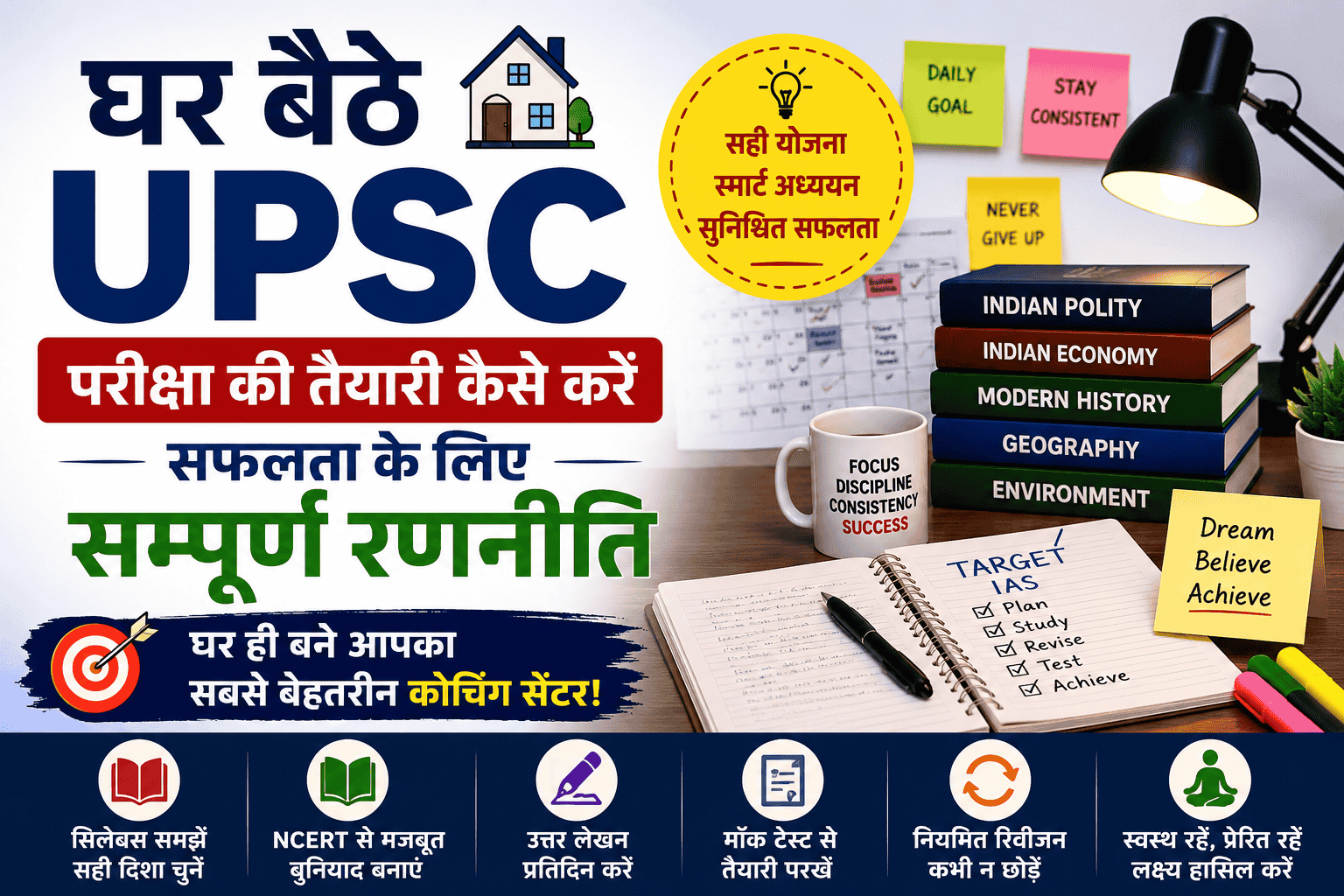
The Union Public Service Commission (UPSC) Civil Services Examination is one of the most prestigious and challenging competitive exams in India. Every year, lakhs of aspirants dream of becoming IAS, IPS, IFS, and other civil servants.
While many students move to coaching hubs for preparation, thousands of successful candidates have proven that UPSC can also be cracked effectively from home with the right strategy, discipline, and consistency.
Understand the UPSC Exam Pattern
The UPSC Civil Services Examination consists of three stages:
1. Preliminary Examination (Prelims)
- Objective type questions
- General Studies (GS)
- CSAT
2. Main Examination (Mains)
- Descriptive written examination
- Essay papers
- General Studies papers
- Optional subject papers
3. Personality Test (Interview)
- Communication skills
- Decision-making ability
- Personality assessment
Know the UPSC Syllabus Thoroughly
- History
- Geography
- Indian Polity
- Economy
- Environment
- Science & Technology
- Current Affairs
- Ethics
- Essay Writing
- Optional Subject
Create a Realistic Study Plan
- Study 6–10 hours daily consistently
- Set weekly and monthly goals
- Allocate time for revision
- Practice answer writing daily
- Take regular mock tests
Start with NCERT Books
NCERT books help build strong conceptual clarity.
- History
- Geography
- Economics
- Political Science
- Science
Read Standard UPSC Books
Recommended Books
- History: Spectrum Modern History
- Polity: Indian Polity by M. Laxmikanth
- Economy: Indian Economy by Ramesh Singh
- Geography: GC Leong + Atlas
- Environment: Shankar IAS Environment Book
- Ethics: Lexicon for Ethics
Stay Updated with Current Affairs
- The Hindu
- Indian Express
- PIB
- Yojana Magazine
- Kurukshetra Magazine
- Monthly Current Affairs PDFs
Practice Answer Writing Daily
- Use Introduction–Body–Conclusion format
- Write concise and structured answers
- Use headings and bullet points
- Add diagrams and flowcharts where possible
Solve Previous Year Question Papers
Solve at least the last 10 years’ UPSC papers to understand question trends, important topics, and exam patterns.
Take Regular Mock Tests
- Improve time management
- Increase accuracy
- Identify weak areas
- Build exam confidence
Revision is the Key to Success
- Revise weekly and monthly
- Make concise notes
- Use mind maps and charts
- Revise current affairs regularly
Choose the Right Optional Subject
- Interest in the subject
- Availability of study material
- Scoring potential
- Previous knowledge
Maintain Discipline and Consistency
- Avoid excessive social media usage
- Create a dedicated study space
- Track daily progress
- Follow fixed study timings
Focus on Mental and Physical Health
- Sleep 6–8 hours daily
- Exercise regularly
- Practice yoga or meditation
- Take short breaks during study
Use Online Resources Smartly
- YouTube educational channels
- Government websites
- Online mock tests
- UPSC topper talks
Stay Motivated Throughout the Journey
- Read success stories
- Set small achievable goals
- Celebrate progress
- Avoid negative comparisons
Common Mistakes to Avoid
- Reading too many books
- Ignoring revision
- Neglecting answer writing
- Inconsistent study routine
Final Thoughts
Preparing for UPSC at home is absolutely possible with the right mindset and disciplined approach. Thousands of aspirants have achieved success through self-study by maintaining consistency, proper planning, and strong determination.
Believe in your abilities, trust the process, and keep moving forward with dedication. Your dream of serving the nation can become a reality.
Conclusion
- Clear understanding of syllabus
- Strong fundamentals
- Regular revision
- Current affairs preparation
- Answer writing practice
- Mock tests
- Consistency and patience
Warm Welcome
R.P. Maurya
IIT Kanpur Alumnus
Ex-Civil Services Examination Aspirant
Educator | Mentor | Academic Excellence Coach
Email: Rahinama24stemgroup@gmail.com
Mobile No.: 7388943059 (WhatsApp)
Telegram: https://t.me/Rahinama24