Categories
- All Products
-
Book Store
- Academic Books
- State PSC Books
- GATE & PSU Books
- CSIR-NET
- IIT-JAM Books
- UGC-NET JRF Books
- SSC, Banking, Railway & Other Government Exams
- Engineering and Technical Exams
- NCERT & Other Reference Books
- UPSC Books
- Learn Beyond Academics
- IIT-JEE | NEET Foundation (Class 9 & 10)
- IIT-JEE | NEET Foundation (Class 11 & 12)
- Judiciary Books
- Common Books for almost Every Competitive Exam
- Other Competitive Exam Books
- Coaching Notes
- Handwritten Notes
-
Test Series & PYQ Books
- For UPSC Solved Papers & PYQs Books
- For GATE & PSU Solved Papers & PYQs Books
- Class 9 to 12 Solved Papers & PYQs Books
- For IITJEE |NEET
- State-PSC
- Engineering and Technical Exams Solved Paper & PYQs
-
SSC, Banking & Other Government Exams Solved Papers & PYQs Books
- SSC (CGL, CHSL, MTS, CPO, GD) Solved Papers & PYQs Books
- Banking (IBPS PO, Clerk, SBI PO, RBI) Solved Papers & PYQ Books
- Railway (NTPC, Group D, ALP, Technician, Other RRB Exams ) Solved Paper & PYQs
- Defence Exams (NDA, CDS, AFCAT, CAPF) Solved Papers & PYQ Books
- Teaching Exam (CTET, UPTET, DSSSB, KVS, NVS, TGT, PGT, EMRS)Solved Papers & PYQ Books
- UGC NET JRF Solved Papers & PYQ Books
- CSIR NET GATE Solved Papers & PYQ Books
- Other Competitive Exam Solved Papers & PYQ Books
- E-Books
- Inspirational Book
- Magazines
- Stationery
Economics
Browse our collection of economics textbooks, solutions, and premium test series.
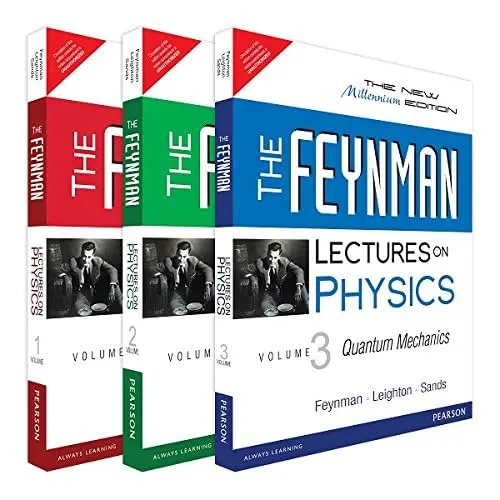
The Feynman Lectures on Physics - Vol. I, II & III Bundle by Feynman Richard P.
The Feynman Lectures on Physics – Vol. I, II & III BundleProduct DescriptionThe Feynman Lectures on Physics – Vol. I, II & III Bundle is a timeless collection of lectures by Nobel Prize-winning physicist Richard P. Feynman, widely regarded as one of the greatest physics educators of all time. Originally developed for students at the California Institute of Technology (Caltech), these three volumes provide a deep and intuitive understanding of the fundamental principles of physics.The bundle covers a comprehensive range of topics, including classical mechanics, thermodynamics, electromagnetism, optics, relativity, statistical mechanics, and quantum mechanics. Rather than focusing solely on formulas and problem-solving techniques, Feynman emphasizes conceptual understanding, logical reasoning, and the beauty of the physical world, making complex ideas accessible and intellectually engaging.Whether you are a university student, educator, researcher, engineer, or a passionate science enthusiast, this collection serves as both an exceptional learning resource and a lifelong reference. Renowned for its clarity, originality, and inspiring approach to teaching, The Feynman Lectures on Physics continues to be one of the most influential and recommended physics books ever published.Key FeaturesComplete three-volume set of the world-famous Feynman Lectures on Physics.Covers mechanics, electromagnetism, thermodynamics, optics, relativity, and quantum mechanics.Focuses on conceptual understanding rather than rote memorization.Written in an engaging and thought-provoking style by Richard P. Feynman.Ideal for undergraduate and postgraduate students, educators, researchers, and self-learners.A classic reference for anyone seeking a deeper understanding of physics.
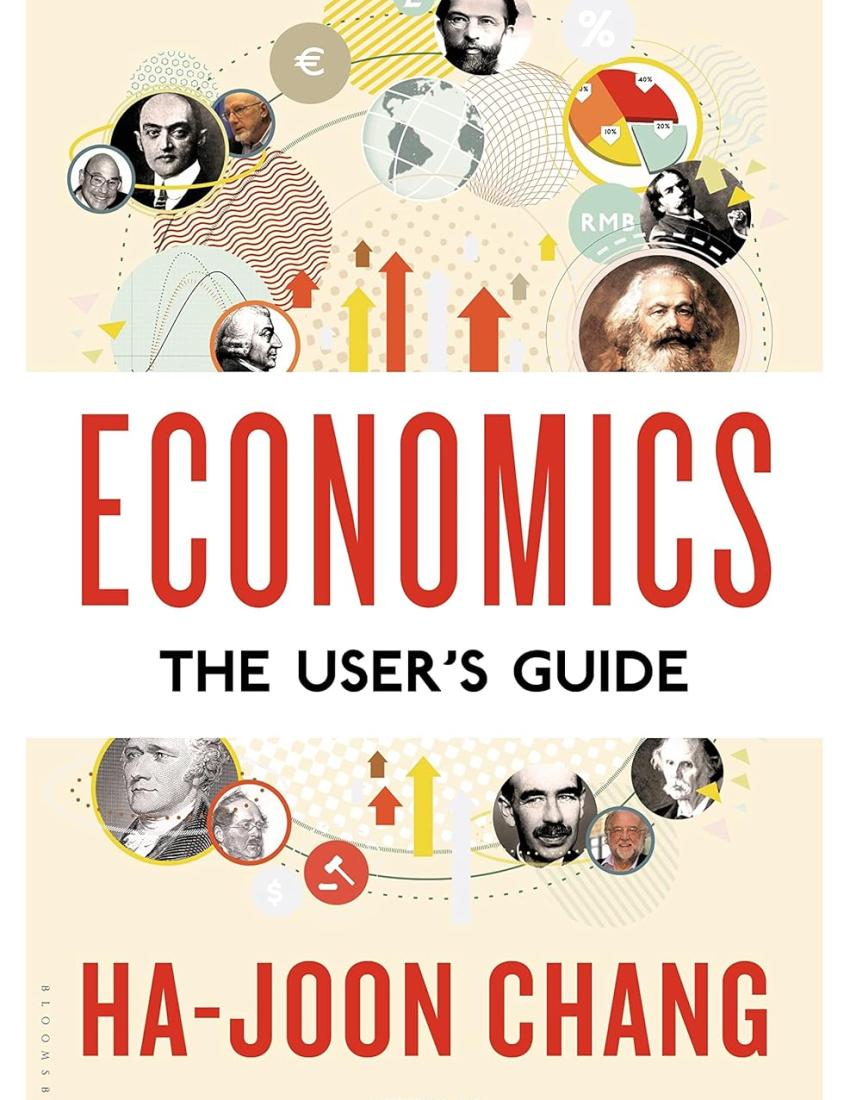
Economics: The User's Guide
Economics: The User's Guide is an accessible introduction to economics by Ha-Joon Chang. Rather than promoting a single economic theory, the book explains how different schools of economics interpret the world and how economic decisions affect everyday life.Short SummaryThe book argues that economics is too important to be left only to experts. Ha-Joon Chang explains complex economic concepts in simple language and shows that there is no single "correct" economic theory. He introduces readers to various schools of economic thought—such as classical, Keynesian, Marxist, and free-market economics—and discusses topics like globalization, inequality, economic growth, inflation, unemployment, and the role of governments. The book encourages readers to think critically about economic policies and understand how economies shape society.Key Takeaways:Economics is about people and society, not just money.Different economic theories provide different solutions to the same problems.Governments and markets both play important roles in economic development.Economic policies affect everyone's daily life.Understanding economics helps people make informed personal and political decisions.
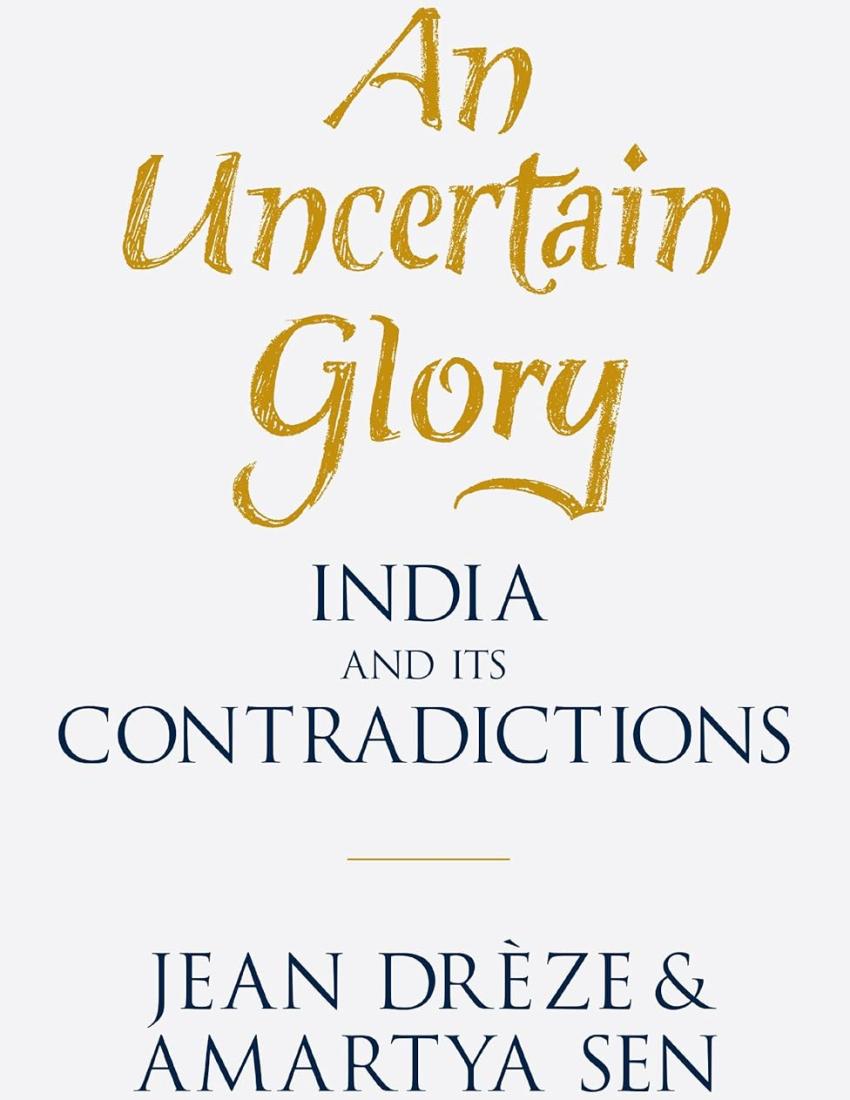
An Uncertain Glory: India and its Contradictions
is a thought-provoking book by Jean Drèze and Amartya Sen that examines why India's rapid economic growth has not translated into better living conditions for everyone.Short SummaryThe book argues that while India has achieved impressive economic growth, it still struggles with poor education, inadequate healthcare, malnutrition, gender inequality, and widespread poverty. The authors emphasize that economic growth alone cannot ensure human development. They advocate for greater investment in public services, stronger social welfare programs, and improved governance to create a more equitable and inclusive society.Key TakeawaysEconomic growth is important but not sufficient for overall development.Quality education and healthcare are essential for long-term progress.High inequality limits the benefits of economic growth.Good governance and accountable public institutions are crucial.Human development should be given equal importance alongside GDP growth.In one sentence: An Uncertain Glory argues that India's true progress depends not just on economic growth, but on investing in people through education, healthcare, social justice, and effective governance.
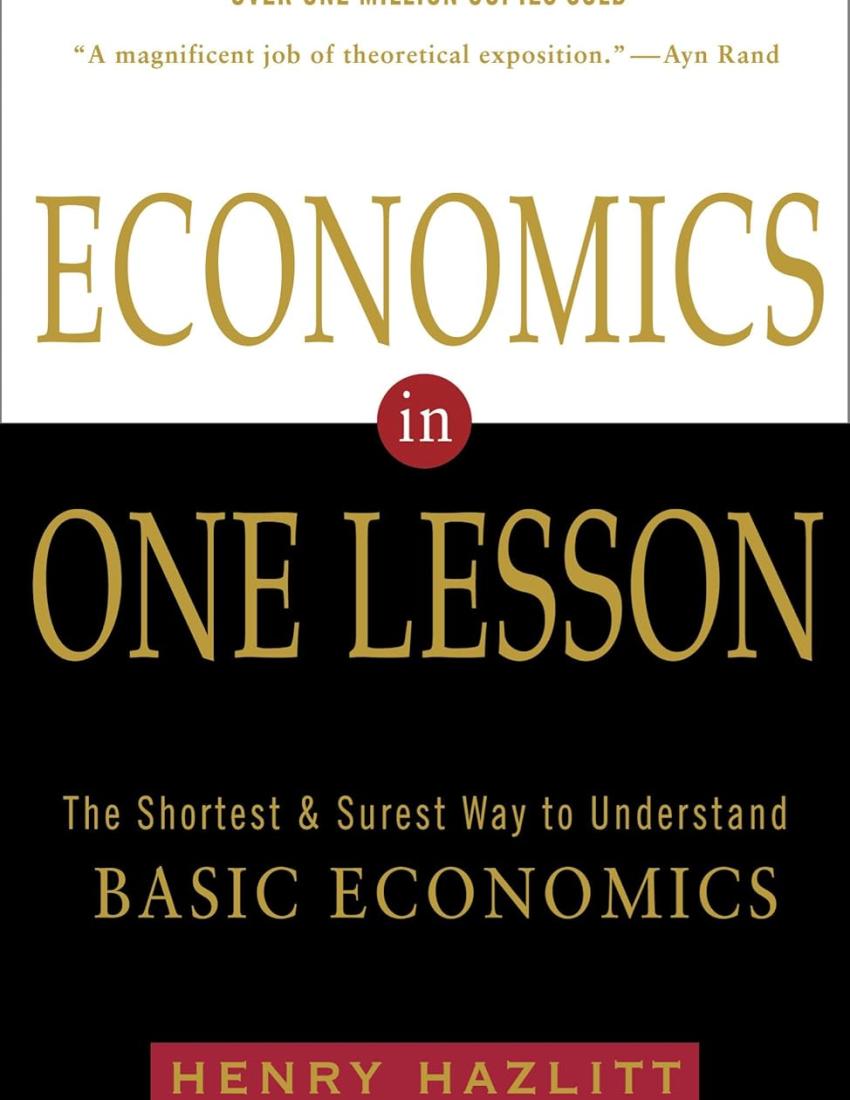
Economics in One Lesson: The Shortest and Surest Way to Understand Basic Economics | Medium : English
Short Summary of Books:Economics in One Lesson explains a simple but powerful principle:Good economics looks at the long-term effects of a policy on everyone, not just the immediate effects on one group.Hazlitt argues that many economic mistakes occur because people focus only on the visible, short-term benefits while ignoring the hidden, long-term costs.Key IdeasThe Broken Window Fallacy: Destruction does not create wealth. Money spent replacing broken property could have been used to create new wealth instead.Government Spending: Government spending is financed through taxes, borrowing, or inflation, so it does not create wealth out of nothing.Taxes: High taxes reduce incentives to work, save, invest, and start businesses.Price Controls: Artificially low prices (price ceilings) cause shortages, while artificially high prices (price floors) create surpluses.Minimum Wage: If set above workers' productivity, it can reduce employment opportunities for low-skilled workers.Subsidies: Subsidies often benefit a small group while spreading costs across the entire population.Inflation: Printing more money does not create real wealth; it mainly reduces purchasing power.Free Markets: Voluntary exchange generally leads to more efficient allocation of resources and higher living standards.The "One Lesson"Always consider both the immediate and the long-term consequences of any economic policy, and evaluate its effects on all members of society—not just those who benefit first.Main TakeawayThe book encourages readers to think beyond appearances and ask:Who benefits?Who pays?What are the hidden costs?What will happen over time?By applying these questions, Hazlitt argues that people can better understand economic issues such as taxation, inflation, subsidies, trade, wages, and government intervention.Best for: Beginners, students, entrepreneurs, policymakers, and anyone who wants a clear introduction to basic economic reasoning without advanced mathematics.