Book Store
Find reference notes, study guides, and dynamic curriculum files for book store preparation.
IGNOU BOOK | Politial Theory – Concepts and Debates| BPSC -103 | ENGLISH MEDIUM
Description:Political Theory – Concepts and Debates is a branch of Political Science that examines the fundamental political concepts, values, and debates that shape political life and society. It encourages students to critically understand and analyse concepts such as freedom, equality, justice, rights, citizenship, democracy, secularism, and nationalism.The subject goes beyond simply defining political concepts. It explores the different interpretations, arguments, and disagreements surrounding them and examines how these ideas apply to real political and social situations.Main AreasFreedom and libertyEquality and social justiceRights and citizenshipDemocracy and political participationSecularismNationalismPower and authorityState and political obligationSocial justice and affirmative actionIndividual and communityMajor political debates and contemporary issuesIn simple words: Political Theory – Concepts and Debates studies important political ideas and the different arguments surrounding them, helping us understand and critically analyse political and social issues.
IGNOU BOOK | Perspectives on International Relations and World History | BPSC -107 | ENGLISH MEDIUM
Description:Perspectives on International Relations and World History is a study of the major events, ideas, theories, and historical developments that have shaped international politics. It connects world history with International Relations to explain how relations between countries and global political systems have evolved over time.The subject examines major developments such as colonialism, nationalism, the World Wars, the Cold War, decolonisation, globalisation, and the emergence of new world powers. It also introduces different perspectives and theories used to understand international events and the behaviour of states.Main AreasEvolution of the international systemMajor approaches to International RelationsColonialism and imperialismNationalism and the rise of nation-statesFirst and Second World WarsCold War and superpower rivalryDecolonisation and independence movementsRise of developing countriesGlobalisationInternational organisations and the United NationsChanging balance of power in world politicsContemporary global issues
Modern Political Philosophy | Adhunik Rajnitik Darshan | BPSC-113 | Hindi Book |
BPSC-113: आधुनिक राजनीतिक दर्शन इग्नू के राजनीति विज्ञान पाठ्यक्रम का एक महत्वपूर्ण विषय है। इसमें आधुनिक काल के प्रमुख राजनीतिक दार्शनिकों, उनके विचारों और राजनीतिक सिद्धांतों का अध्ययन किया जाता है। पाठ्यक्रम का उद्देश्य यह समझना है कि आधुनिक राज्य, स्वतंत्रता, अधिकार, समानता, न्याय और लोकतंत्र जैसी अवधारणाओं का विकास किस प्रकार हुआ।प्रमुख विषयआधुनिक राजनीतिक दर्शन का परिचय — आधुनिक राजनीतिक चिंतन की प्रकृति और विशेषताएँ।निकोलो मैकियावेली — राज्य, सत्ता और राजनीतिक यथार्थवाद के विचार।थॉमस हॉब्स — प्राकृतिक अवस्था, सामाजिक अनुबंध और संप्रभुता।जॉन लॉक — प्राकृतिक अधिकार, सीमित सरकार और सहमति का सिद्धांत।ज्याँ-जाक रूसो — सामाजिक अनुबंध, सामान्य इच्छा और जनसत्ता।जेरेमी बेंथम — उपयोगितावाद और अधिकतम लोगों के अधिकतम सुख का सिद्धांत।जॉन स्टुअर्ट मिल — स्वतंत्रता, प्रतिनिधि सरकार और व्यक्तित्व का विकास।हेगेल — राज्य, स्वतंत्रता और नैतिक जीवन की अवधारणा।कार्ल मार्क्स — वर्ग संघर्ष, पूंजीवाद, राज्य और ऐतिहासिक भौतिकवाद।आधुनिक राजनीतिक अवधारणाएँ — स्वतंत्रता, समानता, अधिकार, राज्य और नागरिकता के विकास पर विचार।निष्कर्षBPSC-113 आधुनिक राजनीतिक दर्शन के विकास को समझने के लिए महत्वपूर्ण है। विभिन्न विचारकों ने राज्य, सत्ता, स्वतंत्रता, अधिकार, सामाजिक अनुबंध, समानता और आर्थिक व्यवस्था के बारे में अलग-अलग दृष्टिकोण प्रस्तुत किए। इन विचारों ने आधुनिक राजनीतिक संस्थाओं और राजनीतिक चिंतन को प्रभावित किया।IGNOU परीक्षा की तैयारी के लिए प्रत्येक विचारक के जीवन-काल की प्रमुख जानकारी, मुख्य अवधारणाएँ, प्रमुख तर्क, राज्य संबंधी विचार, स्वतंत्रता एवं अधिकारों पर दृष्टिकोण तथा उनके विचारों की आलोचनाएँ व्यवस्थित रूप से पढ़ना उपयोगी रहेगा।
Introduction to South Asia | Dakshin Ayeshiya Ka Ek parichaye | BPSE-144 | Hindi Medium |
BPSE-144: दक्षिण एशिया का परिचय दक्षिण एशिया के देशों की राजनीतिक, सामाजिक, आर्थिक और ऐतिहासिक परिस्थितियों को समझने पर केंद्रित पाठ्यक्रम है। इसमें दक्षिण एशिया को एक क्षेत्र के रूप में देखते हुए विभिन्न देशों के बीच समानताओं, अंतरों और पारस्परिक संबंधों का अध्ययन किया जाता है।प्रमुख विषयदक्षिण एशिया की अवधारणा — दक्षिण एशिया का अर्थ, भौगोलिक विस्तार और क्षेत्रीय विशेषताएँ।ऐतिहासिक पृष्ठभूमि — औपनिवेशिक शासन, स्वतंत्रता और राष्ट्र-निर्माण की प्रक्रियाएँ।भारत — राजनीतिक व्यवस्था, लोकतंत्र, अर्थव्यवस्था और क्षेत्रीय भूमिका।पाकिस्तान — राजनीतिक संस्थाएँ, लोकतंत्र, सैन्य भूमिका और शासन व्यवस्था।बांग्लादेश — स्वतंत्रता, राजनीतिक विकास और सामाजिक-आर्थिक परिवर्तन।नेपाल और भूटान — राजनीतिक परिवर्तन, राजतंत्र से लोकतंत्र तथा राज्य-निर्माण।श्रीलंका — राजनीतिक व्यवस्था, जातीय प्रश्न और सामाजिक परिवर्तन।मालदीव — राजनीतिक एवं सामाजिक विकास।क्षेत्रीय सहयोग — दक्षिण एशियाई देशों के बीच सहयोग और SAARC की भूमिका।भारत-पड़ोसी संबंध — दक्षिण एशिया में राजनीतिक, आर्थिक और सुरक्षा संबंध।क्षेत्रीय चुनौतियाँ — गरीबी, विकास, सुरक्षा, सीमा विवाद, प्रवासन और पर्यावरणीय समस्याएँ।निष्कर्षBPSE-144 विद्यार्थियों को दक्षिण एशिया को एक ऐतिहासिक और राजनीतिक क्षेत्र के रूप में समझने में सहायता करता है। यह पाठ्यक्रम बताता है कि साझा इतिहास और सांस्कृतिक समानताओं के बावजूद दक्षिण एशियाई देशों की राजनीतिक व्यवस्थाएँ और विकास की परिस्थितियाँ अलग-अलग हैं। साथ ही, क्षेत्रीय सहयोग और विभिन्न चुनौतियाँ इन देशों के पारस्परिक संबंधों को प्रभावित करती हैं।
IGNOU BOOK | Introduction to South Asia | BPSE-144 | English Medium |
Introduction to South Asia (BPSE-144) is an IGNOU study material designed for students pursuing Political Science and related social science programmes. The book provides a comprehensive introduction to the South Asian region and helps learners understand its political, social, economic, cultural, and historical dimensions.The study material covers important themes related to South Asia, including the evolution of the region, its diverse societies, political systems, regional relationships, and major contemporary issues. It encourages students to examine the similarities and differences among South Asian countries and understand how history, geography, culture, and politics influence regional developments.Written in English medium, the book is structured according to the IGNOU self-learning format. The content is presented in a clear and systematic manner, making it suitable for independent study and examination preparation. Important concepts and topics are explained in an accessible way to help students develop a better understanding of South Asian politics and society.BPSE-144 – Introduction to South Asia is useful for IGNOU students looking for course-aligned study material, revision support, and a broader understanding of the South Asian region. It can also serve as a reference for learners interested in comparative politics, international relations, regional studies, and contemporary South Asian affairs.Key Features:IGNOU BPSE-144 course materialEnglish MediumCovers major themes of South AsiaUseful for self-study and revisionHelpful for examination preparationSuitable for Political Science and related programmesClear, structured, and student-friendly content
Introduction to Political Theory | Rajnitik shidhant Ka Parichaye | BPSC-131 | Hindi Medium | IGNOU BOOK|
Introduction to Political Theory (BPSC-131) यानी “राजनीतिक सिद्धांत का परिचय” IGNOU के विद्यार्थियों के लिए तैयार किया गया महत्वपूर्ण अध्ययन-सामग्री है। यह पुस्तक राजनीतिक सिद्धांत की मूल अवधारणाओं, विचारों और प्रमुख विषयों को सरल एवं व्यवस्थित रूप में समझने में सहायता करती है।इस पुस्तक में राजनीति और राजनीतिक सिद्धांत से जुड़े विभिन्न महत्वपूर्ण पहलुओं का परिचय दिया गया है। इसमें स्वतंत्रता, समानता, न्याय, अधिकार, लोकतंत्र, राज्य, सत्ता, नागरिकता तथा अन्य प्रमुख राजनीतिक अवधारणाओं को समझने का अवसर मिलता है। पुस्तक विद्यार्थियों को राजनीतिक विचारों को उनके सामाजिक और ऐतिहासिक संदर्भों में समझने तथा विभिन्न दृष्टिकोणों का अध्ययन करने में मदद करती है।BPSC-131 IGNOU के स्व-अध्ययन प्रारूप के अनुरूप तैयार किया गया है। विषयों को क्रमबद्ध तरीके से प्रस्तुत किया गया है, जिससे विद्यार्थी बिना किसी अतिरिक्त मार्गदर्शन के भी पाठ्यक्रम का अध्ययन और पुनरावृत्ति कर सकें। यह पुस्तक असाइनमेंट तैयार करने, परीक्षा की तैयारी करने और राजनीतिक सिद्धांत की आधारभूत समझ विकसित करने के लिए उपयोगी है।मुख्य विशेषताएँ:IGNOU BPSC-131 अध्ययन सामग्रीहिंदी माध्यम“राजनीतिक सिद्धांत का परिचय” विषय पर केंद्रितप्रमुख राजनीतिक अवधारणाओं का अध्ययनIGNOU परीक्षा एवं असाइनमेंट की तैयारी के लिए उपयोगीसरल, व्यवस्थित और विद्यार्थी-अनुकूल सामग्रीस्व-अध्ययन और रिवीजन के लिए उपयुक्त
IGNOU BOOK | Introduction to Political Theory | BPSC-131 | English Medium |
Introduction to Political Theory (BPSC-131) is an IGNOU study material designed to provide students with a clear and systematic understanding of the basic concepts, ideas, and debates in political theory. The book introduces learners to important political concepts and helps them understand their significance in contemporary political life.The study material covers key themes such as liberty, equality, justice, rights, democracy, state, power, citizenship, and other fundamental concepts associated with political theory. It encourages students to examine political ideas critically and understand how different concepts have developed within social, historical, and political contexts.Prepared according to the IGNOU self-learning format, BPSC-131 presents the subject in a structured and accessible manner. The material is particularly useful for students who are preparing for IGNOU examinations, assignments, and academic discussions. Its organized presentation makes it suitable for independent study, revision, and developing a strong foundation in political theory.Key Features:IGNOU BPSC-131 study materialEnglish MediumCovers fundamental concepts of political theoryUseful for understanding major political ideas and debatesSuitable for self-study and revisionHelpful for IGNOU assignments and examination preparationClear, structured, and student-friendly content
Introduction to International Relations | Antarrastiriye Sambandho Ka Parichaye | BPSC-134 | Hindi Medium | IGNOU BOOK |
अंतर्राष्ट्रीय संबंधों का परिचय (BPSC-134)अंतर्राष्ट्रीय संबंध (International Relations) राजनीति विज्ञान की एक महत्वपूर्ण शाखा है, जो विभिन्न देशों, अंतर्राष्ट्रीय संगठनों, गैर-राज्य अभिकर्ताओं और वैश्विक संस्थाओं के बीच संबंधों का अध्ययन करती है। IGNOU के BPSC-134 पाठ्यक्रम में अंतर्राष्ट्रीय संबंधों की मूल अवधारणाओं, प्रमुख सिद्धांतों और समकालीन वैश्विक मुद्दों को समझने पर विशेष ध्यान दिया जाता है।अंतर्राष्ट्रीय संबंधों का मुख्य विषय यह समझना है कि राज्य अपने राष्ट्रीय हितों की पूर्ति के लिए अन्य राज्यों के साथ किस प्रकार संबंध स्थापित करते हैं। इसमें शक्ति, राष्ट्रीय हित, संप्रभुता, सुरक्षा, कूटनीति, युद्ध, शांति, सहयोग और संघर्ष जैसी अवधारणाएँ महत्वपूर्ण हैं। परंपरागत रूप से अंतर्राष्ट्रीय राजनीति में राज्य को प्रमुख अभिनेता माना जाता था, लेकिन वर्तमान समय में संयुक्त राष्ट्र, बहुराष्ट्रीय कंपनियाँ, गैर-सरकारी संगठन और अन्य गैर-राज्य अभिकर्ता भी महत्वपूर्ण भूमिका निभाते हैं।अंतर्राष्ट्रीय संबंधों के अध्ययन में विभिन्न सिद्धांतों का विशेष महत्व है। यथार्थवाद (Realism) शक्ति और राष्ट्रीय हित को प्रमुख मानता है, जबकि उदारवाद (Liberalism) अंतर्राष्ट्रीय सहयोग, संस्थाओं और पारस्परिक निर्भरता पर जोर देता है। इसके अतिरिक्त मार्क्सवादी, रचनावादी और अन्य दृष्टिकोण भी अंतर्राष्ट्रीय राजनीति को समझने में सहायता करते हैं।आधुनिक अंतर्राष्ट्रीय संबंध केवल युद्ध और सुरक्षा तक सीमित नहीं हैं। वैश्वीकरण, जलवायु परिवर्तन, आतंकवाद, मानवाधिकार, आर्थिक असमानता, प्रवासन, परमाणु हथियार, साइबर सुरक्षा और सतत विकास जैसे मुद्दे भी इसके महत्वपूर्ण विषय हैं। भारत के संदर्भ में पड़ोसी देशों के साथ संबंध, विदेश नीति, क्षेत्रीय सहयोग तथा वैश्विक संस्थाओं में भारत की भूमिका का अध्ययन विशेष रूप से उपयोगी है।इस प्रकार, अंतर्राष्ट्रीय संबंधों का परिचय विद्यार्थियों को विश्व राजनीति की संरचना, विभिन्न देशों के व्यवहार और बदलती वैश्विक व्यवस्था को व्यवस्थित ढंग से समझने की आधारभूमि प्रदान करता है।
IGNOU BOOK | Introduction to International Relations | BPSC- 134 | English Medium
Introduction to International Relations is an important area of Political Science that examines the relations and interactions among states and other actors in the international system. The subject helps us understand how countries pursue their interests, exercise power, cooperate with one another, and deal with conflicts in a changing global environment.International Relations is concerned with several fundamental concepts such as state, sovereignty, national interest, power, security, diplomacy, war, peace, cooperation, and international institutions. Traditionally, states were considered the primary actors in international politics. However, contemporary International Relations also recognizes the importance of international organizations, multinational corporations, non-governmental organizations, social movements, and other non-state actors.Different theoretical approaches provide different explanations of international politics. Realism emphasizes power, national interest, competition, and security. Liberalism gives importance to cooperation, international institutions, democracy, and economic interdependence. Other approaches, including Marxism, Constructivism, Feminism, and Postcolonial perspectives, examine international politics from different social, economic, historical, and cultural viewpoints.The study of International Relations is not limited to war and military security. Contemporary global politics includes issues such as globalization, international trade, climate change, terrorism, human rights, migration, nuclear weapons, environmental security, cyber security, economic inequality, and sustainable development. These issues often require cooperation among countries because their effects cross national boundaries.International Relations is also important for understanding India's foreign policy and its relations with neighbouring countries and major world powers. India's participation in organizations such as the United Nations and its engagement with regional and global institutions demonstrate the importance of international cooperation.Thus, the study of International Relations provides a systematic understanding of the structure and functioning of world politics. It explains how power, interests, institutions, ideas, and global challenges influence relations.
Introduction to Comparative Government and politics
Introduction to Comparative Government and Politics is the study of the governmental structures, political institutions, political processes, and political behaviour of different countries. It uses comparison to understand how political systems operate and why they differ from one another.The subject focuses on constitutions, forms of government, legislatures, executives, judiciaries, political parties, elections, federalism, political participation, and political development. It also helps in understanding different democratic and non-
IGNOU BOOK | Introduction to Comparative Government and politics | BPSC-105 | English Medium
Introduction to Comparative Government and Politics (BPSC-105) is an important course in Political Science that introduces students to the study of different political systems through comparison. Comparative politics examines how governments and political institutions function in different countries and helps us understand similarities and differences among political systems.The study of comparative government traditionally focused on the formal institutions of government, such as the legislature, executive, judiciary, constitution, political parties, and electoral systems. However, modern comparative politics has expanded its scope to include political behaviour, political culture, interest groups, social movements, public opinion, political participation, development, and the relationship between state and society.A major objective of comparative politics is to understand why political systems differ in their structures and functioning. Countries may have democratic, authoritarian, parliamentary, presidential, federal, or unitary systems. Comparative analysis helps explain how these different arrangements influence political stability, representation, accountability, and decision-making.The course also introduces students to important approaches and concepts used in comparative political analysis. These include institutional, behavioural, structural, political economy, and political development approaches. Such approaches allow scholars to study political institutions as well as the social and economic conditions in which they operate.Comparative politics is particularly useful for understanding the relationship between state, society, economy, and political power. It also examines processes such as democratization, political modernization, nationalism, development, political conflict, and state-building.The comparative study of countries provides a broader understanding of politics rather than limiting analysis to a single national system. For example, comparing parliamentary and presidential systems can help students understand differences in executive-legislative relations, while comparing federal and unitary systems helps explain different forms of power distribution.Thus, BPSC-105 provides students with the basic concepts, approaches, and methods required to understand and compare political systems. It develops the ability to examine political institutions and processes systematically and provides a foundation for studying contemporary comparative politics
Indian Political Thought-II | Bhartiya Rajnitik Chintan II | BPSC-114 | Hindi Medium |
भारतीय राजनीतिक चिंतन-II (BPSC-114) भारतीय राजनीतिक विचारों के विकास और विभिन्न आधुनिक भारतीय चिंतकों के राजनीतिक, सामाजिक तथा आर्थिक विचारों का अध्ययन करता है। यह पाठ्यक्रम विद्यार्थियों को यह समझने में सहायता करता है कि भारतीय चिंतकों ने स्वतंत्रता, समानता, न्याय, राष्ट्रवाद, लोकतंत्र, सामाजिक सुधार, धर्म, राज्य और समाज जैसे प्रश्नों पर किस प्रकार विचार किया।भारतीय राजनीतिक चिंतन की आधुनिक परंपरा का विकास औपनिवेशिक शासन और उसके विरुद्ध उभरते राष्ट्रीय आंदोलन के संदर्भ में हुआ। इस दौर के चिंतकों ने भारतीय समाज की समस्याओं के साथ-साथ आधुनिक राजनीतिक संस्थाओं और पश्चिमी राजनीतिक विचारों पर भी विचार किया। उन्होंने भारतीय परिस्थितियों के अनुरूप राजनीतिक और सामाजिक परिवर्तन के विभिन्न मार्ग प्रस्तुत किए।इस विषय में महात्मा गांधी, डॉ. भीमराव आंबेडकर, जवाहरलाल नेहरू, राम मनोहर लोहिया, जयप्रकाश नारायण तथा अन्य आधुनिक भारतीय चिंतकों के विचारों को समझना महत्वपूर्ण है। गांधी के चिंतन में सत्य, अहिंसा, स्वराज, ग्राम स्वराज और नैतिक राजनीति प्रमुख हैं। आंबेडकर ने सामाजिक न्याय, समानता, जाति-व्यवस्था के उन्मूलन, लोकतंत्र और संवैधानिक अधिकारों पर विशेष बल दिया। नेहरू ने धर्मनिरपेक्षता, लोकतंत्र, वैज्ञानिक दृष्टिकोण और आधुनिक राष्ट्र-निर्माण को महत्व दिया।भारतीय राजनीतिक चिंतन-II केवल व्यक्तिगत विचारों का अध्ययन नहीं है, बल्कि यह भी समझने का प्रयास करता है कि इन विचारकों ने अपने समय की सामाजिक असमानता, औपनिवेशिक शासन, आर्थिक समस्याओं और राजनीतिक चुनौतियों का समाधान किस प्रकार देखा।इस प्रकार, BPSC-114 भारतीय राजनीतिक चिंतन की विविध और बहुआयामी परंपरा को समझने का अवसर प्रदान करता है। यह विद्यार्थियों को भारतीय लोकतंत्र, सामाजिक न्याय, राष्ट्रवाद और राजनीतिक परिवर्तन से जुड़े समकालीन प्रश्नों को ऐतिहासिक तथा वैचारिक दृष्टि से समझने में मदद करता है।
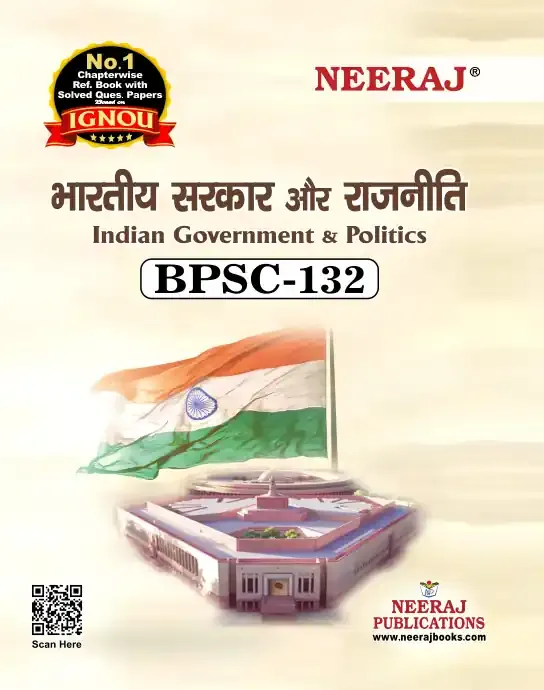
Indian Government and Politics | Bhartiya Sarkaar Aur Rajniti | BPSC-132 | Hindi Medium | IGNOU Book |
भारतीय सरकार और राजनीति (BPSC-132) भारतीय राजनीतिक व्यवस्था, संवैधानिक संस्थाओं तथा लोकतांत्रिक शासन की कार्यप्रणाली को समझने से संबंधित महत्वपूर्ण पाठ्यक्रम है। इसमें भारत के संविधान, राजनीतिक संस्थाओं, संघीय व्यवस्था, चुनाव, राजनीतिक दलों तथा केंद्र और राज्यों के बीच संबंधों का अध्ययन किया जाता है।भारत का संविधान देश की राजनीतिक व्यवस्था का आधार है। यह लोकतंत्र, गणराज्य, धर्मनिरपेक्षता, सामाजिक न्याय, स्वतंत्रता, समानता और मौलिक अधिकारों जैसे मूल्यों को स्थापित करता है। भारतीय शासन प्रणाली में संसदीय व्यवस्था अपनाई गई है, जिसमें राष्ट्रपति संवैधानिक प्रमुख और प्रधानमंत्री तथा मंत्रिपरिषद वास्तविक कार्यपालिका के रूप में कार्य करते हैं। संसद कानून निर्माण, प्रतिनिधित्व और सरकार की जवाबदेही सुनिश्चित करने में महत्वपूर्ण भूमिका निभाती है।इस पाठ्यक्रम में केंद्र और राज्य सरकारों के संबंधों का भी अध्ययन किया जाता है। भारत में संघीय व्यवस्था के साथ कुछ एकात्मक विशेषताएँ भी मौजूद हैं। संविधान द्वारा विधायी, प्रशासनिक और वित्तीय शक्तियों का विभिन्न स्तरों पर वितरण किया गया है। राज्य सरकारों में राज्यपाल, मुख्यमंत्री, मंत्रिपरिषद और विधानमंडल प्रमुख संस्थाएँ हैं।भारतीय राजनीति को समझने के लिए चुनाव और राजनीतिक दलों का अध्ययन भी आवश्यक है। निर्वाचन प्रक्रिया नागरिकों को राजनीतिक भागीदारी का अवसर देती है, जबकि राजनीतिक दल सरकार बनाने, नीतियाँ प्रस्तुत करने और जनता तथा शासन के बीच संबंध स्थापित करने में महत्वपूर्ण भूमिका निभाते हैं।इसके अतिरिक्त, भारतीय राजनीति में जाति, धर्म, भाषा, क्षेत्रवाद, सामाजिक आंदोलन, दबाव समूह और नागरिक समाज जैसे सामाजिक एवं राजनीतिक कारकों का भी प्रभाव देखा जाता है। स्थानीय स्वशासन और पंचायती राज संस्थाएँ लोकतंत्र को जमीनी स्तर तक पहुँचाने में महत्वपूर्ण भूमिका निभाती हैं।इस प्रकार, BPSC-132 भारतीय संविधान और शासन की संस्थाओं के साथ-साथ उन सामाजिक और राजनीतिक प्रक्रियाओं को समझने में सहायता करता है जो भारतीय लोकतंत्र के संचालन को प्रभावित करती हैं। यह पाठ्यक्रम विद्यार्थियों को भारत की राजनीतिक व्यवस्था का व्यापक और व्यवस्थित परिचय प्रदान करता है।
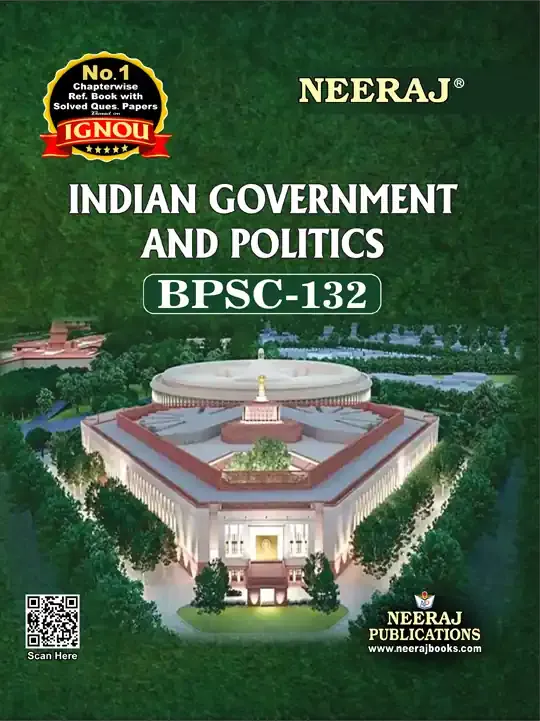
IGNOU BOOK | Indian Government and Politics | BPSC-132 | English Medium |
Indian Government and Politics (BPSC-132) is an IGNOU study material designed to introduce students to the major institutions, processes, and political developments of the Indian political system. The book provides a systematic understanding of how the Indian Constitution establishes the framework of government and how political institutions function within a democratic system.The book discusses important constitutional institutions such as the Parliament, President, Prime Minister, Council of Ministers, Supreme Court, and High Courts. It also explains the federal structure of India and examines the relationship between the Union and State governments. Topics related to elections, political parties, pressure groups, representation, and democratic participation help students understand how political processes operate in practice.A major focus of the course is the relationship between constitutional provisions and actual political developments. The material therefore helps learners understand not only formal institutions but also the social, economic, and political factors that influence Indian politics. Issues such as democracy, secularism, social justice, caste, regionalism, political mobilisation, and centre-state relations are important for developing a broader understanding of Indian government and politics.The book is particularly useful for IGNOU students preparing for examinations because it presents concepts in a structured and accessible manner. It can also serve as a useful reference for students preparing for competitive examinations such as BPSC, UPSC, and other state civil services, especially for topics related to Indian polity and governance.Overall, BPSC-132 provides a comprehensive introduction to the working of Indian democracy and its political institutions. It enables students to understand the constitutional framework, functioning of government, political processes, and major challenges facing Indian democracy.
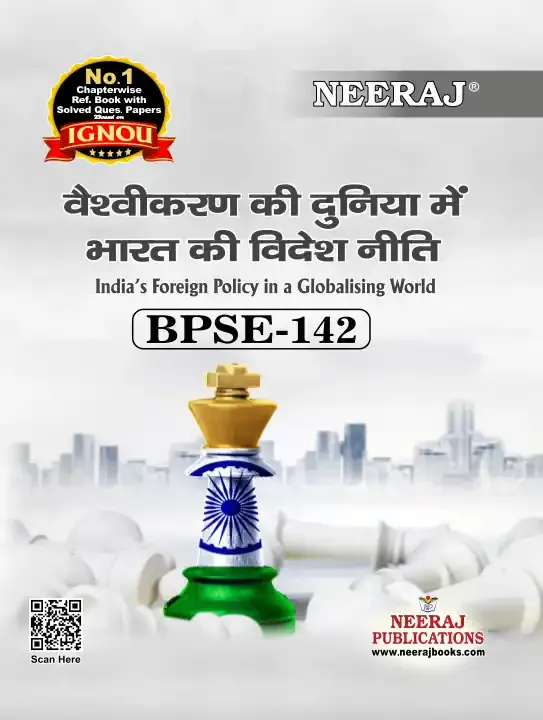
India's Foreign Policy in A Globalising World | Vayasvik ki Duniya Mai Bharat Ki Videsh Niti | Hindi Medium | BPSE-142 | IGNOU BOOK
“भारत की विदेश नीति” (BPSE-142) IGNOU की अध्ययन सामग्री है, जो वैश्वीकरण और बदलती अंतरराष्ट्रीय व्यवस्था के संदर्भ में भारत की विदेश नीति को समझने में सहायता करती है। यह पुस्तक विद्यार्थियों को भारत के विदेश नीति-निर्माण की प्रक्रिया, उसके प्रमुख उद्देश्यों, सिद्धांतों और विभिन्न देशों तथा अंतरराष्ट्रीय संगठनों के साथ भारत के संबंधों का व्यवस्थित परिचय देती है।पुस्तक में भारत की विदेश नीति के ऐतिहासिक विकास और स्वतंत्रता के बाद अपनाई गई प्रमुख नीतियों का अध्ययन किया जाता है। गुटनिरपेक्षता, पंचशील, शांतिपूर्ण सह-अस्तित्व, राष्ट्रीय हित और रणनीतिक स्वायत्तता जैसे महत्वपूर्ण विचारों के माध्यम से भारत के विदेश नीति दृष्टिकोण को समझाया गया है। साथ ही, बदलती वैश्विक परिस्थितियों के कारण भारत की विदेश नीति में आए परिवर्तनों पर भी ध्यान दिया गया है।इस पुस्तक का एक महत्वपूर्ण पक्ष भारत के प्रमुख देशों और क्षेत्रों के साथ संबंधों का अध्ययन है। इसमें भारत-अमेरिका संबंध, भारत-रूस संबंध, भारत-चीन संबंध, पड़ोसी देशों के साथ संबंध तथा एशिया और अन्य क्षेत्रों में भारत की भूमिका जैसे विषयों को समझने का अवसर मिलता है। इसके अतिरिक्त, संयुक्त राष्ट्र, वैश्विक शासन, आर्थिक वैश्वीकरण, क्षेत्रीय सहयोग, सुरक्षा और आतंकवाद जैसे अंतरराष्ट्रीय मुद्दों के संदर्भ में भारत की भूमिका पर भी चर्चा की जाती है।यह पुस्तक IGNOU के विद्यार्थियों के लिए विशेष रूप से उपयोगी है क्योंकि इसमें विषय को सरल और अध्ययन-अनुकूल तरीके से प्रस्तुत किया गया है। यह सामग्री राजनीति विज्ञान, अंतरराष्ट्रीय संबंध और भारतीय विदेश नीति की बुनियादी समझ विकसित करने में सहायक है तथा विश्वविद्यालय परीक्षाओं और प्रतियोगी परीक्षाओं की तैयारी के लिए संदर्भ सामग्री के रूप में भी उपयोगी हो सकती है।कुल मिलाकर, BPSE-142 भारत की विदेश नीति को ऐतिहासिक, राजनीतिक और वैश्विक परिप्रेक्ष्य में समझने के लिए एक उपयोगी अध्ययन सामग्री है।
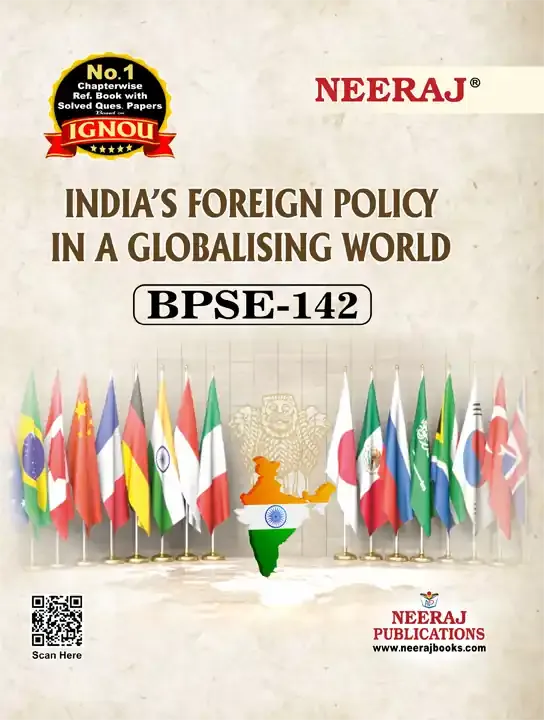
IGNOU BOOK | India's Foreign Policy in A Globalising World | BPSE-142 | ENGLISH MEDIUM
India’s Foreign Policy in a Globalising World deals with India's relations with other countries and international organizations in the context of globalization, economic interdependence, changing global power structures, security challenges and emerging international issues.1. Meaning of Foreign PolicyForeign policy refers to the principles, objectives and strategies adopted by a country to manage its relations with other countries and international organizations.India's foreign policy primarily seeks to protect:National security and sovereigntyTerritorial integrityEconomic interestsStrategic autonomyPeace and stabilityIndia's developmental interestsIndia's position in global affairs
IGNOU BOOK | Global Politics | VASSVIK RAJNETIK | BPSC - 110 | HINDI MEDIUM
Global PoliticsGlobal Politics is the study of political relationships, power, conflicts, cooperation and decision-making at the international and global level. It examines how states and non-state actors interact and how global issues affect societies and countries.1. Meaning of Global PoliticsGlobal politics is broader than traditional international relations. It does not focus only on relations between states but also studies the role of:States and governmentsInternational organizationsMultinational corporationsNon-governmental organizations (NGOs)Social movementsMedia and global networks
IGNOU BOOK | Global Politics | BPSC - 110 | ENGLISH MEDIUM |
Global Politics is an insightful introduction to the complex and constantly changing world of international affairs. Exploring the relationships between nations, governments, institutions, and societies, this book provides readers with a broad understanding of the forces that shape the contemporary global order.The book examines major themes in global politics, including international relations, diplomacy, globalization, power, security, conflict, cooperation, and the role of international organizations. It explores how countries pursue their national interests while responding to global challenges that increasingly cross national borders. From geopolitical rivalries and international conflicts to economic interdependence and diplomatic negotiations, the subject offers a comprehensive view of how political decisions influence the wider world.Global Politics also introduces readers to the changing nature of power in the twenty-first century. Alongside traditional military and economic influence, it considers the growing significance of technology, communication, trade, culture, environmental concerns, and non-state actors. Issues such as climate change, migration, terrorism, human rights, development, and global inequality demonstrate why international politics has become increasingly interconnected.Written in an accessible and informative manner, the book can help students develop a clearer understanding of important political concepts while encouraging critical thinking about current international affairs. It is useful for students of political science, international relations, history, public administration, and related disciplines, as well as readers interested in understanding the world beyond national boundaries.