IGNOU Books
Browse our collection of ignou books textbooks, solutions, and premium test series.
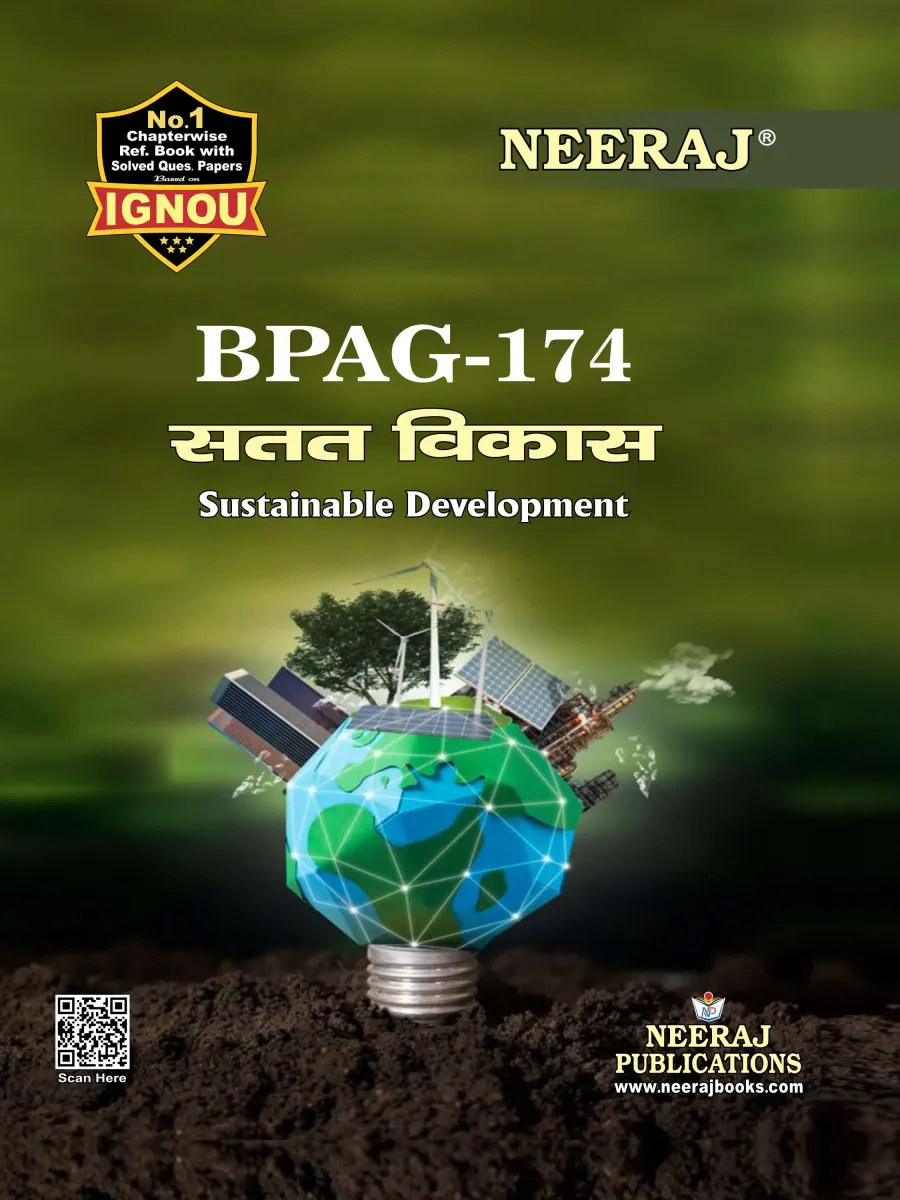
Sustainable Development for BPAG-174 | IGNOU | Hindi Medium | Sustainable Development Study Material
Product DescriptionSustainable Development for BPAG-174 is a useful study resource for IGNOU BPAG-174 Sustainable Development. It is designed to help students understand the key concepts, principles, approaches and contemporary issues related to sustainable development and its application in society, economy and the environment.The material covers important areas such as sustainable development concepts, environmental sustainability, economic and social dimensions of development, natural resource management, climate change, sustainable development goals (SDGs), governance and sustainable development.This study material can support IGNOU BPAG-174 exam preparation, revision and assignment work, helping learners study important topics in a structured and exam-oriented manner.Key HighlightsCourse: BPAG-174 – Sustainable DevelopmentUniversity: IGNOU (Indira Gandhi National Open University)Subject: Sustainable DevelopmentUseful for: IGNOU students and exam preparationCovers important concepts and themes of sustainable developmentHelpful for quick revision, exam preparation and academic studyWhy Choose This Study Material?Get focused and easy-to-use study resources for IGNOU BPAG-174 Sustainable Development at Rahinama24.com, your trusted destination for academic and competitive examination study materials.Buy Sustainable Development for BPAG-174 online at Rahinama24.com and strengthen your IGNOU exam preparation.
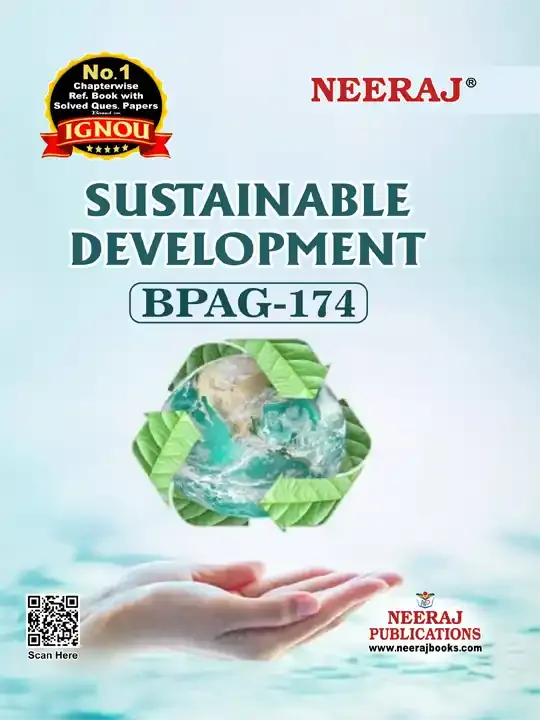
Sustainable Development[ English medium]BPAG-174
Sustainable Development — BPAG-174Sustainable Development means a pattern of development that meets the needs of the present generation without compromising the ability of future generations to meet their own needs.It aims to maintain a balance between economic development, social well-being, and environmental protection.1. Meaning and ConceptSustainable development recognizes that economic growth should not happen at the cost of natural resources or human welfare. It promotes the careful use of resources so that they remain available in the future.The concept became particularly influential after the Brundtland Commission Report (1987), which defined sustainable development in terms of meeting present and future needs.2. Three Main Dimensionsa. Economic DimensionPromotes stable and inclusive economic growth.Encourages efficient use of resources.Creates employment and reduces poverty.Supports long-term economic security.b. Social DimensionPromotes equality and social justice.Ensures access to education, healthcare, housing and basic services.Encourages participation of communities in development.Seeks to reduce poverty and discrimination.c. Environmental DimensionProtects forests, water, soil and biodiversity.Reduces pollution and waste.Promotes renewable sources of energy.Addresses climate change and environmental degradation.3. Principles of Sustainable DevelopmentImportant principles include:Intergenerational equity — resources should be protected for future generations.Intragenerational equity — development benefits should be fairly distributed among people today.Conservation of natural resources.Polluter Pays Principle — those responsible for pollution should bear the cost of managing its consequences.Precautionary Principle — lack of complete scientific certainty should not be used as a reason to delay measures against serious environmental damage.People's participation in development and environmental decision-making.4. ImportanceSustainable development is important because rapid population growth, industrialization, urbanization and excessive consumption can lead to resource depletion, pollution, poverty and climate-related problems. Sustainable development attempts to address these issues together rather than treating economic, social and environmental concerns separately.5. Sustainable Development GoalsThe United Nations Sustainable Development Goals (SDGs) provide a global framework consisting of 17 goals, adopted in 2015 with targets intended to be pursued through 2030. They cover issues such as poverty, hunger, health, education, gender equality, clean water, clean energy, decent work, climate action and protection of ecosystems.
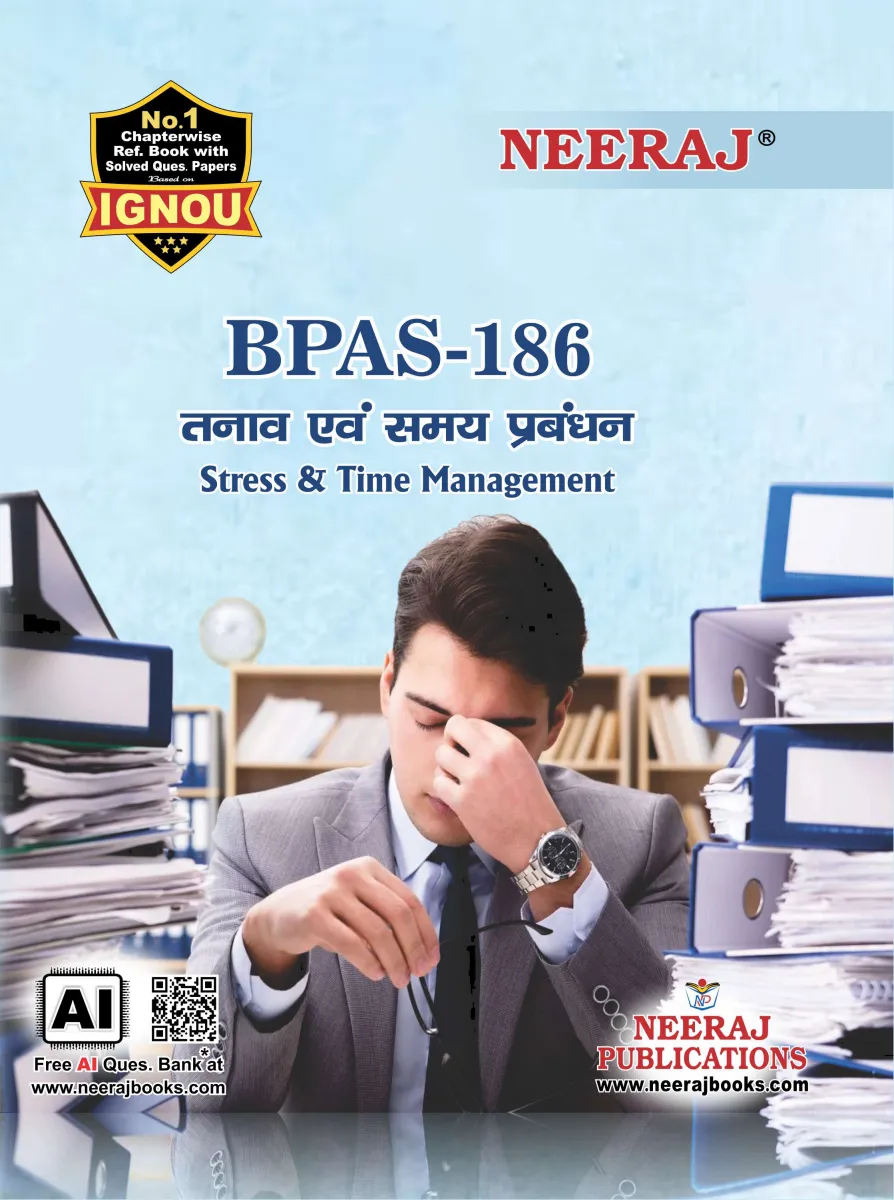
Stress and Time Management[Hindi medium] BPAS-186
BPAS-186: Stress and Time Management — हिंदी माध्यमStress (तनाव) और Time Management (समय प्रबंधन) व्यक्ति के व्यक्तिगत तथा व्यावसायिक जीवन के महत्वपूर्ण विषय हैं।1. तनाव (Stress) क्या है?तनाव वह मानसिक या शारीरिक स्थिति है जो तब उत्पन्न होती है जब व्यक्ति किसी परिस्थिति, समस्या या मांग को अपनी क्षमता से अधिक चुनौतीपूर्ण महसूस करता है।तनाव के प्रमुख कारण:पढ़ाई या काम का अधिक दबावसमय की कमीआर्थिक समस्याएँपारिवारिक या सामाजिक समस्याएँभविष्य की चिंताअपेक्षाओं और उपलब्धियों में अंतरतनाव के प्रभाव:चिंता और चिड़चिड़ापनएकाग्रता में कमीथकान और नींद में परेशानीकार्यक्षमता में कमीस्वास्थ्य पर नकारात्मक प्रभावतनाव प्रबंधन के उपाय:कार्यों की प्राथमिकता तय करनानियमित व्यायाम और पर्याप्त नींदध्यान एवं योगसमय का उचित नियोजनपरिवार/मित्रों से बातचीतसमस्याओं को छोटे-छोटे कार्यों में बाँटना2. समय प्रबंधन (Time Management) क्या है?समय प्रबंधन का अर्थ है उपलब्ध समय का सही योजना, प्राथमिकता और अनुशासन के साथ उपयोग करना, ताकि निर्धारित कार्य समय पर पूरे किए जा सकें।समय प्रबंधन के प्रमुख सिद्धांत:लक्ष्य निर्धारित करना।महत्वपूर्ण और आवश्यक कार्यों की प्राथमिकता तय करना।दैनिक/साप्ताहिक समय-सारणी बनाना।कार्यों के लिए समय-सीमा निर्धारित करना।टालमटोल से बचना।अनावश्यक कार्यों और समय की बर्बादी को कम करना।कार्य की प्रगति की समीक्षा करना।3. तनाव और समय प्रबंधन का संबंधखराब समय प्रबंधन के कारण कार्य लंबित होते जाते हैं, जिससे दबाव और तनाव बढ़ सकता है। इसके विपरीत, उचित समय प्रबंधन व्यक्ति को कार्यों को व्यवस्थित ढंग से पूरा करने में मदद करता है और तनाव को नियंत्रित करने में सहायक हो सकता है।निष्कर्ष:तनाव को पूरी तरह समाप्त करना हमेशा संभव नहीं होता, लेकिन सही समय प्रबंधन, प्राथमिकता निर्धारण, स्वस्थ जीवनशैली और सकारात्मक दृष्टिकोण के माध्यम से तनाव को प्रभावी ढंग से नियंत्रित किया जा सकता है।

Stress and Time Management[English medium] BPAS-186
Stress and Time Management – BPAS-186Meaning of StressStress is a physical and emotional response that occurs when a person feels unable to cope with the demands or pressures of a situation. It may arise from studies, work, family problems, financial difficulties, relationships, or other challenges.A small amount of stress can motivate a person to perform better, but excessive or prolonged stress can negatively affect physical and mental well-being.Causes of StressHeavy workload or academic pressureLack of sleep and restFinancial or family problemsPoor time managementConflicts with othersFear of failureMajor changes in lifeUnrealistic expectationsEffects of StressPhysical effects: headache, tiredness, disturbed sleep, muscle tension, and changes in appetite.Emotional effects: anxiety, irritability, sadness, frustration, and difficulty concentrating.Behavioural effects: avoiding responsibilities, reduced productivity, social withdrawal, or changes in daily habits.
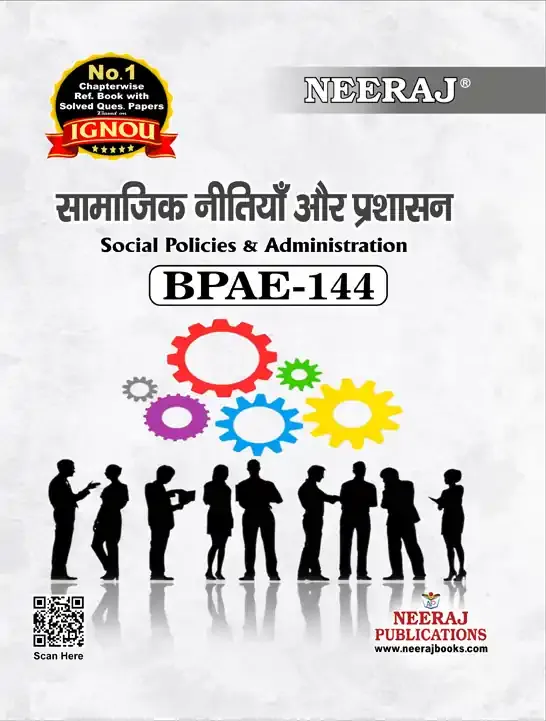
IGNOU BOOK | Social Policies and Administration[Hindi medium] BPAE-144
.BPAE-144: Social Policies and Administrationसामाजिक नीतियाँ एवं प्रशासन — हिंदी माध्यम1. सामाजिक नीति का अर्थसामाजिक नीति (Social Policy) से आशय उन सिद्धांतों, योजनाओं, नियमों और कार्यक्रमों से है जिन्हें सरकार तथा अन्य संस्थाएँ समाज के लोगों के कल्याण, समानता, सामाजिक सुरक्षा और विकास के लिए बनाती हैं।सामाजिक नीति का मुख्य उद्देश्य समाज की समस्याओं को कम करना और विशेष रूप से गरीब, कमजोर तथा वंचित वर्गों के जीवन स्तर में सुधार करना है।2. सामाजिक नीति के प्रमुख उद्देश्यसामाजिक और आर्थिक असमानता को कम करना।गरीब और कमजोर वर्गों का कल्याण करना।शिक्षा और स्वास्थ्य की सुविधाएँ उपलब्ध कराना।रोजगार और सामाजिक सुरक्षा को बढ़ावा देना।महिलाओं, बच्चों, वृद्धों और दिव्यांग व्यक्तियों की सुरक्षा करना।समाज में समान अवसर और सामाजिक न्याय स्थापित करना।लोगों के जीवन स्तर में सुधार करना।3. सामाजिक प्रशासन का अर्थसामाजिक प्रशासन (Social Administration) सामाजिक नीतियों और कल्याणकारी कार्यक्रमों को व्यवहार में लागू करने की प्रक्रिया है।सरल शब्दों में:सामाजिक नीति बताती है कि क्या करना है, जबकि सामाजिक प्रशासन यह सुनिश्चित करता है कि उसे कैसे लागू किया जाए।सामाजिक प्रशासन में योजना बनाना, संसाधनों का प्रबंधन, संस्थाओं का संचालन, कर्मचारियों की व्यवस्था और योजनाओं की निगरानी आदि शामिल होते हैं।4. सामाजिक प्रशासन की विशेषताएँजनकल्याण पर आधारित – इसका प्रमुख उद्देश्य लोगों का कल्याण है।सामाजिक न्याय – समाज के विभिन्न वर्गों के बीच न्याय और समान अवसर को बढ़ावा देता है।कमजोर वर्गों पर ध्यान – जरूरतमंद और वंचित लोगों तक सेवाएँ पहुँचाने पर जोर देता है।सरकार की महत्वपूर्ण भूमिका – सरकार नीतियाँ बनाती और अनेक कार्यक्रमों को लागू करती है।जनभागीदारी – गैर-सरकारी संगठनों और समुदाय की भागीदारी भी महत्वपूर्ण होती है।संसाधनों का उपयोग – उपलब्ध धन, मानव संसाधन और संस्थागत संसाधनों का प्रभावी उपयोग किया जाता है।5. सामाजिक नीति और सामाजिक प्रशासन में अंतरसामाजिक नीतिसामाजिक प्रशासननीतियों और उद्देश्यों का निर्धारण करती है।निर्धारित नीतियों को लागू करता है।यह बताती है कि क्या करना है।यह बताता है कि कैसे करना है।इसमें लक्ष्य और सिद्धांत महत्वपूर्ण हैं।इसमें कार्यान्वयन और प्रबंधन महत्वपूर्ण हैं।नीति निर्माण पर अधिक जोर होता है।कार्यक्रमों के संचालन पर अधिक जोर होता है।6. भारत में सामाजिक नीति के प्रमुख क्षेत्रभारत में सामाजिक नीतियाँ अनेक क्षेत्रों से संबंधित हैं, जैसे—शिक्षास्वास्थ्यगरीबी उन्मूलनरोजगारमहिला एवं बाल कल्याणवृद्धजन कल्याणदिव्यांगजन कल्याणसामाजिक सुरक्षाअनुसूचित जाति, अनुसूचित जनजाति और अन्य वंचित वर्गों का कल्याण7. सामाजिक नीति एवं प्रशासन का महत्वसामाजिक नीति और प्रशासन लोकतांत्रिक कल्याणकारी राज्य के महत्वपूर्ण आधार हैं। इनके माध्यम से सरकार समाज की आवश्यकताओं की पहचान करती है, योजनाएँ बनाती है और उन्हें लोगों तक पहुँचाती है। इससे सामाजिक न्याय, समान अवसर, मानव विकास और सामाजिक सुरक्षा को बढ़ावा मिलता है।निष्कर्षसामाजिक नीति समाज के कल्याण के लिए दिशा और लक्ष्य निर्धारित करती है, जबकि सामाजिक प्रशासन उन लक्ष्यों को योजनाओं एवं कार्यक्रमों के माध्यम से लागू करता है। दोनों एक-दूसरे के पूरक हैं और समावेशी तथा कल्याणकारी समाज के निर्माण में महत्वपूर्ण भूमिका निभाते हैं।
IGNOU BOOK | Social Policies and Administration[BPAC-144] ENGLISH MEDIUM
BPAC-144: Social Policies and Administration — DescriptionSocial Policies and Administration is a subject that studies how governments and other institutions formulate and implement policies to improve the social and economic well-being of people.It mainly focuses on social welfare, social justice, equality, poverty reduction, education, health, employment, housing, and protection of vulnerable groups.Major areas coveredMeaning of Social PolicyConcept, nature and scope of social policyObjectives of social policyRelationship between social policy and social developmentSocial Welfare and Social AdministrationMeaning and importance of social welfarePrinciples of social administrationRole of government and voluntary organisationsPolicy FormulationIdentification of social problemsFormulation of policies and programmesRole of different stakeholders in policymakingImplementation of Social PoliciesAdministrative machineryPlanning and coordinationMonitoring and evaluation of programmesMajor Social IssuesPoverty and unemploymentInequality and social exclusionProblems of children, women, older persons and persons with disabilitiesSocial SecuritySocial assistanceSocial insuranceWelfare and development programmesRole of the StateGovernment's responsibility towards social welfareConstitutional and institutional mechanismsCentre–State and local-level administration
IGNOU BOOK | Right of Information [BPAE-141] Hindi medium
Right to Information (RTI) — BPAE-141हिंदी माध्यम में सरल वर्णनसूचना का अधिकार (Right to Information—RTI) भारत के नागरिकों को सरकारी संस्थाओं से सूचना प्राप्त करने का कानूनी अधिकार देता है। इसका मुख्य उद्देश्य पारदर्शिता, जवाबदेही और भ्रष्टाचार में कमी लाना है।1. सूचना का अधिकार क्या है?सूचना का अधिकार अधिनियम, 2005 के तहत कोई भी भारतीय नागरिक सार्वजनिक प्राधिकरण के पास उपलब्ध या उसके नियंत्रण में मौजूद सूचना मांग सकता है। इसमें सरकारी रिकॉर्ड, दस्तावेज, आदेश, रिपोर्ट, प्रमाणित प्रतियां आदि शामिल हो सकते हैं।2. RTI के प्रमुख उद्देश्यसरकारी कार्यों में पारदर्शिता बढ़ाना।प्रशासन को जवाबदेह बनाना।भ्रष्टाचार पर नियंत्रण में सहायता करना।नागरिकों की शासन में भागीदारी बढ़ाना।सरकारी कार्यप्रणाली के बारे में नागरिकों को जानकारी उपलब्ध कराना।3. कौन RTI मांग सकता है?कोई भी भारतीय नागरिक RTI के माध्यम से सूचना मांग सकता है। सामान्यतः आवेदक को सूचना मांगने का कारण बताना आवश्यक नहीं होता।4. सूचना कैसे प्राप्त की जाती है?नागरिक संबंधित लोक सूचना अधिकारी (PIO) को आवेदन देकर सूचना मांग सकता है। आवेदन निर्धारित शुल्क के साथ किया जाता है। सूचना सामान्यतः 30 दिनों के भीतर दी जानी होती है। यदि मामला किसी व्यक्ति के जीवन या स्वतंत्रता से संबंधित हो, तो सूचना 48 घंटे के भीतर देने का प्रावधान है।5. कौन-सी सूचनाएँ नहीं दी जा सकतीं?RTI में कुछ सूचनाओं को सार्वजनिक करने से छूट दी गई है, जैसे:राष्ट्रीय सुरक्षा से संबंधित कुछ सूचनाएँ।ऐसी जानकारी जिससे किसी व्यक्ति की निजता का अनुचित हनन हो।कुछ व्यावसायिक/गोपनीय सूचनाएँ।ऐसी सूचनाएँ जिन्हें कानून के तहत प्रकट करने से छूट प्राप्त है।6. अपील की व्यवस्थायदि आवेदक को समय पर सूचना नहीं मिलती या वह दिए गए उत्तर से संतुष्ट नहीं है, तो वह प्रथम अपील कर सकता है। इसके बाद आवश्यकता होने पर केंद्रीय या राज्य सूचना आयोग में द्वितीय अपील की जा सकती है।निष्कर्षसूचना का अधिकार लोकतांत्रिक शासन का एक महत्वपूर्ण साधन है। यह नागरिकों को सरकार के कामकाज के बारे में जानकारी प्राप्त करने और प्रशासन से पारदर्शिता एवं जवाबदेही की मांग करने में सक्षम बनाता है।
IGNOU BOOK | Right to Information[BPAE-141] ENGLISH MEDIUM
Right to Information (RTI)The Right to Information (RTI) is a legal right given to citizens of India to obtain information from public authorities. It is provided under the Right to Information Act, 2005. The main purpose of RTI is to promote transparency, accountability, and good governance.1. Meaning of RTIRTI allows citizens to ask government departments and public authorities for information about their functioning, decisions, records, expenditure, rules, policies, etc.For example, a citizen can ask a government department how public money was spent on a particular project.2. Objectives of RTIThe major objectives are:To promote transparency in administration.To make government officials accountable.To help control corruption.To empower citizens.To improve the quality of governance.To increase public participation in administration.3. Who can use RTI?Any citizen of India can file an RTI application. The applicant generally does not have to give a reason for asking for the information.4. What information can be obtained?Citizens can seek information such as:Government records and documentsOrders and circularsReportsOfficial correspondenceDetails of government expenditureCertified copies of documentsInformation about government schemes and decisions5. Public Information Officer (PIO)Every public authority generally has a Public Information Officer (PIO) who receives RTI applications and provides the requested information according to the Act.Normally, information should be provided within 30 days. In matters concerning the life or liberty of a person, the law provides for a 48-hour time limit.6. ExemptionsSome information is exempt from disclosure under the RTI Act. These include certain information relating to:National security and sovereigntyConfidential informationCertain commercial interestsPersonal privacyInformation prohibited from disclosure by law7. AppealsIf a person does not receive information within the prescribed period or is dissatisfied with the response, they can file a First Appeal. A further appeal can be made to the Central Information Commission or State Information Commission, as applicable.8. Importance of RTIRTI has strengthened democracy by giving citizens a means to question public authorities and obtain information about government activities. It helps promote open government and administrative accountability.
IGNOU BOOK | Prashasinik Vicharak[BPAC-102] hindi medium
BPAC-102 क्या है?यह विषय लोक प्रशासन (Public Administration) के प्रमुख विचारकों और उनके प्रशासन संबंधी विचारों का अध्ययन करता है। इसमें बताया जाता है कि संगठन को कैसे चलाया जाए, कर्मचारियों को कैसे प्रेरित किया जाए, निर्णय कैसे लिए जाएँ और प्रशासन को प्रभावी कैसे बनाया जाए।प्रमुख प्रशासनिक विचारकएफ. डब्ल्यू. टेलर (F.W. Taylor)वैज्ञानिक प्रबंधन के जनक माने जाते हैं।कार्य को वैज्ञानिक तरीके से करने और उत्पादकता बढ़ाने पर जोर दिया।हेनरी फेयोल (Henri Fayol)प्रशासन के सिद्धांतों और प्रबंधन के कार्यों पर जोर दिया।योजना, संगठन, निर्देशन आदि को महत्वपूर्ण माना।मैक्स वेबर (Max Weber)नौकरशाही (Bureaucracy) का सिद्धांत दिया।नियम, पदानुक्रम, अधिकार और योग्यता आधारित प्रशासन पर जोर दिया।मैरी पार्कर फॉलेट (Mary Parker Follett)सहयोग, समन्वय और नेतृत्व को महत्वपूर्ण माना।संगठन में कर्मचारियों की भागीदारी पर बल दिया।एल्टन मेयो (Elton Mayo)मानवीय संबंध दृष्टिकोण (Human Relations Approach) पर जोर दिया।कर्मचारियों की सामाजिक और मनोवैज्ञानिक आवश्यकताओं को महत्व दिया।चेस्टर बर्नार्ड (Chester Barnard)संगठन को सहयोग की व्यवस्था के रूप में देखा।संचार और सहयोग को संगठन के लिए आवश्यक माना।हर्बर्ट साइमन (Herbert Simon)प्रशासन में निर्णय-निर्माण (Decision Making) को केंद्रीय विषय माना।सीमित तार्किकता (Bounded Rationality) की अवधारणा दी।अब्राहम मैस्लो (Abraham Maslow)आवश्यकताओं के पदानुक्रम का सिद्धांत दिया।बताया कि अलग-अलग आवश्यकताएँ व्यक्ति को प्रेरित करती हैं।डगलस मैकग्रेगर (Douglas McGregor)Theory X और Theory Y प्रस्तुत की।कर्मचारियों के प्रति प्रबंधक की सोच उनके प्रबंधन के तरीके को प्रभावित करती है।क्रिस आर्गिरिस (Chris Argyris)व्यक्ति और संगठन के संबंधों का अध्ययन किया।कर्मचारियों के विकास और संगठनात्मक वातावरण पर जोर दिया।
IGNOU BOOK | Perspectives on Public Administration[BPAC-131] English medium
BPAC-131 – Perspectives on Public AdministrationMeaning:BPAC-131 deals with the different perspectives or approaches used to understand Public Administration. It explains how administrative thought developed over time and how different scholars viewed organisations, employees, decision-making, development, and governance.Major PerspectivesClassical PerspectiveFocuses on organisational structure, rules, hierarchy, division of work and efficiency.Important thinkers include F.W. Taylor, Henri Fayol and Max Weber.Neo-Classical PerspectiveGives importance to the human side of administration.Focuses on employee behaviour, social relationships, motivation and informal groups.Behavioural PerspectiveStudies the actual behaviour of people within organisations.Herbert Simon gave major importance to decision-making and the concept of bounded rationality.Systems PerspectiveLooks at administration as a system connected with its environment.Changes in society, economy and politics can influence administration.Development AdministrationFocuses on the role of administration in achieving economic and social development.Particularly important for developing countries.New Public Administration (NPA)Emphasises social equity, justice, citizen needs and responsiveness.Argues that administration should address social problems, not focus only on efficiency.New Public Management (NPM)Introduces management techniques into the public sector.Emphasises performance, efficiency, accountability and results.Governance PerspectiveGoes beyond government alone.Recognises the role of government, private organisations, civil society and citizens in solving public problems.Emphasises cooperation, networks and participation.
IGNOU BOOK | Perspectives on Public Administration[BPAC-101] Hindi medium
(लोक प्रशासन के परिप्रेक्ष्य) — हिंदी माध्यमBPAC-101 में लोक प्रशासन की प्रकृति, विकास, विचारधाराओं और विभिन्न दृष्टिकोणों का अध्ययन किया जाता है। इसमें समझाया जाता है कि प्रशासन क्या है, इसका समाज और सरकार से क्या संबंध है और समय के साथ प्रशासन की सोच में कैसे बदलाव आया।प्रमुख विषय1. लोक प्रशासन का अर्थ और प्रकृतिलोक प्रशासन का अर्थ सरकारी नीतियों और कार्यक्रमों को लागू करना है।यह जनता को सेवाएँ प्रदान करने और सार्वजनिक समस्याओं के समाधान में महत्वपूर्ण भूमिका निभाता है।लोक प्रशासन का संबंध सरकार, नागरिक और समाज से होता है।2. शास्त्रीय दृष्टिकोण (Classical Perspective)संगठन की संरचना, नियम, पदानुक्रम और कार्य-विभाजन पर जोर।प्रशासन में दक्षता और अनुशासन को महत्वपूर्ण माना गया।प्रमुख विचारक: एफ. डब्ल्यू. टेलर, हेनरी फेयोल और मैक्स वेबर।3. नव-शास्त्रीय दृष्टिकोण (Neo-Classical Perspective)प्रशासन में मानवीय संबंधों और कर्मचारी व्यवहार को महत्व दिया गया।कर्मचारियों की सामाजिक और मनोवैज्ञानिक आवश्यकताओं पर ध्यान दिया गया।4. व्यवहारवादी दृष्टिकोण (Behavioural Perspective)प्रशासन में वास्तविक मानवीय व्यवहार का अध्ययन।निर्णय लेने की प्रक्रिया पर विशेष ध्यान।हर्बर्ट साइमन का महत्वपूर्ण योगदान।5. व्यवस्था दृष्टिकोण (Systems Perspective)प्रशासन को एक व्यवस्था (System) के रूप में देखा जाता है।प्रशासन और उसके राजनीतिक, सामाजिक तथा आर्थिक वातावरण के बीच संबंधों का अध्ययन किया जाता है।6. विकास प्रशासन (Development Administration)प्रशासन को आर्थिक और सामाजिक विकास का साधन माना जाता है।विकासशील देशों में प्रशासन की भूमिका पर विशेष ध्यान दिया जाता है।7. नवीन लोक प्रशासन (New Public Administration)सामाजिक समानता, न्याय, नागरिकों की आवश्यकताओं और उत्तरदायित्व पर जोर।प्रशासन को केवल दक्षता के आधार पर नहीं, बल्कि सामाजिक उद्देश्यों के आधार पर भी देखा जाता है।8. नवीन लोक प्रबंधन (New Public Management)सरकारी क्षेत्र में आधुनिक प्रबंधन तकनीकों के प्रयोग पर जोर।दक्षता, प्रदर्शन, परिणाम और जवाबदेही महत्वपूर्ण हैं।9. सुशासन/गवर्नेंस (Governance)प्रशासन में केवल सरकार ही नहीं, बल्कि निजी क्षेत्र, नागरिक समाज और नागरिकों की भागीदारी को भी महत्व दिया जाता है।सहयोग, पारदर्शिता, भागीदारी और जवाबदेही पर जोर दिया जाता है।
IGNOU BOOK | Perspectives on Public Administration[BPAC-101] English medium
BPAC-101: Perspectives on Public Administration is a course that explains the meaning, nature, evolution and different approaches to Public Administration. It helps us understand how administration works and how different thinkers and approaches have changed the study of administration over time.1. Meaning and Nature of Public AdministrationPublic Administration refers to the activities carried out by the government to implement public policies, provide services and manage public affairs.It deals with:Government organisationsPublic policiesPublic servicesAdministration of government programmesRelationship between government and citizens2. Classical PerspectiveThe Classical approach focuses mainly on organisation, structure, hierarchy, rules and efficiency.Important thinkers:F.W. Taylor – Scientific ManagementHenri Fayol – Principles of AdministrationMax Weber – Bureaucratic Model3. Neo-Classical PerspectiveThis approach gives importance to the human side of administration.It focuses on:Employee behaviourHuman relationsMotivationInformal groupsSocial needs of employees4. Behavioural PerspectiveThe Behavioural approach studies actual human behaviour and decision-making in organisations.Herbert Simon is an important contributor. He introduced the idea of bounded rationality, which explains that people cannot always make completely rational decisions because of limited information and time.5. Systems PerspectiveThe Systems approach considers administration as a system connected with its environment.For example, political, economic and social changes can influence the functioning of public administration.6. Development AdministrationDevelopment Administration focuses on the role of administration in achieving economic and social development.It is especially important for developing countries because government administration plays a major role in:Poverty reductionEducationHealthRural developmentEconomic development7. New Public Administration (NPA)New Public Administration developed with greater emphasis on social equity and public needs.Its important concerns include:Social justiceEqualityCitizen needsResponsivenessAccountability
IGNOU BOOK | Organisational Behaviour[BPAE-142] Hindi medium
BPAE-142: Organisational Behaviour (संगठनात्मक व्यवहार) में यह अध्ययन किया जाता है कि किसी संगठन में व्यक्ति और समूह किस प्रकार व्यवहार करते हैं, और उनके व्यवहार का संगठन के काम, उत्पादकता तथा लक्ष्यों पर क्या प्रभाव पड़ता है।1. संगठनात्मक व्यवहार का अर्थसंगठनात्मक व्यवहार का अर्थ है—संगठन में व्यक्तियों और समूहों के व्यवहार का व्यवस्थित अध्ययन।इसमें यह समझने का प्रयास किया जाता है कि:कर्मचारी कैसे काम करते हैं?वे एक-दूसरे के साथ कैसे व्यवहार करते हैं?उनकी प्रेरणा और संतुष्टि किन चीजों से प्रभावित होती है?संगठन में नेतृत्व और संचार कैसे काम करते हैं?2. संगठनात्मक व्यवहार की विशेषताएँयह मानवीय व्यवहार का अध्ययन करता है।व्यक्ति और समूह दोनों पर ध्यान देता है।संगठन के उद्देश्यों को प्राप्त करने में मदद करता है।इसमें मनोविज्ञान, समाजशास्त्र और प्रबंधन जैसे विषयों का योगदान होता है।3. व्यक्तिगत व्यवहार (Individual Behaviour)हर व्यक्ति का व्यवहार अलग होता है। इसे प्रभावित करने वाले प्रमुख तत्व हैं:व्यक्तित्वधारणा (Perception)सीखनादृष्टिकोण (Attitude)मूल्य (Values)भावनाएँ4. प्रेरणा (Motivation)प्रेरणा वह प्रक्रिया है जो व्यक्ति को काम करने और लक्ष्य प्राप्त करने के लिए प्रोत्साहित करती है।प्रमुख सिद्धांत:Maslow's Need Hierarchy TheoryHerzberg's Two-Factor TheoryMcGregor's Theory X and Theory Y5. समूह व्यवहार (Group Behaviour)संगठन में लोग अक्सर समूहों में काम करते हैं।इसमें अध्ययन किया जाता है:समूह निर्माणसमूह के नियमसमूह के भीतर संबंधटीमवर्कसमूह की एकता6. नेतृत्व (Leadership)नेतृत्व का अर्थ है लोगों को प्रभावित और मार्गदर्शन करके संगठन के लक्ष्यों की ओर ले जाना।नेतृत्व के विभिन्न प्रकारों और शैलियों का अध्ययन किया जाता है, जैसे:निरंकुश नेतृत्वलोकतांत्रिक नेतृत्वस्वतंत्र/उदार नेतृत्व
IGNOU BOOK | Perspectives on Public Administration[BPAC-131] Hindi medium
BPAC-131: Perspectives on Public Administration (लोक प्रशासन के परिप्रेक्ष्य) में लोक प्रशासन को समझने के लिए विकसित हुए विभिन्न दृष्टिकोणों (Perspectives/Approaches) का अध्ययन किया जाता है। यह विषय बताता है कि प्रशासन की अवधारणा समय के साथ कैसे विकसित हुई।1. लोक प्रशासन का अर्थलोक प्रशासन का अर्थ है सरकार द्वारा बनाई गई नीतियों और योजनाओं को लागू करना तथा जनता को आवश्यक सेवाएँ प्रदान करना।इसके प्रमुख कार्य हैं:सरकारी नीतियों का क्रियान्वयनजनसेवाकानून एवं व्यवस्था बनाए रखनाविकास कार्यक्रमों को लागू करनासार्वजनिक संसाधनों का प्रबंधन2. शास्त्रीय दृष्टिकोण (Classical Perspective)इस दृष्टिकोण में संगठन की संरचना, नियम, पदानुक्रम, कार्य-विभाजन और दक्षता पर जोर दिया जाता है।प्रमुख विचारक:एफ. डब्ल्यू. टेलर – वैज्ञानिक प्रबंधनहेनरी फेयोल – प्रशासन के सिद्धांतमैक्स वेबर – नौकरशाही का सिद्धांत3. नव-शास्त्रीय दृष्टिकोण (Neo-Classical Perspective)इस दृष्टिकोण ने प्रशासन में मानवीय तत्व को अधिक महत्व दिया।मुख्य बातें:कर्मचारी व्यवहारमानवीय संबंधप्रेरणाअनौपचारिक समूहकर्मचारी संतुष्टि4. व्यवहारवादी दृष्टिकोण (Behavioural Perspective)इसमें संगठन के अंदर व्यक्तियों के वास्तविक व्यवहार और निर्णय लेने की प्रक्रिया का अध्ययन किया जाता है।हर्बर्ट साइमन का महत्वपूर्ण योगदान रहा। उन्होंने सीमित तार्किकता (Bounded Rationality) की अवधारणा दी।5. व्यवस्था दृष्टिकोण (Systems Perspective)इस दृष्टिकोण में प्रशासन को एक व्यवस्था (System) के रूप में देखा जाता है।प्रशासन पर उसके वातावरण का प्रभाव पड़ता है, जैसे:राजनीतिक वातावरणसामाजिक परिस्थितियाँआर्थिक परिस्थितियाँतकनीकी परिवर्तन6. विकास प्रशासन (Development Administration)इसका संबंध आर्थिक और सामाजिक विकास में प्रशासन की भूमिका से है।विशेष रूप से विकासशील देशों में प्रशासन:गरीबी कम करनेशिक्षा और स्वास्थ्य बढ़ानेग्रामीण विकासरोजगारआर्थिक विकासजैसे कार्यों में महत्वपूर्ण भूमिका निभाता है।
IGNOU BOOK | Logistic Management[BPAS-184] Hindi medium
BPAS-184: Logistics Management (लॉजिस्टिक्स प्रबंधन/रसद प्रबंधन) में वस्तुओं, सेवाओं और संबंधित सूचनाओं के सही स्थान, सही समय और उचित लागत पर प्रवाह का अध्ययन किया जाता है। इसका मुख्य उद्देश्य आपूर्ति और वितरण की प्रक्रिया को प्रभावी बनाना है।1. लॉजिस्टिक्स प्रबंधन का अर्थलॉजिस्टिक्स का अर्थ है वस्तुओं की खरीद/प्राप्ति से लेकर उनके भंडारण और अंतिम उपयोगकर्ता तक पहुँचने तक की पूरी प्रक्रिया का प्रबंधन।सरल उदाहरण:उत्पादक → गोदाम → परिवहन → वितरक → दुकान → ग्राहकइस पूरी प्रक्रिया को व्यवस्थित करना लॉजिस्टिक्स प्रबंधन का हिस्सा है।2. लॉजिस्टिक्स प्रबंधन के मुख्य उद्देश्यसही वस्तु को सही स्थान तक पहुँचानासही समय पर डिलीवरी करनापरिवहन और भंडारण की लागत कम करनाग्राहकों को बेहतर सेवा देनावस्तुओं की उपलब्धता बनाए रखनासंसाधनों का उचित उपयोग करना3. परिवहन प्रबंधन (Transportation Management)वस्तुओं को एक स्थान से दूसरे स्थान तक पहुँचाने की व्यवस्था को परिवहन प्रबंधन कहते हैं।परिवहन के प्रमुख साधन:सड़क परिवहनरेल परिवहनजल परिवहनवायु परिवहनपाइपलाइनपरिवहन का चुनाव लागत, दूरी, समय और वस्तु की प्रकृति के आधार पर किया जाता है।4. भंडारण (Warehousing)वस्तुओं को सुरक्षित रूप से रखने की व्यवस्था को भंडारण कहते हैं।गोदाम के प्रमुख कार्य:वस्तुओं को सुरक्षित रखनामाल को व्यवस्थित करनाआवश्यकता के अनुसार माल उपलब्ध करानामाल की प्राप्ति और प्रेषण5. इन्वेंटरी प्रबंधन (Inventory Management)Inventory का अर्थ है संगठन के पास उपलब्ध कच्चा माल, तैयार माल और अन्य आवश्यक वस्तुओं का स्टॉक।इन्वेंटरी प्रबंधन का उद्देश्य यह सुनिश्चित करना है कि:बहुत अधिक स्टॉक न होबहुत कम स्टॉक भी न होउत्पादन और बिक्री में बाधा न आए6. सामग्री प्रबंधन (Materials Management)कच्चे माल और अन्य आवश्यक सामग्री की खरीद, भंडारण, नियंत्रण और उपयोग का प्रबंधन सामग्री प्रबंधन कहलाता है।7. खरीद प्रबंधन (Purchasing Management)संगठन के लिए आवश्यक वस्तुओं और सेवाओं को उचित गुणवत्ता, मात्रा, समय और लागत पर प्राप्त करना खरीद प्रबंधन का प्रमुख कार्य है।8. वितरण प्रबंधन (Distribution Management)तैयार उत्पादों को उत्पादक से अंतिम ग्राहक तक पहुँचाने की प्रक्रिया वितरण प्रबंधन कहलाती है।इसमें शामिल हैं:ऑर्डर प्राप्त करनापैकेजिंगपरिवहनभंडारणडिलीवरी
IGNOU BOOK | Logistics Management[BPAS-184] English medium
BPAS-184: Logistics Management deals with the planning, movement, storage and control of goods, services and information from the point of origin to the final customer. Its main purpose is to ensure that the right product reaches the right place, at the right time, in the right condition and at an appropriate cost.1. Meaning of Logistics ManagementLogistics Management is the process of managing the flow of goods and related information from the supplier to the final consumer.A simple flow is:Supplier → Procurement → Transportation → Warehouse → Distribution → Customer2. Objectives of Logistics ManagementThe major objectives are:Timely delivery of goodsReduction of transportation and storage costsProper utilisation of resourcesMaintaining adequate stockImproving customer serviceEnsuring smooth flow of goods and information3. Transportation ManagementTransportation involves moving goods from one place to another.Major modes include:RoadwaysRailwaysAirwaysWaterwaysPipelinesThe choice of transportation depends on cost, distance, time, quantity and nature of goods.4. WarehousingWarehousing means storing goods safely until they are required.Main functions:Receiving goodsStoring goodsProtecting goodsMaintaining recordsDispatching goods when required5. Inventory ManagementInventory means the stock of materials, components, work-in-progress and finished goods held by an organisation.Inventory Management aims to maintain an appropriate level of stock so that:Excessive inventory is avoided.Shortages are prevented.Production and sales continue smoothly.Storage costs are controlled.6. Materials ManagementMaterials Management deals with the planning, purchasing, storage, handling and control of materials required by an organisation.Its purpose is to make materials available in the required quantity, quality and time.
IGNOU BOOK | Governance: Issues and Challenges[BPAG-172] Hindi medium
Governance: Issues and Challenges (शासन: मुद्दे एवं चुनौतियाँ)Governance (शासन) का अर्थ है—सरकार और प्रशासन द्वारा जनता की आवश्यकताओं को ध्यान में रखते हुए नीतियाँ बनाना, संसाधनों का उचित उपयोग करना और सार्वजनिक सेवाएँ प्रभावी ढंग से उपलब्ध कराना।शासन के प्रमुख मुद्देपारदर्शिता का अभावसरकारी कार्यों और निर्णयों की जानकारी जनता तक पर्याप्त रूप से न पहुँचने पर विश्वास की कमी होती है।भ्रष्टाचाररिश्वत, पक्षपात और सरकारी संसाधनों के गलत उपयोग से शासन की प्रभावशीलता प्रभावित होती है।जवाबदेही की कमीअधिकारियों और संस्थाओं को अपने निर्णयों और कार्यों के लिए उत्तरदायी बनाना एक महत्वपूर्ण मुद्दा है।जनभागीदारी का अभावशासन में नागरिकों की सक्रिय भागीदारी न होने से नीतियाँ कई बार वास्तविक आवश्यकताओं से दूर हो सकती हैं।सार्वजनिक सेवाओं की असमान उपलब्धताशिक्षा, स्वास्थ्य, रोजगार, पानी और अन्य सेवाओं तक सभी लोगों की समान पहुँच सुनिश्चित करना चुनौतीपूर्ण है।शासन की प्रमुख चुनौतियाँबढ़ती जनसंख्या और विविधता को ध्यान में रखते हुए प्रभावी प्रशासन करना।गरीबी और बेरोजगारी जैसी सामाजिक-आर्थिक समस्याओं का समाधान करना।डिजिटल शासन को बढ़ावा देते हुए डिजिटल विभाजन को कम करना।कानून का प्रभावी पालन और नागरिकों के अधिकारों की रक्षा करना।नीतियों का सही क्रियान्वयन सुनिश्चित करना।आपदा और संकट प्रबंधन को मजबूत बनाना।पर्यावरण संरक्षण और सतत विकास के बीच संतुलन बनाना।निष्कर्षअच्छे शासन के लिए पारदर्शिता, जवाबदेही, जनभागीदारी, कानून का शासन और प्रभावी सेवा-प्रदान आवश्यक हैं। आधुनिक शासन की सफलता इस बात पर निर्भर करती है कि सरकार नागरिकों की आवश्यकताओं के प्रति कितनी संवेदनशील और उत्तरदायी है।
IGNOU BOOK | Governance: Issues and Challenges[BPAG-172] English medium
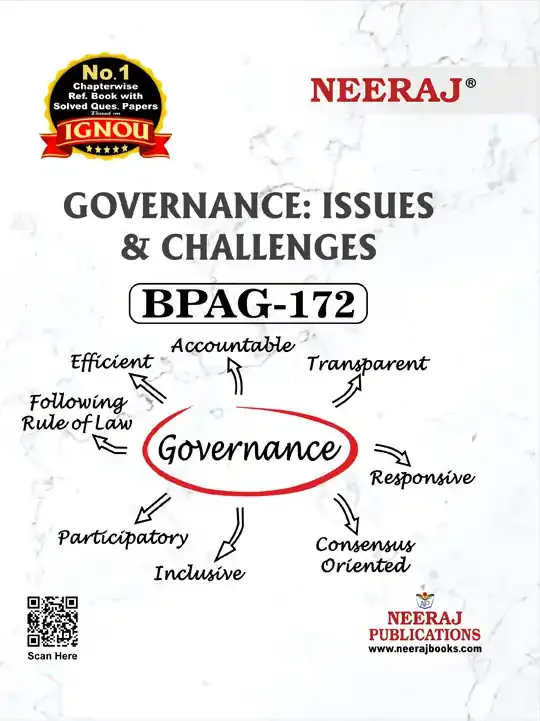
Governance: Issues and ChallengesGovernance refers to the process through which government institutions, public officials, civil society and other stakeholders make and implement decisions for the welfare and development of society. Good governance aims to make administration transparent, accountable, responsive, effective and participatory.Governance faces several important issues and challenges. Transparency is essential because citizens need access to information about government decisions, policies and the use of public resources. Lack of transparency can reduce public trust. Accountability is another major requirement. Public officials and institutions must be responsible for their actions and decisions.Corruption is a major challenge to good governance. It can lead to misuse of public resources, unequal access to services and reduced administrative efficiency. Citizen participation is also important because democratic governance requires people to participate in decision-making and public affairs. The rule of law ensures that laws are applied fairly and equally to all citizens.Governments also face challenges such as poverty, unemployment, inequality, rapid urbanisation, population growth and environmental degradation. Providing quality public services such as education, healthcare, sanitation, water and social security to all sections of society remains a major task.The growth of e-governance has improved access to many government services and increased administrative efficiency. However, challenges such as the digital divide, privacy and cybersecurity must also be addressed.In conclusion, effective governance requires transparency, accountability, participation, rule of law and administrative efficiency. Strengthening institutions and ensuring inclusive public participation are essential for achieving good governance and sustainable development.