Engineering and Technical Exams
Browse our collection of engineering and technical exams textbooks, solutions, and premium test series.
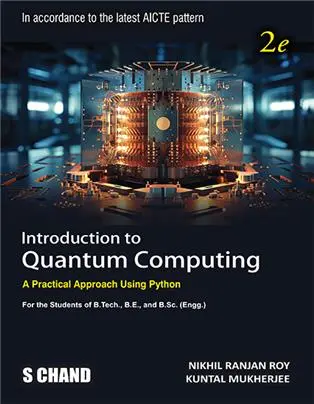
Introduction to Quantum Computing: A Practical Approach Using Python 2/e
Introduction to Quantum Computing: A Practical Approach Using Python 2/e, in its second edition, has been carefully developed into a comprehensive, application-oriented resource for understanding quantum information systems. Designed in alignment with the guidelines of the AICTE (All India Council for Technical Education) and the National Quantum Mission (NQM), the book addresses the evolving academic and technological needs of engineering students, particularly those in computer science and allied disciplines across India.The text offers a systematic progression from the fundamental principles of quantum mechanics—including superposition, interference, entanglement, wave-particle duality, the uncertainty principle, the Schrödinger equation and the Dirac formalism—to the core concepts of quantum computation. Mathematical prerequisites such as operator theory, matrix mechanics, probability amplitudes, and quantum dynamics are presented clearly to build a strong conceptual foundation.Bridging physics and computation, the book introduces key elements of the quantum computing paradigm, including qubits, Bloch sphere representation, tensor products, density matrices and computational basis states. It further develops readers' understanding through detailed discussions on quantum circuits, quantum gates and quantum logic design, supported by intuitive explanations and practical illustrations.A distinctive feature of this book is its hands-on, practice-driven approach. Readers gain exposure to leading quantum computing platforms such as IBM Qiskit, Google Cirq and PyQuil, as well as Python-based implementations of key quantum algorithms. This practical orientation ensures that learners can translate theoretical concepts into real-world applications.The book also explores emerging and interdisciplinary applications of quantum computing, including quantum cryptography, quantum machine learning, optimisation, environmental and biological systems, drug discovery and financial decision-making. Carefully curated case studies reinforce conceptual understanding and illustrate the transformative potential of quantum technologies.
Introduction to Programming
The book Introduction to Programming is designed for the common course of all students of Engineering branches across Andhra Pradesh/India. The book is written with the singular objective of providing the students with a distinct source material as per the syllabus. This textbook is organized into eight chapters each of which cover a different aspect of programming, and it includes a mix of theory and practical material. Students will learn the basic concepts of programming, such as data types, control structures, functions, Pointers and arrays through this textbook. The book also helps how to use these concepts to write programs that solve real-world problems. The book will also develop your logical thinking and problem-solving skills. Programming is a great way to exercise your mind and learn how to think creatively. It has all the features essential to arouse interest and involve students in the subject.Concepts explained in lucid manner and logically arranged material.The book helps understand basics of computers, the concept of algorithm and algorithmic thinking. Implement various algorithms using the C programming language.Develop problem-solving skills and the ability to debug and optimize the code.
Hands on Data Analysis with Python Book: A User Manager Perspective for Managers, Decision-makers and Data Users
This book is specially curated for managers, decisions makers and data users. It explains, from the ground level, how Python can be used for data analysis and visualization through its powerful libraries—NumPy, Pandas, Matplotlib, Seaborn and yfinance. These libraries provide ready-made functions that help us analyse data and create meaningful visualizations without requiring prior knowledge of programming. Learning by Doing. The examples in this book use practical datasets resembling real-world situations from different domains. Each function is explained along with its code and the corresponding output, so that you can run the code, observe the results, and learn through hands-on practice. The functions, tools, and techniques explained here are not limited to the datasets used in the book; they can be applied to other datasets and real-world situations.✓ Creating and loading DataFrames✓ Exploring, selecting, filtering, and sorting data✓ Performing calculations and applying functions✓ Grouping and summarizing data✓ Handling missing values✓ Creating meaningful visualizations✓ Working with time-series data
Fundamentals of Data Sciences for the Students of B.Tech., B.E., and B.Sc. (Engg.)
This textbook has been designed to provide undergraduate B.Tech., B.E., B.Sc. (Engineering) and related students with a strong conceptual and practical foundation in this rapidly evolving area. This book builds a strong conceptual foundation while maintaining a clear practical orientation. The text systematically introduces learners to the complete data science lifecycle—starting from data types, data collection and pre-processing and progressing through exploratory data analysis, statistical reasoning, correlation and regression analysis, and data modeling. Special emphasis is placed on Python-based data handling, with detailed coverage of NumPy, Pandas and industry-relevant data visualization libraries such as Matplotlib, Seaborn, Plotly and Bokeh, enabling students to translate theory into practice. Statistical concepts are presented in a simplified yet rigorous manner, reducing mathematical complexity without compromising academic depth. Each chapter is structured logically, supported by real-world examples, tables, graphs and step-by-step explanations to enhance clarity and comprehension.
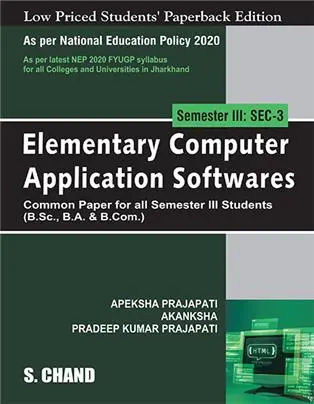
Elementary Computer Application Softwares Semester III: SEC-3 | B.Sc., B.A. & B.Com) - NEP 2020 Jharkhand
The textbook Elementary Computer Application Softwares has been specifically developed on the directives of National Education Policy (NEP 2020) and is as per latest curriculum of Skill Enhancement Course (Third Semester) for Ranchi University (FYUGP) and other Universities in Jharkhand. The book is a comprehensive guide to understand the fundamental concepts and applications of computer science and Microsoft office tools. The book covers important topics such as Basic Concepts of Computer, Concepts of Hardware, Processing Concept of Computer, Software, Operating Systems, Internet and Its Uses, Digital Education, Microsoft Word, Excel, Power Point, and Shortcut Keys etc. All the topics are well explained. This book isn't just about computers; it's a key to a future you shape with your curiosity and determination.Very lucid and logical presentation of concepts, for easy and quick understanding.Plethora of appropriate illustrations for better understanding of almost every topic is included. More than 450 practice exercise questions are included to help readers develop their skills and apply what they have learned.
Data Structures | Computer Science Textbook | Arrays, Linked Lists, Stacks, Queues, Trees & Graphs | Algorithms & Programming Concepts | Study & Exam Preparation
Data Structures is a useful computer science textbook for students learning how data is organized, stored, accessed, and processed in computer programs. It provides a foundation for understanding commonly used data structures and their applications in programming and algorithm development.The book covers important concepts associated with arrays, linked lists, stacks, queues, trees, graphs, searching, sorting, and algorithms. These topics help students develop an understanding of how different structures can be used to solve computational problems efficiently.Suitable for academic study and self-learning, this book can support students in building their fundamentals in computer science, programming, algorithms, and problem-solving.Key FeaturesCovers fundamental Data Structures conceptsIncludes arrays, linked lists, stacks, and queuesIntroduces trees and graphsCovers searching and sorting conceptsSupports understanding of algorithms and programmingUseful for computer science and IT studentsSuitable for study, revision, and exam preparationHelpful for strengthening programming fundamentalsIdeal ForThis book is suitable for students searching for Data Structures books, computer science textbooks, programming books, algorithms and data structures study material, data structure notes, and exam preparation books.Subject: Data StructuresCategory: Computer Science | Programming | AlgorithmsUse: Academic Study | Practice | Revision | Exam Preparation
Data Structures
The primary objective of this book is to introduce readers to the fundamental concepts of data structures and their practical applications in problem-solving. With a strong emphasis on understanding, the book provides comprehensive coverage of data structure fundamentals and principles of algorithm analysis. It guides readers in selecting or designing the most appropriate data structure to handle a variety of problems.The book covers essential topics, including fundamental linear data structures, searching and sorting techniques, linked lists, stacks, queues, deques, trees, graphs, and hashing. Each chapter begins with a theoretical description of the problem, followed by the underlying techniques, illustrated with examples and algorithms. Noteworthy features include clear explanations using diagrams, numerous solved examples within chapters, crucial technical and interview questions at chapter ends, comprehensive exercises, and objective-type questions to enhance analytical skills. These features are thoughtfully incorporated to spark interest and actively engage students in the subject matter."Data Structures" stands as a foundational course meticulously tailored for students in computer engineering and circuit branches. Acknowledging its importance, numerous universities and institutions have integrated it as an essential course for both undergraduate and graduate programs in computer and allied circuit branches. Mindful of the diverse approaches adopted by different institutions, the book has been purposefully crafted as a versatile "One Fit for All" resource. It serves as a common resource suitable for a broad spectrum of universities and institutions, aligning seamlessly with the model/common curriculum of AICTE/JNTU.
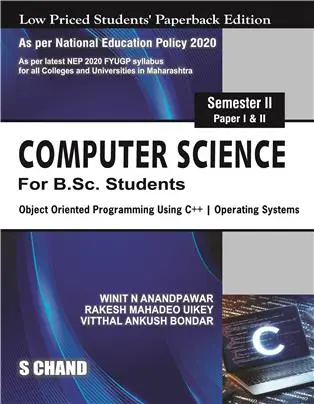
Computer Science for B.Sc. Students: Object Oriented Programming Using C++ | Operating Systems, (Paper I and II): Semester II - NEP Maharashtra
The book is a comprehensive and syllabus-oriented textbook designed for B.Sc. Second Semester students of Computer Science as per Common Minimum Syllabus prescribed for Universities and Colleges under the recommended National Education Policy 2020 in Maharashtra. The book offers a balanced and structured approach to two core areas of computer science—Object Oriented Programming using C++ and Operating Systems—which together form the foundation of modern software development and system-level understanding.The text introduces students to the principles of object-oriented thinking, enabling them to design robust, reusable and modular programs using C++. Concepts are developed progressively, supported by clear explanations, illustrative programs and diagrams that simplify complex ideas. The operating systems section provides an in-depth understanding of how modern systems manage processes, memory, files, and hardware resources, helping students appreciate the internal functioning of computer systems.Written in a clear, student-friendly language and aligned strictly with the prescribed syllabus, this book bridges the gap between theory and application. It is ideally suited for classroom learning, self-study, and examination preparation, making it a reliable companion for undergraduate computer science students.
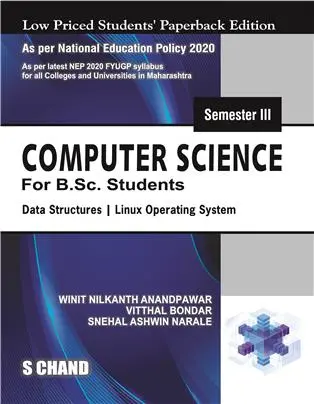
Computer Science for B.Sc. Students: Data Structures and Linux Operating System, Semester III - NEP Maharashtra
This textbook offers a comprehensive and structured approach to two foundational areas of computer science—Data Structures and the Linux Operating System. Designed for undergraduate students, the book strikes a balance between theoretical depth and practical clarity, making it an ideal resource for both academic study and hands-on application.In Part 1: Data Structures, readers explore essential topics, including Linked Lists, Stacks, Queues, Sorting & Searching, Trees and Graphs. Each concept is explained with clarity, supported by diagrams, algorithms and real-world examples to build strong problem-solving skills. Part 2: Linux Operating System introduces the architecture, commands, shell scripting, file systems and user management in Linux. It guides learners through practical tasks, such as hardware interfacing, backup and restore, process management and GUI environments like GNOME and KDE.Complete coverage of Data Structures and Linux OS fundamentalsStep-by-step explanations with diagrams and code snippetsHands-on approach with practical examples and system commandsCovers advanced topics like recursion, hashing, heap trees, and shell programmingSupports lab work and real-world Linux system administration tasks
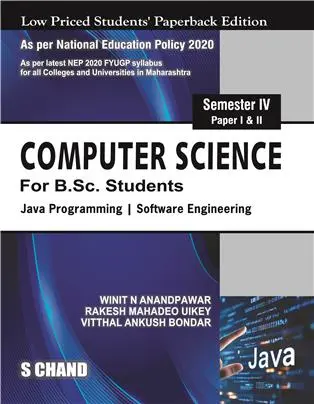
Computer Science for B.Sc. Students Semester IV | Java Programming & Software Engineering | Paper I & II | NEP Maharashtra | Undergraduate Computer Science Textbook
Computer Science for B.Sc. Students: Java Programming & Software Engineering is a subject-focused textbook designed for B.Sc. Semester IV students following the NEP Maharashtra curriculum. Covering Paper I and Paper II, the book provides academic support for studying Java programming and software engineering concepts in a structured manner.The Java Programming section introduces important programming concepts and helps students develop an understanding of Java-based programming and problem-solving. It can be used for learning fundamental concepts, practising programming approaches, and preparing for university examinations.The Software Engineering section focuses on key concepts related to software development and engineering practices. Students can use the material to build their understanding of software engineering principles and revise important topics covered in their course.Key FeaturesDesigned for B.Sc. Computer Science Semester IVBased on the NEP Maharashtra curriculumCovers Java ProgrammingIncludes Software EngineeringCovers Paper I & Paper IIUseful for concept building and academic studySupports exam preparation and revisionSuitable for B.Sc. undergraduate Computer Science studentsProvides subject-focused study material in one bookThis textbook is a useful academic resource for B.Sc. students studying Java Programming and Software Engineering in Semester IV. It can support classroom learning, self-study, revision, and university examination preparation.
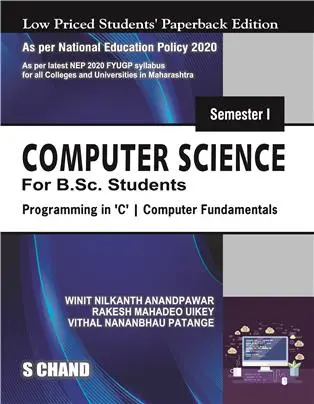
Computer Science for B. Sc. Students: Semester I: Programming in ‘C’ | Computer Fundamentals - NEP 2020 Maharashtra
This textbook offers a dual focus on Programming in ';C' and Computer Fundamentals, two foundational areas of computer science. With a structured and accessible approach, it builds a strong foundation in both coding and core computing concepts.Part 1: Programming in ';C' introduces readers to the logic and syntax of the ';C' programming language. It covers everything from basic programming structures and operators to advanced topics, such as pointers, file handling, and command-line arguments. Each concept is explained with clarity, supported by examples and practical applications. Part 2: Computer Fundamentals explores the architecture and components of digital computers, including input/output devices, memory, number systems, logic gates, binary arithmetic and networking. It provides a solid understanding of how computers work and communicate, essential for any aspiring IT professional.Comprehensive coverage of ';C' programming and computer fundamentalsStep-by-step explanations with examples and diagramsCovers advanced topics like recursion, file handling and command-line argumentsDetailed overview of hardware, software and networking conceptsIdeal for B.Sc. Computer Science, BCA and IT foundation coursesSupports practical learning with a focus on problem-solving and system understanding
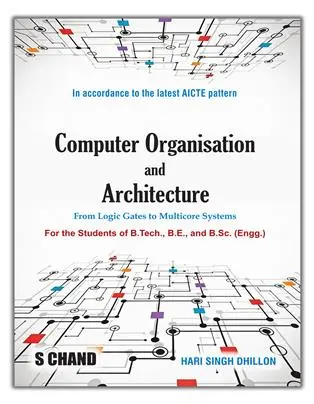
Computer Organisation and Architecture: From Logic Gates to Multicore Systems
Computer Organisation and Architecture: From Logic Gates to Multicore Systems is a comprehensive and systematically organised text that explains how modern computers are built, controlled and optimised. Beginning with the essential principles of digital logic, the book develops the conceptual foundation required to understand processors, memories, input-output systems and high-performance computer architectures. The opening chapters review truth tables, positive and negative logic, logic gates, encoders, decoders, multiplexers, demultiplexers, flip-flops, shift registers and counters. This is followed by a clear treatment of binary, octal and hexadecimal number systems, signed-number representation, fixed- and floating-point formats, character codes and the hardware implementation of binary arithmetic operations. The discussion then moves from individual building blocks to the functional organisation of a complete computer. The stored-program concept, CPU structure, memory, instruction sets, instruction formats and register-transfer-level interpretation are explained alongside detailed coverage of the 8085 and 8086 microprocessors, memory and I/O interfacing, addressing modes, assembly-language programming and modern instruction-set architectures. A dedicated treatment of control-unit design compares hardwired and microprogrammed approaches and connects them with RISC and CISC processor philosophies. The chapters on peripheral devices explain I/O subsystems, device interfaces, serial and parallel communication, programmed I/O, interrupt-driven transfer, DMA, privileged instructions, exceptions, process-state transitions and widely used interfaces such as SCSI and USB. Memory organisation is developed through memory technologies, hierarchy, interleaving, cache mapping, block-size considerations, replacement algorithms, write policies and virtual memory. The final chapter introduces performance metrics, instruction pipelining, pipeline hazards, parallel processor architectures, advanced parallel-processing technologies and the practical challenges of multicore systems. Numerous diagrams, worked illustrations, comparison tables, review questions and chapter-end self-assessment exercises strengthen understanding and support examination preparation. An extensive appendix broadens the coverage with Karnaugh maps, BCD adders, disk and SATA technologies, I/O processors, locality of reference, Moore's law, VLIW, superscalar and SMT processors, compiler techniques for instruction-level parallelism, and single-cycle and multi-cycle datapath design.
An Introduction to Computer Science
An Introduction to Computer Science invites readers into the fast-evolving and fascinating world of computing with clarity, depth and purpose. Designed as both a foundation and a roadmap, this book presents computer science as a unified discipline—bridging theory, practice and innovation in an engaging and accessible manner.The journey begins with the essential principles of computing, laying a solid groundwork in how computers function and the scientific ideas that drive them. From there, it carefully unfolds the field's intellectual backbone, introducing readers to core theoretical areas such as logic, graph theory, automata and computational complexity. These concepts develop analytical thinking and provide a deeper understanding of how problems are defined and solved in computing.Building on this foundation, the book transitions to practical topics, covering programming, data structures and algorithms—the fundamental tools for building efficient and scalable software systems. It further explores the architecture of computer systems, operating systems and computer networks, offering a comprehensive view of how modern computing environments operate and interact.Recognising the data-driven nature of today's digital world, the book also delves into databases, data mining and big data analytics, highlighting how information is managed, analysed and transformed into meaningful insights.A key strength of this text is its forward-looking perspective. It introduces readers to emerging and impactful areas, including software development, artificial intelligence, multimedia systems, human-computer interaction, soft computing and knowledge-based systems. These topics prepare learners to understand and engage with the technologies shaping the future.Written with clarity and learner accessibility in mind, the book includes self-assessment questions that reinforce key concepts and encourage critical thinking. Whether you are a newcomer exploring computer science or a student strengthening your academic foundation, this book offers a balanced blend of theoretical insight, practical knowledge and inspiration for further exploration.
AI-Driven Agreement Intelligence | A Practical Guide to AI-Powered Contract Analysis, Management & Legal Technology
Explore how Artificial Intelligence is transforming the way organizations understand, analyze, manage, and work with agreements.AI-Driven Agreement Intelligence provides an introduction to the growing field of AI-powered contract and agreement intelligence, exploring how modern technologies can help organizations extract information from agreements, identify important clauses, manage contractual data, and support more efficient workflows.As businesses increasingly handle large volumes of contracts and agreements, AI-driven tools are becoming an important part of legal operations, contract management, compliance, risk analysis, and business decision-making.Key FeaturesAI & Agreement Intelligence: Understand the role of Artificial Intelligence in analyzing contractual documents.Contract Analysis: Explore how AI can help identify clauses, obligations, dates, terms, and other important information.Legal Technology: Learn about the intersection of AI, contracts, and modern legal operations.Contract Management: Understand how technology can support more efficient agreement workflows.Risk & Compliance: Explore how agreement data can support contract monitoring and risk management.Business Applications: Discover potential applications across legal, procurement, finance, and business teams.Practical Perspective: Useful for readers interested in applying AI concepts to real-world agreement management.Topics ExploredThe book may be useful for understanding areas such as:Artificial Intelligence in contract managementAgreement and contract analysisDocument intelligenceContract data extractionClause and obligation identificationLegal operations technologyContract lifecycle managementCompliance and risk monitoringAI-enabled business workflowsThe future of legal technologyWho Is This Book For?Legal professionalsContract managersLegal operations teamsBusiness professionalsCompliance professionalsProcurement teamsTechnology and AI professionalsStudents and researchers interested in LegalTechOrganizations exploring AI-powered contract managementWhy Choose This Book?Agreements contain critical business information, but manually reviewing and managing large volumes of contracts can be time-consuming. AI-Driven Agreement Intelligence explores how AI and document intelligence can help organizations work with contractual information more efficiently.It is a useful resource for readers who want to understand the evolving relationship between Artificial Intelligence, contracts, LegalTech, compliance, and business operations.Explore the future of intelligent agreement management and discover how AI is reshaping the way organizations work with contracts.This book is intended for educational and informational purposes and should not be considered legal advice.
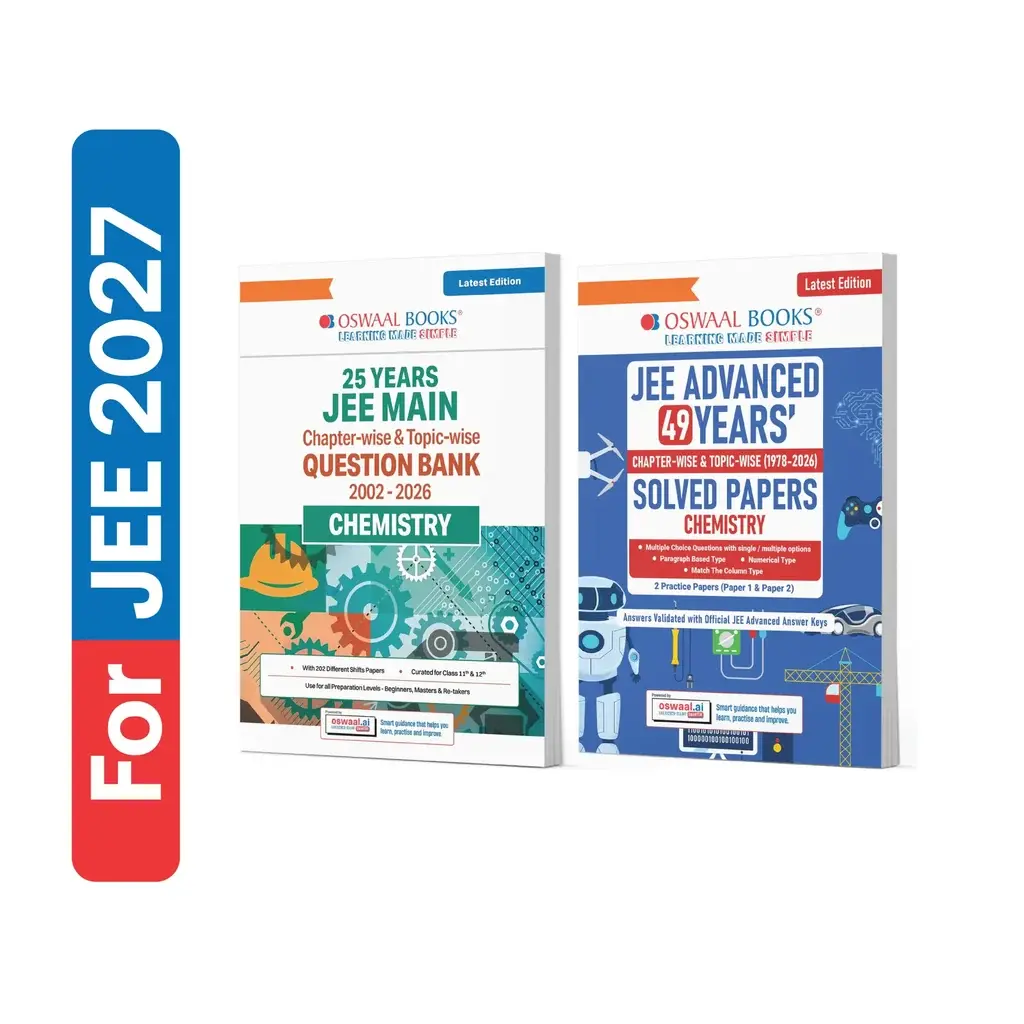
JEE Main 25 Years'(2002-2026) & Advanced 49 Years' (1978-2026) | Chapter-wise & Topic-wise Question Bank: Chemistry
The set provides extensive Chemistry previous-year-question practice from both examinations:JEE Main: 2002–2026 — 25 yearsJEE Advanced: 1978–2026 — 49 yearsChapter-wise and topic-wise organisationJEE Main January & April 2026 papers included and fully solvedJEE Advanced May 2026 Paper 1 & Paper 2 included and fully solved6,650+ JEE Main PYQs across PCM and 3,500+ JEE Advanced PYQs across PCM are covered by the complete six-book PCM collection; this Chemistry set is the dedicated Chemistry portion.The questions are presented in the relevant exam formats, including MCQs and Numerical Value Questions, with detailed solutions designed to help students understand the approach rather than simply check the answer. The set also includes revision-oriented features such as mind maps, mnemonics, expert tips and shortcuts.⭐ Key Features🧪 Subject: Chemistry📚 Set of 2 books📅 JEE Main: 2002–2026🎓 JEE Advanced: 1978–2026📖 Chapter-wise & Topic-wise questions✅ JEE Main January & April 2026 papers✅ JEE Advanced May 2026 Paper 1 & 2💡 Detailed, step-by-step solutions⚡ Smart shortcuts and expert tips🧠 Mind maps and mnemonics for revision🤖 Oswaal AI support, including personalised practice, instant answers, concept videos and smart quizzes🎯 Designed for JEE Main & JEE Advanced 2027 preparation.
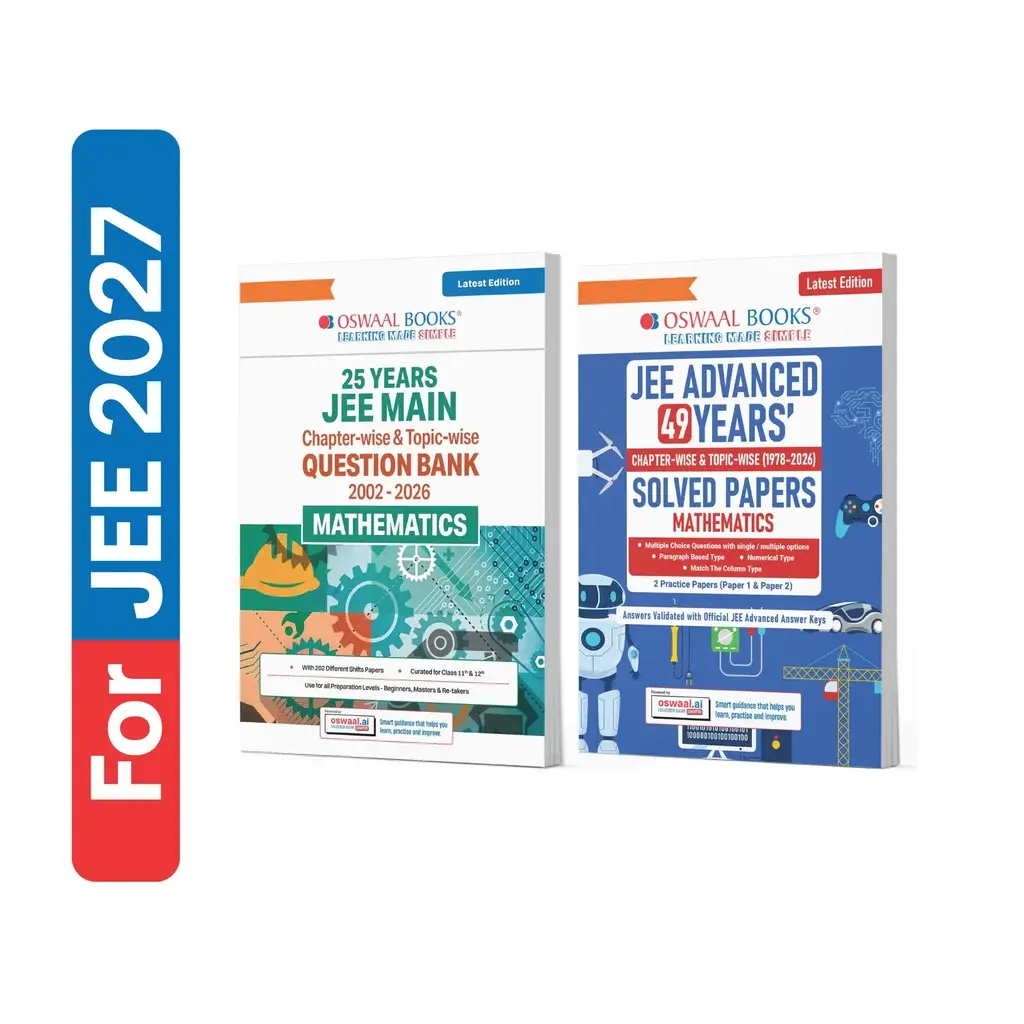
JEE Main 25 Years'(2002-2026) & Advanced 49 Years' (1978-2026) | Chapter-wise & Topic-wise Question Bank: Mathematics
The set combines extensive Mathematics previous-year-question practice from both examinations:JEE Main: 25 years, covering 2002–2026JEE Advanced: 49 years, covering 1978–2026Chapter-wise + topic-wise arrangementJEE Main 2026 January & April papers includedJEE Advanced 2026 May Paper 1 & Paper 2 includedDetailed, step-by-step solutionsMCQs and Numerical Value Questions in the respective exam formatsRevision support through mind maps, mnemonics, expert tips and shortcutsTrend-oriented preparation to identify important areas.The broader Oswaal Main + Advanced collection contains 6,650+ JEE Main PYQs across PCM and 3,500+ JEE Advanced PYQs across PCM; the Mathematics set is the dedicated Mathematics portion of that collection.⭐ Key Features📐 Subject: Mathematics📚 Set: 2 books📅 JEE Main: 2002–2026🎓 JEE Advanced: 1978–2026📝 49 years of Advanced PYQs📝 25 years of Main PYQs📖 Chapter-wise & topic-wise organisation✅ JEE Main January & April 2026 papers✅ JEE Advanced May 2026 Paper 1 & 2💡 Detailed solutions⚡ Smart shortcuts and expert tips🧠 Mind maps and mnemonics🤖 Oswaal AI learning support is part of the overall Main + Advanced collection.
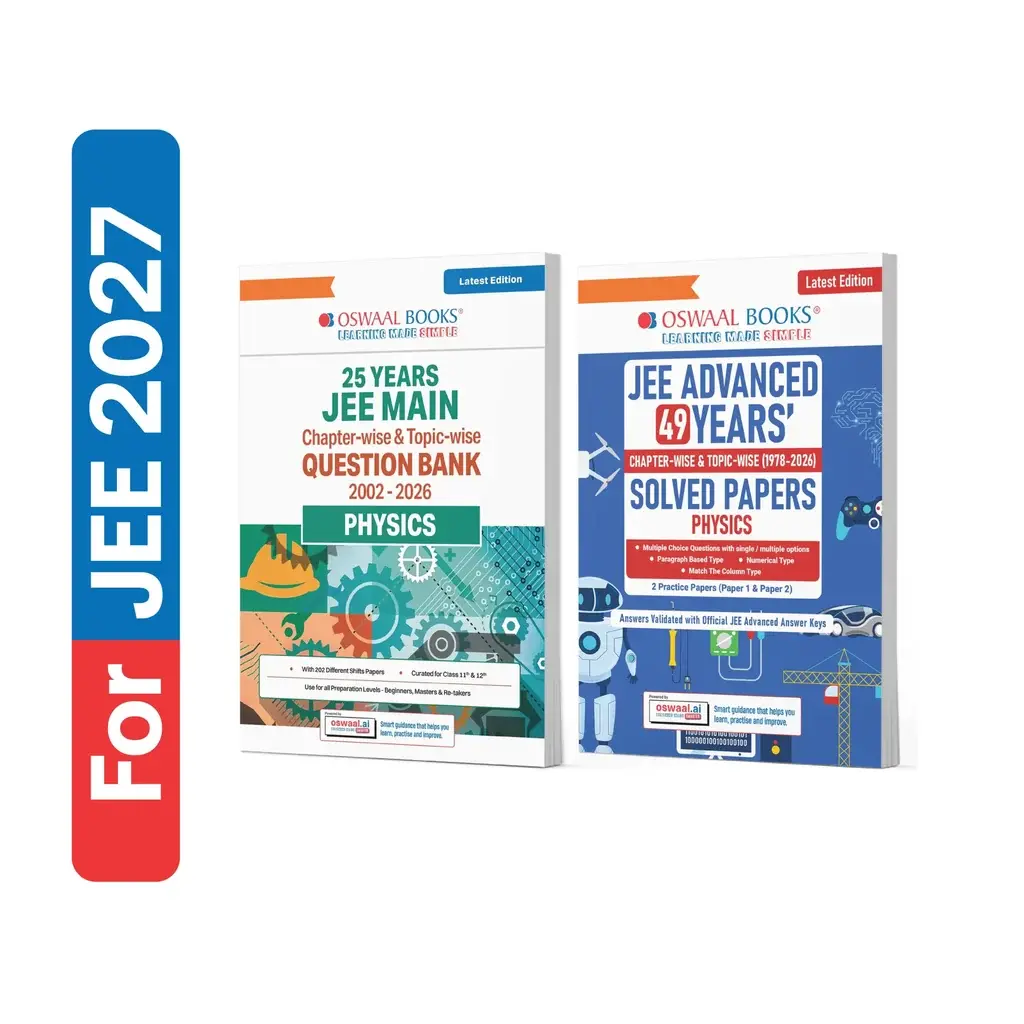
JEE Main 25 Years & JEE Advanced 49 Years Physics Question Bank | 2002–2026 & 1978–2026 | Chapter-Wise & Topic-Wise | PYQs & Exam Preparation
JEE Main 25 Years (2002–2026) & JEE Advanced 49 Years (1978–2026) Physics Question Bank is a comprehensive practice resource for students preparing for JEE Main and JEE Advanced Physics.The book brings together previous-year questions from the specified examination years and organizes them chapter-wise and topic-wise, making it easier for students to practice individual concepts and systematically revise Physics. Working through a wide range of previous-year questions can help students understand different question formats, identify recurring concepts, improve problem-solving skills, and assess their preparation.This book is suitable for students who want extensive Physics PYQ practice, chapter-wise revision, topic-wise problem solving, and exam-oriented preparation for engineering entrance examinations.Key FeaturesJEE Main: 25 years of questions (2002–2026)JEE Advanced: 49 years of questions (1978–2026)Focused on PhysicsQuestions arranged chapter-wise and topic-wiseUseful for extensive previous-year question practiceHelps identify important concepts and question patternsSupports systematic revision and self-assessmentSuitable for JEE Main and JEE Advanced preparationIdeal ForThis book is suitable for JEE Main and JEE Advanced aspirants looking for extensive Physics previous-year questions. It can be used for chapter-wise practice, topic-wise revision, problem-solving practice, and exam-oriented preparation.Book Title: JEE Main & JEE Advanced Physics Question BankJEE Main Coverage: 2002–2026 (25 Years)JEE Advanced Coverage: 1978–2026 (49 Years)Subject: PhysicsOrganization: Chapter-Wise & Topic-WiseCategory: JEE Main | JEE Advanced | Physics | Previous Year Questions | Question Bank
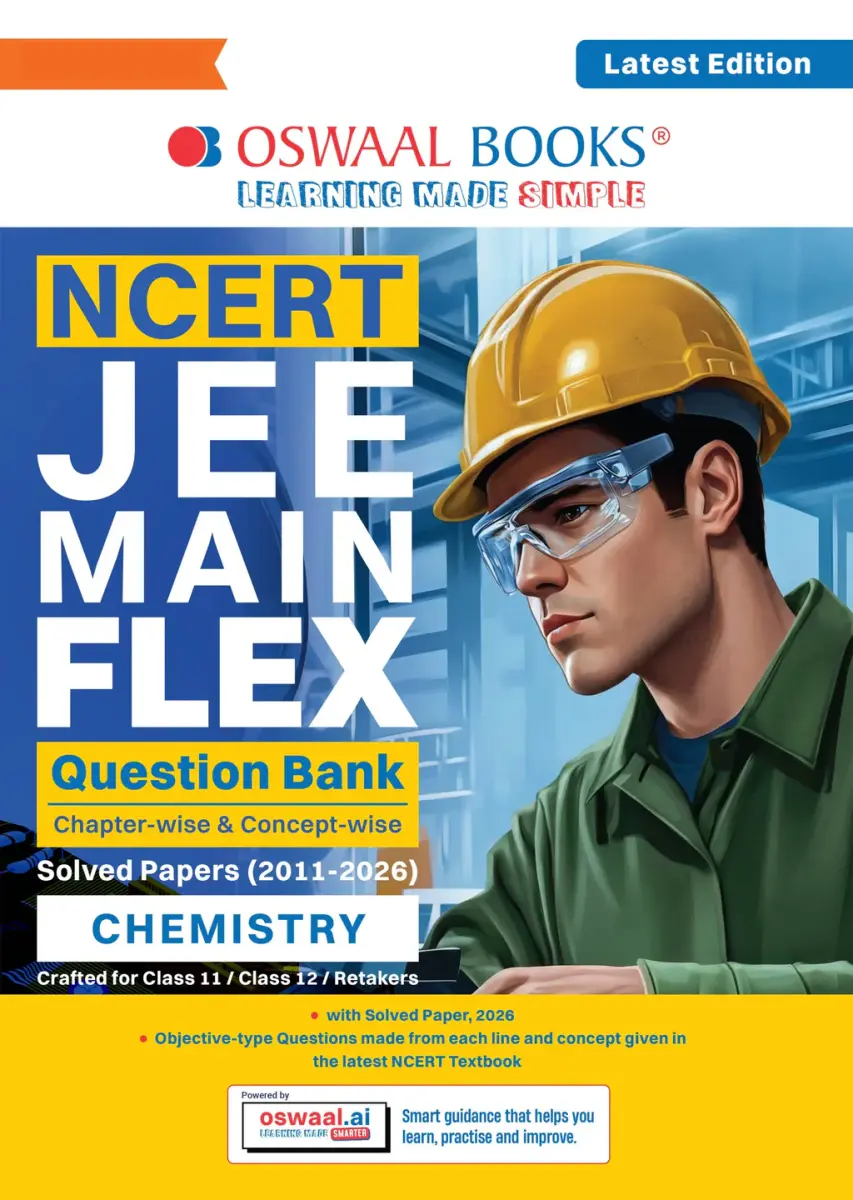
NCERT JEE (Main) FLEX | Chapter-wise & Topic-wise NCERT Objective Question Bank-Chemistry
The book is designed to connect NCERT Chemistry concepts with actual JEE Main questions. It contains objective questions based on concepts and content from the latest NCERT Textbook and NCERT Exemplar, along with previous-year JEE Main questions from the last 16 years.The chapter-wise and topic-wise organisation makes it useful for systematic preparation: study a topic from NCERT, then practise the corresponding objective questions and PYQs.It also provides detailed solutions, concept clarity, smart shortcuts, trend analysis, tips, mnemonics and mind maps. Questions are tagged with relevant NCERT Textbook/Exemplar page indicators, making it easier to trace the underlying NCERT concept.⭐ Key Features🧪 Subject: Chemistry📅 JEE Main PYQs: 2011–2026📝 1,300+ Chemistry questions📚 Chapter-wise & topic-wise practice📖 NCERT Textbook + NCERT Exemplar based🔖 NCERT page indicators for questions✅ January & April 2026 JEE Main papers fully solved💡 Detailed solutions⚡ Smart shortcuts and exam-oriented tricks🧠 Concept notes, mnemonics and mind maps📊 2020–2026 trend analysis🤖 Oswaal AI-powered learning support🎯 Designed for JEE Main 2027 aspirants