Study Materials & Books
Explore our complete catalog of toppers handwritten notes, curated textbooks, formulas, and competitive exam preparation resources.
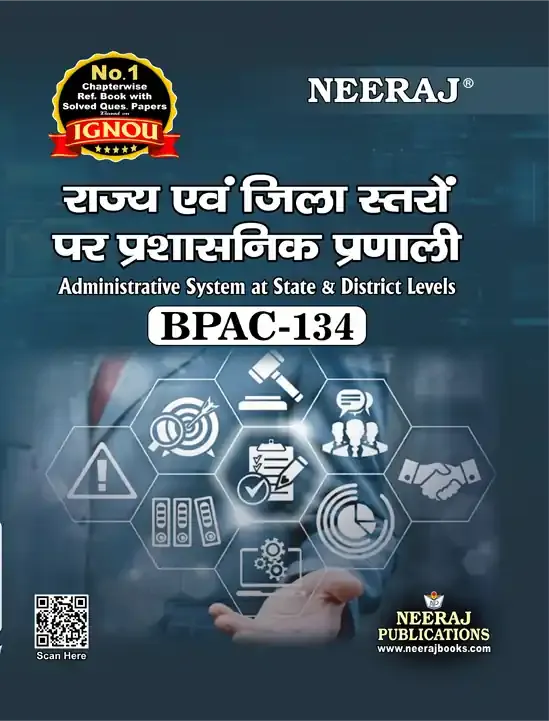
IGNOU BOOK | Administrative System at State and District Level [ Hindi medium] BPAC- 134
राज्य एवं जिला स्तर पर प्रशासनिक व्यवस्था — हिंदी माध्यमराज्य एवं जिला प्रशासन भारतीय लोक प्रशासन का अत्यंत महत्वपूर्ण भाग है। भारतीय संविधान में केंद्र और राज्यों के बीच शक्तियों का विभाजन किया गया है। राज्य सरकार अपने राज्य के प्रशासन को संचालित करती है और जिला प्रशासन राज्य की नीतियों एवं योजनाओं को स्थानीय स्तर पर लागू करने का प्रमुख माध्यम है।1. राज्य प्रशासन का अर्थराज्य प्रशासन से आशय राज्य सरकार द्वारा राज्य के विभिन्न क्षेत्रों—जैसे शिक्षा, स्वास्थ्य, कृषि, वित्त, कानून-व्यवस्था, ग्रामीण विकास और सामाजिक कल्याण—के प्रशासन से है।राज्य प्रशासन के दो प्रमुख पक्ष हैं:राजनीतिक कार्यपालिका — राज्यपाल, मुख्यमंत्री और मंत्रिपरिषद।स्थायी कार्यपालिका — मुख्य सचिव तथा विभिन्न विभागों के प्रशासनिक अधिकारी।2. राज्य प्रशासन की प्रमुख संस्थाएँ(क) राज्यपालराज्यपाल राज्य का संवैधानिक प्रमुख होता है। उसका प्रावधान भारतीय संविधान के अनुच्छेद 153 से आगे किया गया है। राज्यपाल की नियुक्ति राष्ट्रपति द्वारा की जाती है।प्रमुख कार्यमुख्यमंत्री की नियुक्ति करना।मुख्यमंत्री की सलाह पर मंत्रियों की नियुक्ति करना।विधानसभा को बुलाना और स्थगित करना तथा संवैधानिक प्रावधानों के अनुसार विधानसभा से संबंधित कार्य करना।विधेयकों पर संविधान के अनुसार निर्णय करना।राज्य की संवैधानिक स्थिति के संबंध में राष्ट्रपति को रिपोर्ट भेजना।राज्यपाल सामान्यतः मंत्रिपरिषद की सहायता और सलाह से कार्य करता है, जैसा कि संविधान में निर्धारित है।(ख) मुख्यमंत्रीमुख्यमंत्री राज्य सरकार का प्रमुख राजनीतिक कार्यकारी होता है। वह राज्य प्रशासन को दिशा देने में केंद्रीय भूमिका निभाता है।मुख्यमंत्री के प्रमुख कार्यमंत्रिपरिषद का नेतृत्व करना।मंत्रियों के बीच विभागों का आवंटन करना।राज्य की नीतियों एवं कार्यक्रमों को दिशा देना।राज्यपाल और मंत्रिपरिषद के बीच संपर्क बनाए रखना।प्रशासनिक विभागों के बीच समन्वय स्थापित करना।राज्य के विकास और जनकल्याण से संबंधित निर्णयों का नेतृत्व करना।
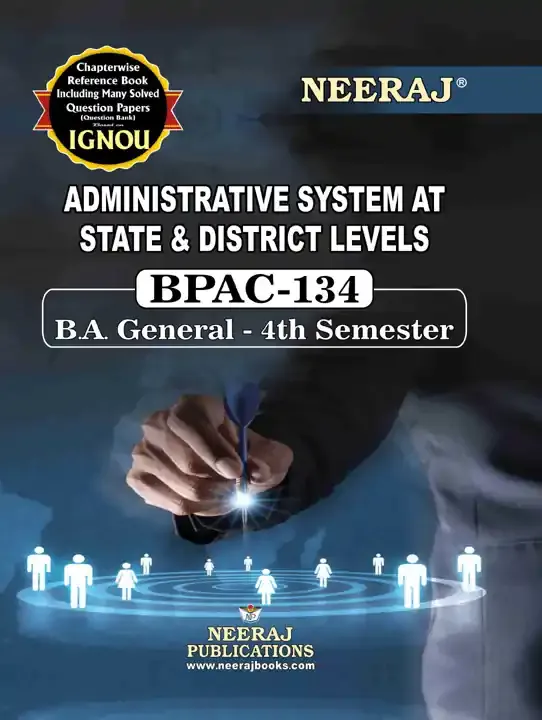
IGNOU BOOK | Administrative System at State and District Level [ BPAC-134]|English Medium
Administrative System at State and District Level – BPAC-134IntroductionThe State and District administrative system is an important part of Indian public administration. The State Government is responsible for administration within the state, while the district administration acts as an important link between the State Government and the people.The system can broadly be understood through two levels:State Level AdministrationDistrict Level AdministrationA. Administrative System at State LevelThe State administration is governed by the Constitution of India and is headed constitutionally by the Governor, while the elected government is led by the Chief Minister.1. GovernorThe Governor is the constitutional head of the state.Main functions:Appoints the Chief Minister.Appoints other ministers on the advice of the Chief Minister.Summons and prorogues the State Legislature.Gives assent to Bills passed by the State Legislature.Performs constitutional functions assigned under the Constitution.The Governor generally acts on the advice of the Council of Ministers headed by the Chief Minister, except in matters where the Constitution provides otherwise.2. Chief MinisterThe Chief Minister (CM) is the real executive head of the State Government.Main functions:Leads the Council of Ministers.Determines major state policies.Coordinates the work of different departments.Advises the Governor on important matters.Provides political leadership to the state administration.The Chief Minister plays a central role in the functioning of the State Government.3. Council of MinistersThe Council of Ministers assists and advises the Governor. It is headed by the Chief Minister.It consists of ministers responsible for different departments such as:HomeFinanceEducationHealthAgricultureTransport
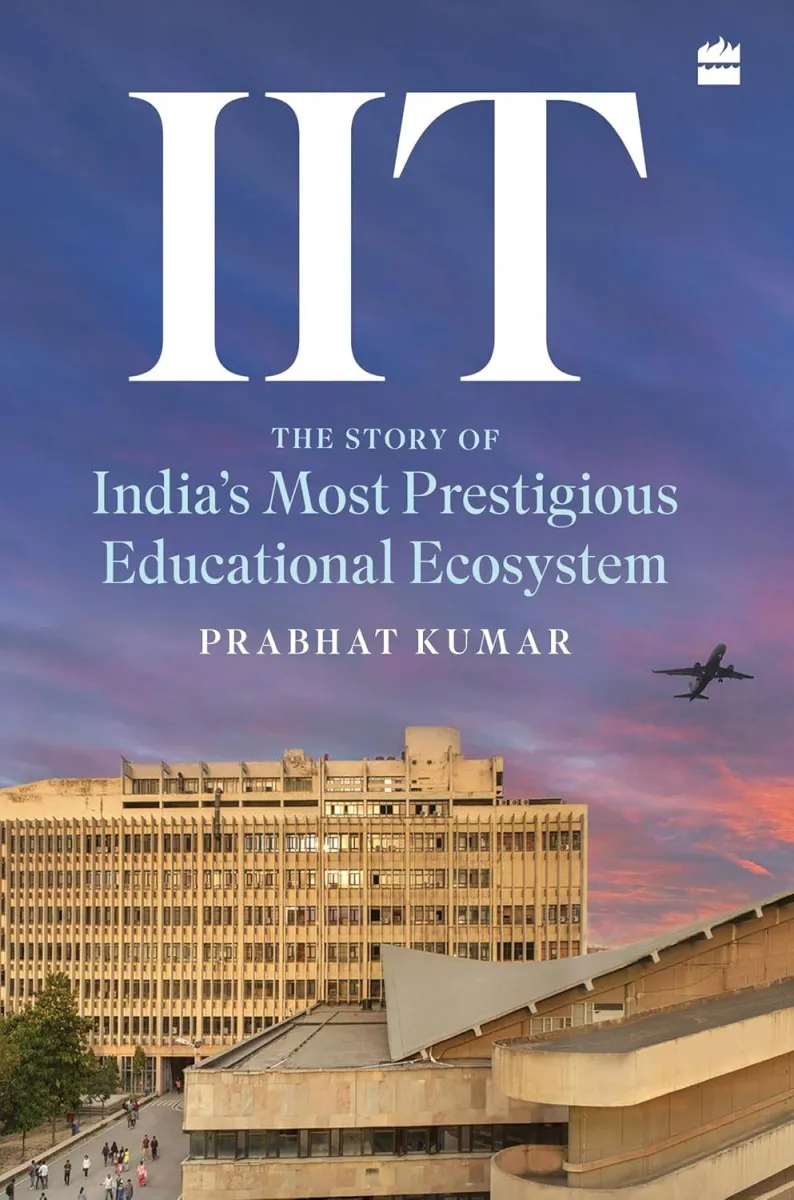
IIT: The Story of India’s Most Prestigious Educational Ecosystem | Indian Institutes of Technology | Education, Innovation & India’s Academic Journey
IIT: The Story of India’s Most Prestigious Educational Ecosystem explores the development and evolution of the Indian Institutes of Technology (IITs) and their role in India's educational and technological landscape.The book offers readers an opportunity to learn about the IIT ecosystem, its academic environment, institutional development, and broader contribution to education, innovation, engineering, and India's talent landscape. It is suitable for readers interested in the history and growth of India's leading technical education institutions.With its focus on the IIT ecosystem, the book can appeal to students, educators, aspirants, education enthusiasts, and readers interested in India's academic and institutional development. It can also make an informative addition to a collection focused on Indian education, technology, and higher learning.Key FeaturesFocuses on the IIT ecosystem in IndiaExplores the development of the Indian Institutes of TechnologyCovers themes related to education, engineering, and innovationProvides insight into India's technical education landscapeSuitable for students and education enthusiastsUseful for readers interested in India's academic institutionsRelevant to discussions around higher education and institutional developmentSuitable for personal reading and academic collectionsIdeal ForThis book is suitable for readers searching for IIT books, Indian Institutes of Technology, IIT history, Indian education books, higher education in India, engineering education books, Indian academic institutions, technology and education books, IIT ecosystem, and books about India's educational development.Book Title: IIT: The Story of India’s Most Prestigious Educational EcosystemSubject: IITs | Indian Education | Higher Education | Engineering | InnovationCategory: Indian Education | IITs | Technology | Higher Learning | Institutional HistoryDiscover the story and evolution of India's IIT ecosystem and its place in the country's educational and technological journey. Add this informative book to your collection and order your copy today.

Booktopus Baby Library – Baby’s First Books | Set of 10 Early Learning Picture Books | Baby Books for Kids 1+ Years | Toddler Learning & Reading Set
Booktopus Baby Library – Baby’s First Books is a set of 10 picture books designed for babies and young children aged 1+ years. This engaging collection introduces little learners to books through simple visuals, early concepts, and age-appropriate picture-based learning.The set is designed to make early reading enjoyable while helping children become familiar with pictures, words, everyday concepts, and basic learning themes. With 10 books in one collection, it offers variety for regular reading sessions and can encourage curiosity, observation, vocabulary development, and an early interest in books.This baby library is suitable for parents, caregivers, and family members looking for a thoughtful first-book collection for toddlers. The compact set also makes a useful gift choice for birthdays, baby showers, and other special occasions.Key FeaturesSet of 10 baby’s first booksDesigned for children aged 1+ yearsIncludes picture-based early learning booksHelps introduce children to books and readingSupports early vocabulary and concept recognitionEncourages visual learning, curiosity, and observationSuitable for babies and toddlersIdeal for parent-child reading sessionsUseful as an early learning and gifting setIdeal ForThis book set is suitable for parents searching for baby books, books for 1-year-old kids, toddler books, early learning books, picture books for babies, baby’s first books, kids learning books, preschool learning books, toddler reading sets, and baby gift sets.Collection: Booktopus Baby Library – Baby’s First BooksSet: 10 BooksAge: 1+ YearsFormat: Picture & Early Learning BooksCategory: Baby Books | Early Learning | Picture Books | Toddler Books | Kids ReadingGive your little one a fun introduction to books and early learning with the Booktopus Baby Library. Add this 10-book set to your child’s bookshelf and order your copy today.

Our Friends in Good Houses | English Novel | Contemporary Fiction | Friendship, Relationships & Social Life | Author : Rahul Pandita
Our Friends in Good Houses | English Novel | Contemporary Fiction | Friendship, Relationships & Social Life | Author: Rahul PanditaOur Friends in Good Houses by Rahul Pandita is a contemporary English novel that explores friendship, relationships, social life, ambition, and the complicated ways people navigate the worlds around them. With a keen eye for human behavior and the subtle dynamics of social relationships, the novel invites readers into a world where appearances, aspirations, loyalties, and personal choices often intersect.At its heart, the story examines friendship and the bonds that connect people through different stages of life. Friendships can provide comfort, companionship, and a sense of belonging, but they can also reveal differences in ambition, values, privilege, expectations, and identity. As the characters move through their personal and social worlds, their relationships become a window into the changing nature of contemporary life.The idea of “good houses” becomes more than a reference to physical spaces. Homes, neighborhoods, social circles, and communities can shape how people see themselves and others. Behind polished appearances and seemingly comfortable lives lie private hopes, insecurities, conflicts, and choices that are not always visible from the outside.Rahul Pandita brings together elements of contemporary fiction and social observation to create a narrative centered on people and their relationships. The novel encourages readers to look beyond surface impressions and consider how friendship, social expectations, and personal aspirations influence individual lives.For readers who enjoy modern Indian fiction, character-driven narratives, relationship stories, and novels that explore social environments, Our Friends in Good Houses offers an engaging literary experience. It is a thoughtful exploration of friendship and belonging, while also reflecting on the spaces and communities in which relationships develop.

Let the Smithereens by Jeet Thayil | Let the Smithereens | Thayil Editions | English Poetry & Literary Collection by Karthika Nair
Let the Smithereens by Jeet Thayil | Thayil Editions | English Poetry & Literary CollectionLet the Smithereens by Jeet Thayil is a striking collection of English poetry that explores the fragments, contradictions, memories, and restless emotions that shape contemporary life. Known for his distinctive poetic voice, Thayil brings together language that is intense, evocative, and often unpredictable, moving between the personal and the universal with remarkable fluidity.The poems in Let the Smithereens engage with themes of love, loss, desire, loneliness, identity, mortality, memory, and the passage of time. Thayil’s writing transforms ordinary moments and fractured experiences into vivid poetic reflections, creating a world where beauty and darkness frequently exist side by side. His imagery can be intimate and dreamlike, while his language carries an unmistakable sense of rhythm and urgency.Rather than offering simple answers, the collection invites readers to linger over its moods, images, and ideas. Each poem becomes a fragment of a larger emotional landscape, encouraging reflection on what remains after relationships, places, memories, and experiences have changed. The result is poetry that can feel both deeply personal and expansively human.Let the Smithereens is a compelling choice for readers who appreciate contemporary Indian writing in English, modern poetry, and literary works that explore the complexities of human experience. With its distinctive voice and layered imagery, the collection offers an immersive reading experience for poetry enthusiasts, students, academics, and anyone drawn to thoughtful and unconventional literary expression.
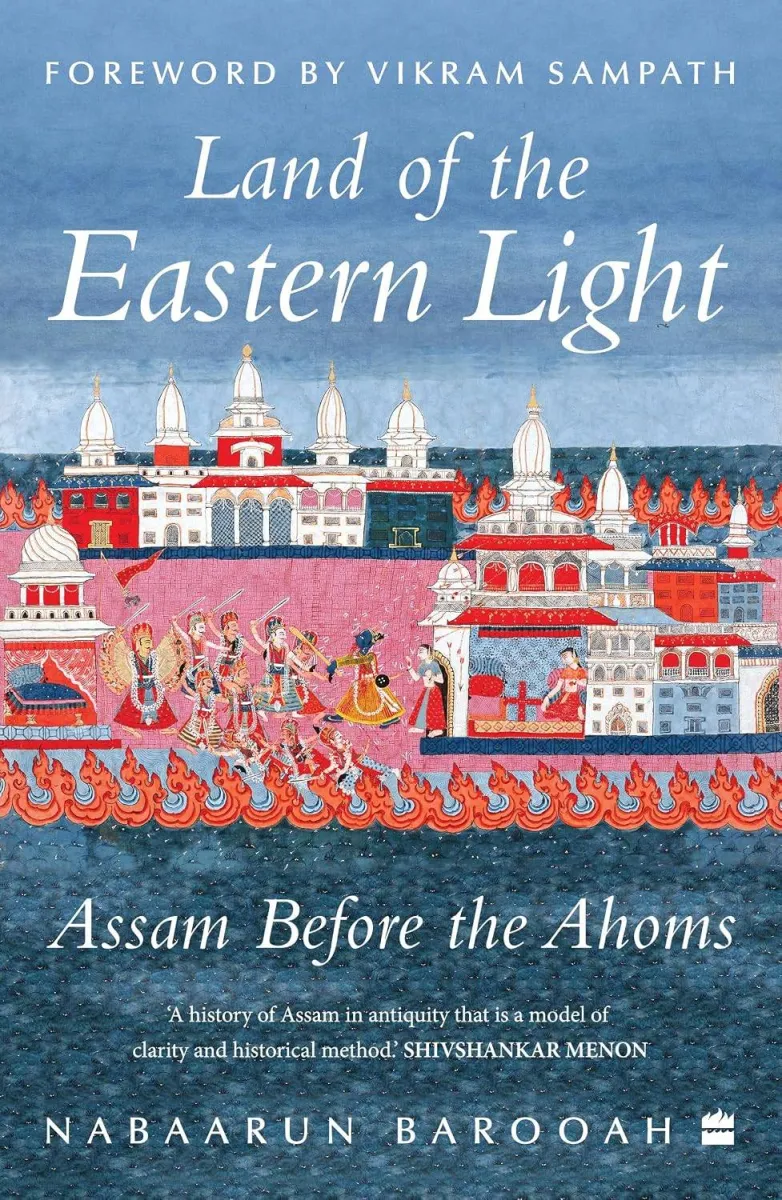
Land of the Eastern Light | Inspirational Book on Eastern Culture, Spirituality, Heritage & Traditions | Travel, History & Cultural Exploration
Land of the Eastern Light invites readers to explore the rich cultural, spiritual, and historical dimensions associated with the East. The book is suited to readers interested in Eastern traditions, cultural heritage, spirituality, history, and the distinctive ideas and customs that have shaped Eastern societies.Through its focus on culture and heritage, the book offers an opportunity to reflect on the traditions, beliefs, landscapes, and ways of life associated with the Eastern world. It can appeal to readers who enjoy discovering different cultural perspectives and exploring the connections between history, spirituality, and everyday life.Whether you are interested in cultural exploration, Eastern philosophy, travel-inspired reading, or world heritage, Land of the Eastern Light can be a thoughtful addition to your personal library.Key FeaturesExplores themes of Eastern culture and heritageFocuses on traditions, spirituality, and cultural perspectivesSuitable for readers interested in history and cultural explorationEncourages appreciation of diverse traditions and ways of lifeRelevant to readers interested in Eastern philosophy and spiritualitySuitable for travel and cultural enthusiastsUseful for reflective and informative readingA thoughtful addition to cultural and heritage collectionsIdeal ForThis book is suitable for readers searching for Land of the Eastern Light, Eastern culture books, Eastern spirituality books, cultural heritage books, books about Eastern traditions, travel and culture books, history and heritage books, Eastern philosophy books, and cultural exploration literature.Book Title: Land of the Eastern LightThemes: Eastern Culture | Spirituality | Heritage | Traditions | History | Cultural ExplorationCategory: Culture | History | Travel | Spirituality | HeritageDiscover the cultural richness, traditions, and spiritual perspectives of the East with Land of the Eastern Light. Add this fascinating book to your collection and order your copy today.

A Queer Shade of Saffron by Shastri Akella | LGBTQ+ Stories, Queer Identity & Indian Culture | Author : Shastri Akella
A Queer Shade of Saffron by Shastri Akella is a compelling and deeply human story that explores queer identity, love, family, belonging, and the complex expectations of Indian culture. Blending emotional storytelling with questions of identity and self-acceptance, the novel offers a thoughtful portrayal of what it means to find your own voice while navigating the traditions and expectations that shape your life.At its heart, the story examines the tension between who we are and who others expect us to be. Through its characters and their experiences, readers encounter questions of sexuality, family, cultural identity, and the search for a life that feels authentic. The saffron of the title evokes the many layers of Indian identity—tradition, spirituality, heritage, and belonging—while the story explores what happens when personal identity does not fit neatly within familiar social boundaries.With an intimate and emotionally engaging narrative, Akella brings attention to the complexities of growing up and finding oneself within a culture where family relationships and social expectations can carry enormous significance. The novel explores the courage required to confront assumptions, the vulnerability of revealing one's authentic self, and the possibility of creating meaningful relationships without surrendering one's identity.A Queer Shade of Saffron is also a story about connection and understanding. It invites readers to look beyond labels and consider the universal human desires for love, acceptance, dignity, and a place to call home.Thoughtful, contemporary, and culturally rooted, this book will appeal to readers interested in LGBTQ+ fiction, queer narratives, Indian literature, coming-of-age stories, family relationships, and identity-driven contemporary fiction.Ultimately, A Queer Shade of Saffron is a celebration of the journey toward authenticity—the difficult, courageous, and deeply personal process of understanding who we are and learning to embrace that truth.
IGNOU BOOK | Urban Sociology[HINDI MEDIUM] BSOE-141
नगरीय समाजशास्त्र (Urban Sociology) समाजशास्त्र की वह शाखा है जिसमें नगरों, नगरीय जीवन, नगरीकरण, नगरीय समुदाय, सामाजिक संबंधों, संस्थाओं तथा नगरों में उत्पन्न सामाजिक समस्याओं का वैज्ञानिक अध्ययन किया जाता है।नगर केवल इमारतों, सड़कों और बाजारों का समूह नहीं है, बल्कि यह विभिन्न वर्गों, जातियों, धर्मों, व्यवसायों और संस्कृतियों के लोगों का सामाजिक संगठन है। नगरीय समाजशास्त्र यह समझने का प्रयास करता है कि नगरों में रहने से लोगों के सामाजिक जीवन और संबंधों में किस प्रकार परिवर्तन आते हैं।1. नगरीय समाजशास्त्र का अर्थनगरीय समाजशास्त्र का मुख्य विषय नगरीय समाज और उसकी सामाजिक प्रक्रियाएँ हैं। इसमें यह अध्ययन किया जाता है कि लोग शहरों में किस प्रकार रहते हैं, काम करते हैं, एक-दूसरे से संबंध बनाते हैं और सामाजिक संस्थाओं में भाग लेते हैं।इसके अंतर्गत प्रमुख विषय हैं:नगरीकरणऔद्योगीकरणग्रामीण-नगरीय प्रवासनगरीय समुदायसामाजिक स्तरीकरणझुग्गी-झोपड़ियाँनगरीय गरीबीअपराध और विचलनआवास की समस्यायातायात और प्रदूषणनगरीय प्रशासन एवं नियोजन2. नगरीकरण (Urbanization)नगरीकरण वह प्रक्रिया है जिसके द्वारा जनसंख्या का बढ़ता हुआ हिस्सा नगरों में रहने लगता है तथा सामाजिक और आर्थिक जीवन अधिक नगरीय स्वरूप ग्रहण करता है।नगरीकरण के प्रमुख कारण हैं:रोजगार के अवसरऔद्योगीकरणशिक्षा की सुविधास्वास्थ्य सेवाएँव्यापार और व्यवसायबेहतर जीवन की आकांक्षाग्रामीण क्षेत्रों से पलायननगरीकरण से लोगों को रोजगार और शिक्षा जैसी सुविधाएँ मिलती हैं, लेकिन इसके साथ भीड़, बेरोजगारी, आवास की कमी और प्रदूषण जैसी समस्याएँ भी बढ़ सकती हैं।3. नगरीय समाज की विशेषताएँनगरीय समाज की कुछ प्रमुख विशेषताएँ निम्नलिखित हैं:(क) सामाजिक विविधता:नगरों में अलग-अलग जाति, धर्म, भाषा, वर्ग और क्षेत्र के लोग रहते हैं।(ख) व्यावसायिक विविधता:नगरों में अनेक प्रकार के व्यवसाय और पेशे पाए जाते हैं।(ग) सामाजिक गतिशीलता:नगरों में व्यक्ति अपनी शिक्षा, योग्यता और व्यवसाय के आधार पर सामाजिक एवं आर्थिक स्थिति बदल सकता है।(घ) औपचारिक संबंध:नगरीय जीवन में बहुत से संबंध व्यक्तिगत और पारिवारिक संबंधों के बजाय औपचारिक एवं व्यावसायिक होते हैं।(ङ) व्यक्तिवाद:नगरीय जीवन में व्यक्ति की स्वतंत्रता और व्यक्तिगत निर्णयों को अधिक महत्व मिल सकता है।4. नगरीय पारिस्थितिकी (Urban Ecology)नगरीय पारिस्थितिकी में नगर के भौतिक पर्यावरण और सामाजिक जीवन के बीच संबंध का अध्ययन किया जाता है।शिकागो स्कूल (Chicago School) के समाजशास्त्रियों ने नगरीय पारिस्थितिकी के अध्ययन में महत्वपूर्ण योगदान दिया। उन्होंने नगर के विभिन्न क्षेत्रों, सामाजिक समूहों के स्थानिक वितरण, प्रतिस्पर्धा, अलगाव और सामाजिक परिवर्तन का अध्ययन किया।इस दृष्टिकोण से यह समझने में सहायता मिलती है कि अलग-अलग सामाजिक वर्ग और समुदाय शहर के विभिन्न हिस्सों में क्यों और कैसे बसते हैं।5. ग्रामीण-नगरीय प्रवासनगरीकरण में प्रवास (Migration) की महत्वपूर्ण भूमिका होती है। ग्रामीण क्षेत्रों के लोग रोजगार, शिक्षा, स्वास्थ्य तथा बेहतर आर्थिक अवसरों की तलाश में शहरों की ओर आते हैं।प्रवास के सकारात्मक प्रभाव:रोजगार के अवसरआय में वृद्धिशिक्षा और स्वास्थ्य तक बेहतर पहुँचनए सामाजिक और सांस्कृतिक अनुभवनकारात्मक प्रभाव:आवास की समस्याअस्थायी रोजगारभीड़भाड़झुग्गी बस्तियों का विकाससामाजिक असुरक्षा6. नगरीय गरीबी और झुग्गी बस्तियाँतेजी से बढ़ते नगरीकरण के कारण सभी लोगों को समान सुविधाएँ नहीं मिलतीं। गरीब लोग अक्सर कम लागत वाले या अनौपचारिक आवासीय क्षेत्रों में रहने के लिए मजबूर होते हैं।झुग्गी बस्तियों में सामान्यतः समस्याएँ होती हैं:खराब आवासस्वच्छ पेयजल की कमीस्वच्छता की समस्यास्वास्थ्य सुविधाओं की कमीभीड़भाड़असुरक्षित रोजगारनगरीय समाजशास्त्र इन समस्याओं को केवल व्यक्तिगत समस्या न मानकर उनके सामाजिक, आर्थिक और राजनीतिक कारणों का भी अध्ययन करता है।7. नगरीय परिवार और समुदायनगरीकरण का प्रभाव परिवार और समुदाय पर भी पड़ता है। शहरों में एकल या नाभिकीय परिवार अधिक दिखाई दे सकते हैं। रोजगार और शिक्षा के कारण लोग अपने मूल स्थान से दूर रहने लगते हैं।फिर भी, शहरों में समुदाय समाप्त नहीं होते। लोग पड़ोस, धार्मिक संगठनों, जातीय समूहों, पेशेवर संगठनों और अन्य सामाजिक नेटवर्क के माध्यम से संबंध बनाए रखते हैं।8. सामाजिक स्तरीकरण और असमानतानगरों में आर्थिक और सामाजिक असमानता स्पष्ट दिखाई देती है। एक ओर उच्च आय वाले लोग आधुनिक और सुविधायुक्त क्षेत्रों में रहते हैं, वहीं दूसरी ओर गरीब वर्गों को सीमित संसाधनों वाले क्षेत्रों में रहना पड़ सकता है।इस प्रकार आवास, शिक्षा, स्वास्थ्य, रोजगार और सार्वजनिक सुविधाओं तक पहुँच सामाजिक असमानता को दर्शाती है।9. प्रमुख नगरीय समस्याएँआधुनिक नगर अनेक समस्याओं का सामना कर रहे हैं:आवास की कमीनगरीय गरीबीबेरोजगारीझुग्गी बस्तियों का विस्तारयातायात की समस्यावायु और जल प्रदूषणअपराधकचरा प्रबंधनजनसंख्या का दबावआधारभूत सुविधाओं पर दबावसामाजिक असमानतापर्यावरणीय समस्याएँ
IGNOU BOOK | Urban Sociology[English medium] BSOE-141
Urban Sociology is a branch of sociology that studies urban life, cities, urban communities, institutions, social relationships, and the processes of urbanisation. It examines how people live and interact in cities and how urban development influences social, economic, cultural, and political life.1. Meaning of Urban SociologyUrban sociology focuses on the social structure and social processes of urban areas. A city is not merely a geographical or physical space; it is also a complex social environment where people from different backgrounds, occupations, cultures, and economic classes interact.Urban sociology therefore studies issues such as:UrbanisationMigrationPopulation growthSocial stratificationUrban povertySlumsHousingCrime and devianceUrban governanceTransport and infrastructureChanging family and community relationships2. UrbanisationUrbanisation refers to the process through which an increasing proportion of the population lives in urban areas. It is closely associated with industrialisation, economic development, employment opportunities, and migration.Rapid urbanisation can create both opportunities and problems. Cities may provide better education, healthcare, employment, and infrastructure, but they can also experience overcrowding, unemployment, pollution, inadequate housing, and inequality.3. Growth of CitiesCities have historically developed around trade, administration, religion, industry, transportation, and political power. With industrialisation and technological development, cities expanded rapidly.Modern cities are characterised by:Large and diverse populationsComplex occupational structuresGreater social mobilityFormal organisations and institutionsDiverse lifestyles and culturesExtensive transportation and communication networks4. Urban Social StructureUrban society is socially diverse. People may differ according to class, caste, religion, ethnicity, occupation, education, and income. This diversity creates both interaction and social divisions.Urban sociology examines how these differences influence access to:EmploymentHousingEducationHealthcarePolitical powerOther urban resources5. Migration and Urban LifeMigration is an important factor in urban growth. People often move from rural to urban areas in search of employment, education, better living conditions, or other opportunities.Migration contributes to the cultural diversity of cities but can also create difficulties for migrants, such as insecure employment, inadequate housing, discrimination, and limited access to public services.6. Slums and Urban PovertyOne of the major concerns of urban sociology is urban poverty. Rapid population growth and unequal development can lead to the expansion of informal settlements and slums.Slum residents may face:Poor housing conditionsLack of sanitationInadequate water supplyLimited healthcareInsecure employmentOvercrowdingUrban sociology studies these problems in relation to wider economic and political structures
IGNOU BOOK | Techniques of Ethnographic Film Making[ HINDI MEDIUM] BSOS -184
BSOS-184: Ethnographic Film Making — Techniques का वर्णनEthnographic Film Making (नृवंशविज्ञानात्मक फिल्म निर्माण) का उद्देश्य किसी समाज, समुदाय, संस्कृति, जीवन-शैली, रीति-रिवाज, विश्वास और दैनिक व्यवहार को फिल्म के माध्यम से व्यवस्थित एवं वास्तविक रूप में प्रस्तुत करना है। इसमें फिल्म निर्माता केवल घटनाओं को रिकॉर्ड नहीं करता, बल्कि उनके सामाजिक और सांस्कृतिक अर्थ को भी समझने का प्रयास करता है।Ethnographic Film Making की प्रमुख तकनीकें1. प्रतिभागी अवलोकन (Participant Observation)फिल्म निर्माता समुदाय के लोगों के बीच रहकर उनके दैनिक जीवन और गतिविधियों को समझता है। इससे लोगों के व्यवहार, संबंधों और परंपराओं को स्वाभाविक रूप में रिकॉर्ड करने में सहायता मिलती है।2. प्रत्यक्ष अवलोकन (Direct Observation)समुदाय की गतिविधियों को बिना अनावश्यक हस्तक्षेप के कैमरे से रिकॉर्ड किया जाता है। जैसे—त्योहार, विवाह, धार्मिक अनुष्ठान, कृषि कार्य या बाजार की गतिविधियाँ।3. साक्षात्कार तकनीक (Interview Technique)समुदाय के सदस्यों से बातचीत करके उनके विचार, अनुभव, विश्वास और जीवन की परिस्थितियों को जाना जाता है। साक्षात्कार को कैमरे पर रिकॉर्ड किया जा सकता है, जिससे फिल्म में लोगों की अपनी आवाज़ शामिल होती है।4. कैमरा तकनीककैमरे का कोण, दूरी, प्रकाश, फ्रेम और कैमरा-गतिशीलता महत्वपूर्ण होते हैं। कैमरे का प्रयोग इस प्रकार किया जाना चाहिए कि वह सामाजिक जीवन को विकृत न करे। लंबे और निरंतर शॉट वास्तविक गतिविधियों को समझने में विशेष रूप से उपयोगी हो सकते हैं।5. ध्वनि रिकॉर्डिंग (Sound Recording)Ethnographic फिल्म में केवल दृश्य ही नहीं, बल्कि स्थानीय भाषा, बातचीत, संगीत, गीत, प्राकृतिक आवाजें और वातावरण की ध्वनियाँ भी महत्वपूर्ण होती हैं। अच्छी ध्वनि फिल्म को अधिक प्रामाणिक बनाती है।6. नैरेशन और वॉयस-ओवर (Narration/Voice-over)फिल्म निर्माता आवश्यकतानुसार घटनाओं और उनके सामाजिक संदर्भ को समझाने के लिए वॉयस-ओवर का प्रयोग कर सकता है। हालांकि, अत्यधिक व्याख्या से बचना चाहिए ताकि समुदाय की अपनी आवाज दब न जाए।7. स्थानीय लोगों की भागीदारीफिल्म निर्माण में समुदाय के सदस्यों को केवल ‘फिल्माए जाने वाले विषय’ के रूप में नहीं, बल्कि सक्रिय प्रतिभागी के रूप में शामिल करना महत्वपूर्ण है। इससे फिल्म अधिक विश्वसनीय और नैतिक बनती है।8. निरंतर रिकॉर्डिंग (Continuous Recording)किसी गतिविधि को छोटे-छोटे अलग-अलग दृश्यों में दिखाने के बजाय उसे पर्याप्त समय तक लगातार रिकॉर्ड करने से घटना की प्रक्रिया और संदर्भ स्पष्ट होता है।9. संपादन (Editing)रिकॉर्ड किए गए दृश्यों को इस तरह व्यवस्थित किया जाता है कि दर्शक समुदाय के जीवन और सामाजिक व्यवहार को आसानी से समझ सके। संपादन में वास्तविक घटनाओं के क्रम और संदर्भ को अनावश्यक रूप से बदलने से बचना चाहिए।10. नैतिकता (Ethical Considerations)Ethnographic फिल्म निर्माण में लोगों की सहमति, निजता, सम्मान और सांस्कृतिक संवेदनशीलता का ध्यान रखना आवश्यक है। फिल्म में किसी समुदाय को गलत, अपमानजनक या रूढ़िबद्ध तरीके से प्रस्तुत नहीं किया जाना चाहिए।निष्कर्षइस प्रकार, Ethnographic Film Making केवल कैमरे से किसी समुदाय की गतिविधियों को रिकॉर्ड करने की प्रक्रिया नहीं है। यह अवलोकन, प्रतिभागिता, साक्षात्कार, कैमरा, ध्वनि, संपादन और नैतिक जिम्मेदारी का संयोजन है। इसका मुख्य उद्देश्य किसी संस्कृति और सामाजिक जीवन को उसके वास्तविक संदर्भ में समझना और दर्शकों तक पहुँचाना है।
IGNOU BOOK | Techniques of Ethnographic Film Making[ English medium] BSOS -184
Techniques of Ethnographic Filmmaking — BSOS-184Ethnographic filmmaking is a method of studying and representing people, their culture, social life, beliefs, customs, and everyday activities through audio-visual media. In sociology and anthropology, film can document social realities in a detailed and engaging way.1. Participant ObservationThis is one of the most important techniques. The filmmaker spends time with the community and observes their everyday life.The filmmaker participates in some activities while observing others.It helps understand behaviour in its natural setting.Long-term interaction builds trust between the filmmaker and participants.Example: A filmmaker living in a village and documenting agricultural practices, festivals, and family relationships.2. Direct Observation and RecordingThe filmmaker records events as they naturally occur rather than creating artificial situations.Everyday conversations, rituals, work, celebrations, and social interactions can be filmed.The camera becomes a tool for recording social behaviour.Repeated observation can reveal details that may initially be overlooked.3. InterviewsInterviews provide information that cannot always be obtained through observation.Types include:Structured interviews: Questions are decided in advance.Unstructured interviews: The conversation is flexible.Semi-structured interviews: A set of broad questions is combined with open discussion.Interviews allow people to explain their beliefs, experiences, feelings, and interpretations in their own words.4. Informal ConversationsInformal conversations are particularly useful in ethnographic filmmaking.Instead of conducting a formal interview, the filmmaker talks naturally with community members. This often produces more spontaneous and authentic responses.5. Long-Take TechniqueA long take involves filming an activity continuously for a relatively long period without frequent cuts.It can capture:Natural behaviourSequence of eventsInteraction between peopleChanges in the social situationThis technique can reduce excessive manipulation during editing.
IGNOU BOOK | Sociology of Religion[Hindi medium] BSOC -106
Sociology of Religion is the systematic study of religion as a social phenomenon and institution. The course examines the relationship between religion and society, focusing on how religious beliefs, values, rituals, symbols, and institutions influence individual behaviour, social relationships, culture, and social organization.The course introduces students to fundamental concepts such as sacred and profane, religious beliefs, rituals, religious authority, religious organizations, secularization, and religious pluralism. It explores the relationship between religion and major social institutions such as family, economy, politics, education, and social stratification.The perspectives of classical sociologists such as Émile Durkheim, Karl Marx, and Max Weber are examined to understand the functions of religion, its relationship with social inequality and power, and its influence on social action and social change.The course also examines contemporary issues including secularization, modernization, religious revivalism, fundamentalism, religious movements, and globalization. In the Indian context, it focuses on religious diversity, pluralism, secularism, communalism, and the relationship between religion, caste, gender, and politics.Overall, Sociology of Religion develops a sociological understanding of religion and its role in maintaining social order, creating identities, reproducing inequalities, and contributing to processes of social integration and social change.
IGNOU BOOK | Sociology of Religion [ ENGLISH MEDIUM] BSOC -106
Sociology of Religion is a course that examines religion as a social institution and explores its role in shaping individual behaviour, social relationships, culture, and social organization. It studies how religious beliefs, practices, institutions, and symbols influence society and how social conditions, in turn, shape religious life.The course introduces students to key sociological concepts such as sacred and profane, religious beliefs, rituals, symbols, religious institutions, secularization, religious authority, and religious communities. It examines the relationship between religion and other social institutions, including family, economy, politics, education, and social stratification.The course engages with the ideas of major sociological thinkers such as Émile Durkheim, Karl Marx, and Max Weber. Their perspectives provide different approaches to understanding religion as a source of social solidarity, a reflection of social inequalities, and a significant force in shaping social action and historical change.The course also examines different forms of religious organization and experience, including sects, denominations, churches, religious movements, and new forms of spirituality. Attention is given to processes such as secularization, modernization, religious revivalism, fundamentalism, and religious pluralism.In the Indian context, the course explores religious diversity, Hinduism, Islam, Christianity, Sikhism, Buddhism, Jainism, tribal religions, secularism, communalism, and religious identities. It considers the relationship between religion, caste, gender, politics, and social change.
IGNOU BOOK | Sociology of Kinship[ English medium] BSOC-109
Sociology of Kinship is a course that examines the social organization of human relationships based on marriage, descent, blood relations, and other culturally recognized forms of relatedness. It explores how kinship systems shape family structures, social identities, inheritance, residence, authority, and patterns of social interaction across different societies.The course introduces students to key sociological and anthropological concepts such as kinship, descent, lineage, clan, marriage, family, household, residence, affinity, and inheritance. It examines different systems of descent, including patrilineal, matrilineal, and bilateral systems, and explores patterns of marriage such as monogamy, polygamy, endogamy, and exogamy.Particular attention is given to the relationship between kinship, family, gender, property, power, and social organization. The course also examines how kinship systems vary across cultures and how they respond to processes of modernization, urbanization, migration, industrialization, and globalization.The course further explores changing patterns of marriage and family, including nuclear and extended families, changing household structures, intergenerational relationships, changing gender roles, and contemporary forms of partnership and family life. It encourages students to critically examine how traditional kinship relations are being transformed in contemporary societies.The course aims to develop students' ability to analyse kinship as an important social institution and to understand its relationship with wider social structures and cultural practices.Overall, Sociology of Kinship provides a comprehensive understanding of how societies organize relationships through kinship, marriage, descent, and family, while examining the changing nature of these relationships in contemporary social life.
IGNOU BOOK | Sociology of India- I[Hindi Medium] BSOC-102
Sociology of India – I is a foundational course that introduces students to the sociological study of Indian society. It examines the distinctive features of Indian social structure, cultural diversity, institutions, and patterns of social relationships. The course aims to provide an understanding of the ways in which historical, cultural, economic, and political factors have shaped Indian society.The course explores major themes such as caste, class, tribe, family, kinship, religion, rural society, social stratification, and social change. It examines the functioning of these institutions and their role in shaping social identities, social relations, and inequalities. The course also considers the diversity of Indian society in terms of region, language, religion, community, and culture.Students are introduced to the ideas and contributions of important Indian sociologists and social thinkers, including G. S. Ghurye, M. N. Srinivas, D. P. Mukerji, A. R. Desai, Irawati Karve, and B. R. Ambedkar. Their perspectives provide important frameworks for understanding caste, culture, tradition, modernity, class, and social transformation in India.The course also examines important processes of social change such as Sanskritization, Westernization, modernization, secularization, industrialization, and urbanization. These processes help students understand the transformation of Indian society and the interaction between traditional institutions and modern forces.Overall, Sociology of India – I provides a comprehensive foundation for understanding the structure, diversity, institutions, inequalities, and processes of social change that characterize Indian society.
IGNOU BOOK | Sociology of India- I [English medium] BSOC 102
BSOC-102: Sociology of India–I is a sociology course that introduces you to the structure, diversity, institutions, and major social processes of Indian society. It helps students understand India from a sociological perspective rather than simply from a historical or political perspective.Main Areas Covered1. Understanding Indian SocietyMeaning and characteristics of Indian societyUnity in diversitySocial and cultural diversityContinuity and change in Indian society2. Caste SystemMeaning and features of casteCaste hierarchyCaste and social inequalityChanges in the caste systemCaste in contemporary India3. Tribe and Tribal SocietyMeaning and characteristics of tribesTribal social organisationTribal identityProblems and challenges faced by tribal communitiesProcesses of tribal transformation4. Family and KinshipMeaning and types of familyJoint and nuclear familiesMarriage and kinshipChanging patterns of family and marriage in India5. Religion in Indian SocietyReligious diversityReligion and social lifeHinduism, Islam, Christianity, Sikhism and other religious traditionsCommunalism and secularism6. Rural and Agrarian SocietyFeatures of rural societyAgrarian social structureLand relationsRural social changeImpact of modernisation and development7. Urban SocietyGrowth of towns and citiesUrbanisationMigrationUrban social problemsChanging nature of urban communities8. Social Change in IndiaImportant processes include:SanskritisationWesternisationModernisationSecularisationGlobalisationIndustrialisation and urbanisationImportant Sociological ThemesThe course particularly helps you understand:Caste and inequalityClass and social stratificationTribal communitiesFamily, marriage and kinshipReligion and secularismRural–urban differencesSocial change and modernisationUnity and diversity in India
IGNOU BOOK | Sociology of India - II[Hindi medium] BSOC-104
Sociology of India – II: Course DescriptionSociology of India – II is an advanced course that examines the changing structures, institutions, social inequalities, and contemporary issues of Indian society. The course builds upon the foundational understanding of Indian society and provides a deeper sociological analysis of the processes through which Indian society has experienced continuity, transformation, and development.The course focuses on major themes such as caste, class, tribe, gender, religion, family, rural and urban transformation, social movements, development, globalization, and identity. It examines how traditional social institutions and cultural practices interact with modern economic, political, and technological changes.Particular attention is given to social inequality and exclusion, including caste-based discrimination, gender inequality, tribal marginalization, poverty, and changing class relations. The course also explores important processes of social change such as modernization, urbanization, industrialization, globalization, migration, and political mobilization.The course further examines significant social movements in India, including Dalit, tribal, women's, environmental, farmers', and other movements for social justice and rights. It encourages students to understand contemporary debates surrounding identity, citizenship, development, social justice, and cultural diversity.The course aims to develop students' ability to critically analyse Indian society using sociological concepts and perspectives. It enables them to connect theoretical ideas with empirical realities and contemporary social issues.Overall, Sociology of India – II provides a comprehensive and critical understanding of contemporary Indian society by examining its diverse social structures, inequalities, institutions, social movements, and processes of social transformation.