Book Store
Find reference notes, study guides, and dynamic curriculum files for book store preparation.
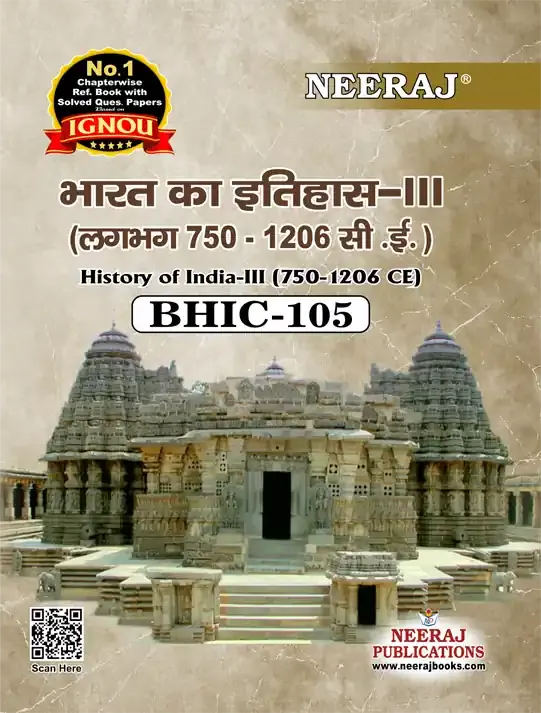
History of India - III | BHIC - 105 | Bhart ka Eithas- III | Hindi medium | IGNOU BOOK|
BHIC-105: भारत का इतिहास–III इग्नू के इतिहास पाठ्यक्रम का एक महत्वपूर्ण पेपर है। इसमें भारत के इतिहास के एक महत्वपूर्ण चरण के राजनीतिक, सामाजिक, आर्थिक और सांस्कृतिक विकास का अध्ययन किया जाता है। पाठ्यक्रम का उद्देश्य विद्यार्थियों को ऐतिहासिक घटनाओं को केवल याद करने के बजाय उनके कारण, प्रभाव और ऐतिहासिक महत्व को समझने में सहायता करना है।इस पेपर में विभिन्न राजवंशों और क्षेत्रीय शक्तियों के उदय, राज्य निर्माण, प्रशासन तथा राजनीतिक संबंधों का अध्ययन किया जाता है। इसके साथ ही युद्धों, राजनीतिक संघर्षों और साम्राज्य विस्तार की प्रक्रियाओं को भी समझाया जाता है।आर्थिक इतिहास BHIC-105 का एक महत्वपूर्ण हिस्सा है। इसमें कृषि, भूमि-राजस्व, व्यापार, वाणिज्य, शिल्प और नगरीय विकास जैसी गतिविधियों का अध्ययन किया जाता है। इन आर्थिक प्रक्रियाओं ने राज्य और समाज दोनों के विकास को प्रभावित किया।पाठ्यक्रम में सामाजिक संरचना पर भी ध्यान दिया गया है। विभिन्न सामाजिक समूहों, जातियों, समुदायों तथा ग्रामीण और शहरी समाज के जीवन का अध्ययन भारतीय समाज में हुए परिवर्तनों को समझने में मदद करता है।इसके अलावा धर्म, संस्कृति, साहित्य, कला और स्थापत्य के विकास को भी ऐतिहासिक संदर्भ में देखा जाता है। धार्मिक परंपराओं और सांस्कृतिक आंदोलनों ने भारतीय समाज और संस्कृति को व्यापक रूप से प्रभावित किया।निष्कर्षतः, BHIC-105 भारत के इतिहास को एक व्यापक दृष्टिकोण से समझने में सहायता करता है। यह पेपर राजनीतिक घटनाओं को सामाजिक, आर्थिक और सांस्कृतिक परिवर्तनों से जोड़कर देखने की क्षमता विकसित करता है। IGNOU की परीक्षा की तैयारी के लिए विद्यार्थियों को प्रत्येक इकाई के मुख्य तथ्य, कारण, परिणाम, महत्वपूर्ण व्यक्तित्व और ऐतिहासिक महत्व पर विशेष ध्यान देना चाहिए।
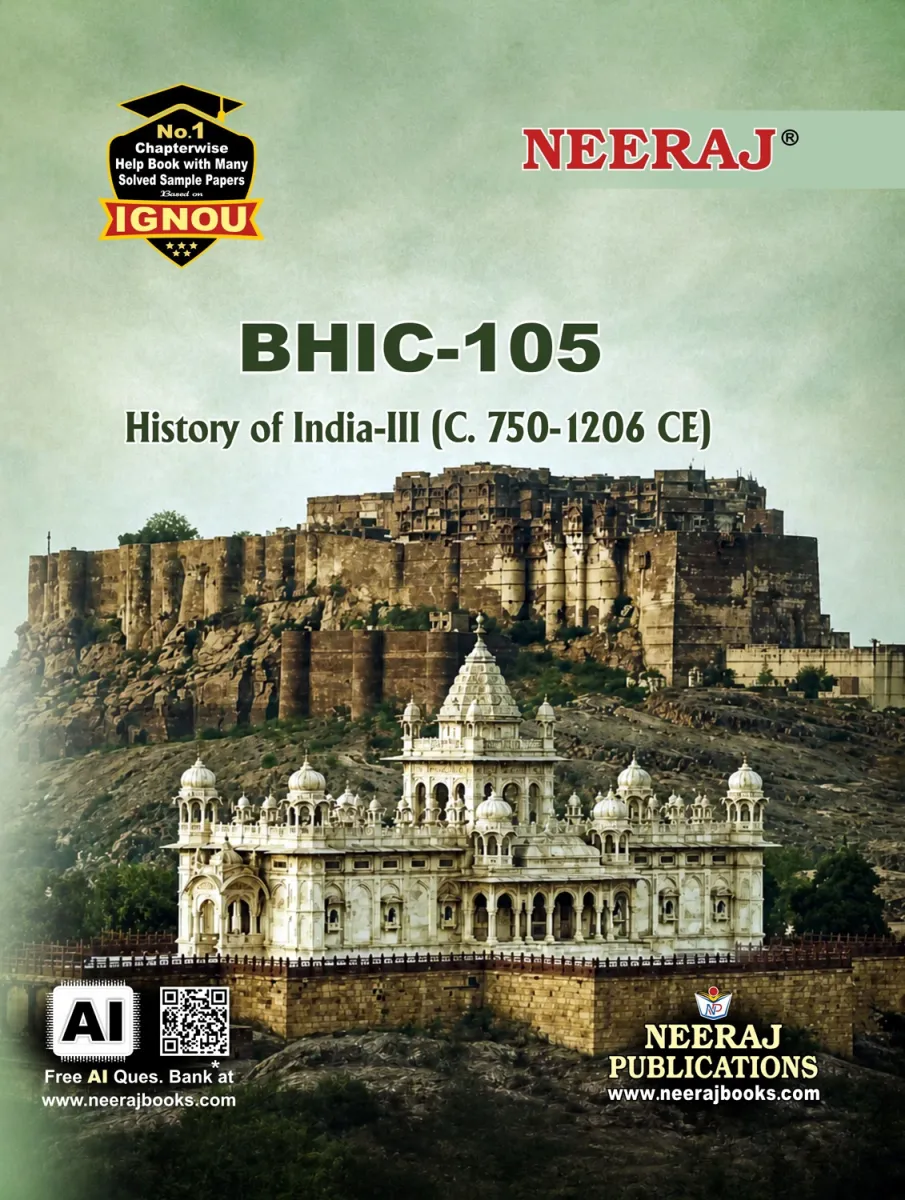
IGNOU BOOK | History of India - III | BHIC-105 | ENGLISH MEDIUM | IGNOU BOOK|
History of India – IIIHistory of India – III generally covers the period from the establishment and expansion of British rule in India to independence and the early years of the Indian Republic. In many university syllabi, the course focuses mainly on colonialism, the economic and social impact of British rule, the rise of nationalism, the freedom struggle, and the making of modern India.1. Expansion of British RuleThe British East India Company gradually changed from a trading organization into a political power.The Battle of Plassey (1757) and the Battle of Buxar (1764) established British dominance in Bengal. The Company then expanded its territories through wars, diplomacy, and political agreements.Important methods of expansion included:Subsidiary Alliance, associated with Lord Wellesley.Doctrine of Lapse, associated with Lord Dalhousie.Military conquest and annexation.Treaties with Indian rulers.By the nineteenth century, the British controlled most of the Indian subcontinent.
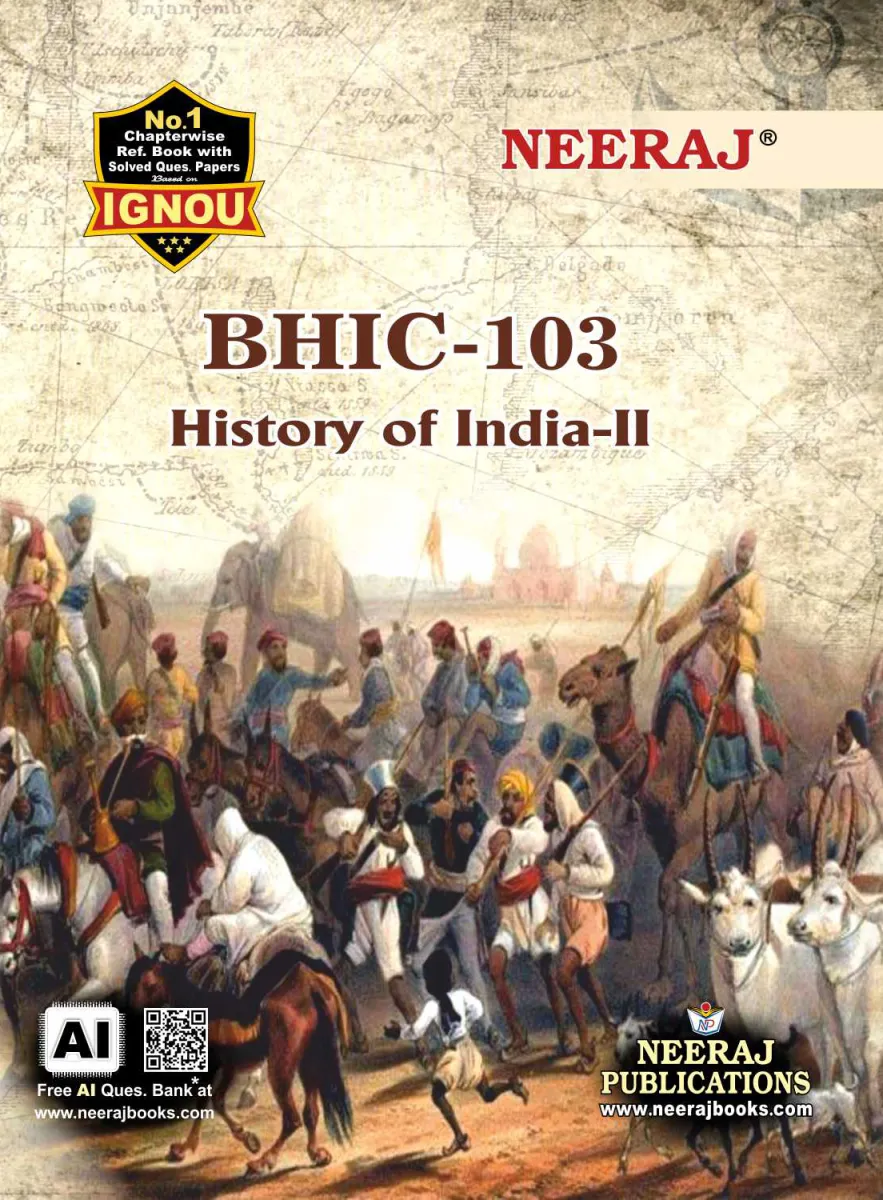
IGNOU BOOK | History of India - II | BHIC - 103 | ENGLISH MEDIUM | IGNOU BOOK|
History of India – IIHistory of India – II generally deals with the history of India from the early medieval period to the beginning of British colonial rule. The exact syllabus varies by university, but it commonly covers the Delhi Sultanate, Mughal Empire, regional kingdoms, Marathas, and the expansion of European powers in India.1. Early Medieval IndiaAfter the decline of major early empires, India became divided among several regional kingdoms.Important powers included:Palas in eastern IndiaPratiharas in northern IndiaRashtrakutas in the DeccanCholas in southern IndiaChalukyas and Pallavas in peninsular IndiaThis period witnessed the growth of regional languages, literature, temples, trade networks, and distinct political cultures.
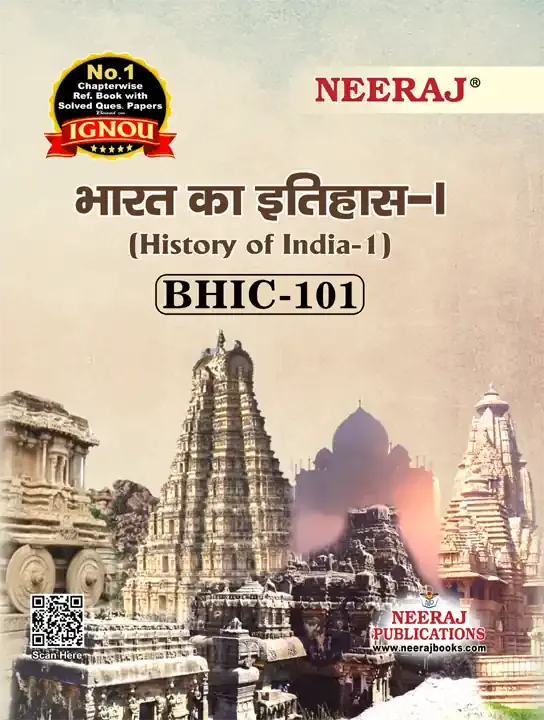
IGNOU BOOK | History of India - I | Bhart ka Etihas - I| BHIC -101 | hindi medium
BHIC-101: भारत का इतिहास–I इग्नू के इतिहास विषय का प्रारंभिक पाठ्यक्रम है। इसमें भारतीय इतिहास के प्रारंभिक चरणों का अध्ययन किया जाता है। पाठ्यक्रम में भारत के प्रागैतिहासिक काल, प्रारंभिक मानव समाज, कृषि और पशुपालन की शुरुआत, प्रारंभिक सभ्यताओं तथा सामाजिक, आर्थिक और सांस्कृतिक विकास को समझने पर जोर दिया जाता है।इस विषय में पुरातात्त्विक और साहित्यिक स्रोतों के माध्यम से इतिहास के पुनर्निर्माण की प्रक्रिया को भी समझाया जाता है। विद्यार्थियों को यह जानने का अवसर मिलता है कि पुरातात्त्विक अवशेष, अभिलेख, सिक्के, स्थापत्य और अन्य स्रोत प्राचीन भारतीय समाज के बारे में जानकारी कैसे प्रदान करते हैं।प्रमुख अध्ययन क्षेत्रप्रागैतिहासिक एवं आद्य-ऐतिहासिक भारतप्रारंभिक मानव जीवन और अर्थव्यवस्थाकृषि एवं पशुपालन का विकाससिंधु/हड़प्पा सभ्यतावैदिक समाज और अर्थव्यवस्थाप्रारंभिक राज्यों और जनपदों का विकाससामाजिक एवं धार्मिक परिवर्तनप्रारंभिक व्यापार, नगरीकरण और संस्कृतिनिष्कर्ष: BHIC-101 विद्यार्थियों को भारतीय इतिहास की प्रारंभिक पृष्ठभूमि समझने में मदद करता है। परीक्षा की तैयारी के लिए प्रत्येक इकाई में मुख्य घटनाएँ, स्रोत, कारण, विशेषताएँ, परिवर्तन और ऐतिहासिक महत्व को व्यवस्थित रूप से पढ़ना उपयोगी रहेगा।
IGNOU BOOK | History of India - I | BHIC - 101 | ENGLISH MEDIUM
BHIC-101: History of India–I is an introductory IGNOU course on the early history of the Indian subcontinent. It focuses on the development of human societies from the prehistoric period to the emergence of early states and urban cultures. The course encourages students to understand historical change through archaeological, literary and other sources.Major Areas of StudyPrehistoric India: Early humans, stone tools, hunting, gathering and the development of technology.Beginning of Food Production: The transition towards agriculture and pastoralism and the emergence of settled communities.Harappan Civilization: Origins, urban centres, economy, trade, social organisation, craft production and cultural features.Vedic Period: Early Vedic and later Vedic society, economy, political institutions and religious practices.Emergence of States: The development of janapadas and mahajanapadas, increasing political organisation and the growth of towns.Economic Developments: Agriculture, crafts, trade, markets and processes of early urbanisation.Social and Religious Changes: Changing social structures and the emergence and development of new religious and philosophical traditions.Historical Sources: Archaeological remains, inscriptions, coins and literary traditions used for reconstructing early Indian history.ConclusionBHIC-101 provides students with a foundation for understanding the political, economic, social and cultural evolution of early India. Rather than studying history only as a sequence of kings and battles, the course examines long-term changes in human settlement, economy, society, technology, religion and political organisation. For IGNOU examinations, students should focus on important terms, sources, major features, causes, consequences and historical significance of each topic.
IGNOU BOOK | History of Enviornment | PARYVAN KA ETIHAS | BHIE - 143 | HINDI MEDIUM
History of EnvironmentThe History of Environment is the study of the relationship between human beings and the natural environment throughout history. It examines how humans have used, changed, protected, and sometimes damaged nature, and how environmental conditions have influenced the development of human societies.1. Early Human SocietyIn prehistoric times, human beings depended directly on nature for their survival. They hunted animals, collected fruits and plants, and used rivers and forests for food and shelter. Their impact on the environment was relatively limited because populations were small and technology was simple.The development of agriculture was a major turning point. People began clearing forests, cultivating land, domesticating animals, and building settlements. Agriculture allowed populations to grow but also caused changes such as deforestation, soil erosion, and the alteration of rivers and water systems.2. Environment in Ancient CivilizationsAncient civilizations developed around fertile areas and rivers. The Indus Valley, Mesopotamian, Egyptian, Chinese, Greek, and Roman civilizations depended heavily on natural resources.Irrigation helped agriculture expand, while forests provided timber and fuel. However, excessive cultivation, deforestation, and improper irrigation sometimes resulted in soil exhaustion and environmental degradation.Thus, the development of civilization was closely connected with the ability of societies to manage natural resources.
History of Environment | BHIE - 143 | English medium | IGNOU BOOK |
History of EnvironmentThe history of the environment is the study of the relationship between human societies and the natural world over time. It examines how people have used natural resources, how societies have changed landscapes, and how environmental changes have affected human life, economies, and politics.1. Environment in Ancient SocietiesIn early human societies, people depended directly on nature for food, water, shelter, and energy. Hunting, fishing, and gathering had relatively small environmental impacts compared with later civilizations.With the development of agriculture, humans began to transform the environment on a much larger scale. Forests were cleared, rivers were modified, and land was cultivated. The development of irrigation allowed civilizations such as those in Mesopotamia, Egypt, the Indus Valley, and China to support large populations.However, intensive agriculture could also cause problems such as soil erosion, deforestation, and water depletion.2. Environment in Medieval PeriodDuring the medieval period, population growth and the expansion of agriculture increased pressure on natural resources.
IGNOU BOOK | History of China C. 1840-1979 | CHIN KA ETIHAS 1840-1978 | HINDI MEDIUM
History of China C. 1840–1979 offers a comprehensive journey through one of the most transformative periods in Chinese history, covering the major political, social, economic, and cultural changes from the mid-nineteenth century to the late twentieth century. Beginning around 1840, when China faced increasing Western intervention and the First Opium War, the book traces the challenges that confronted the Qing Empire and the profound changes that followed.The narrative explores the unequal treaties, foreign influence, internal rebellions, and reform movements that weakened the traditional imperial order. It examines the Self-Strengthening Movement, the Hundred Days’ Reform, the Boxer Uprising, and the 1911 Revolution, which brought an end to more than two thousand years of imperial rule and led to the establishment of the Republic of China.The book further discusses the political struggles of the Republican era, including the rise of the Kuomintang and the Chinese Communist Party, the Chinese Civil War, Japanese occupation, and the broader impact of international conflicts on China. The establishment of the People’s Republic of China in 1949 marks another major turning point, followed by an examination of the Great Leap Forward, the Cultural Revolution, and the political and social developments of the Mao era.Covering the period up to 1979, the book also provides context for the beginnings of China’s post-Mao transformation and the reforms associated with Deng Xiaoping. By connecting major events with broader themes of nationalism, revolution, modernization, ideology, and social change, History of China C. 1840–1979 provides students and readers with a structured understanding of modern Chinese history.
IGNOU BOOK | Htisory of China C. 1840-1978 | BHIE-141 | ENGLISH MEDIUM
History of China, c. 1840–1978The History of China from about 1840 to 1978 covers one of the most dramatic periods in Chinese history. It begins with the weakening of the Qing dynasty and increasing Western influence, continues through revolution, civil war, and the establishment of the People’s Republic of China, and ends with the beginning of economic reforms under Deng Xiaoping.1. China and Western Imperialism (c. 1840–1911)In the early nineteenth century, China was ruled by the Qing dynasty. European powers increasingly sought access to Chinese markets. Britain’s trade in opium led to the First Opium War (1839–1842). China’s defeat resulted in the Treaty of Nanjing, which forced China to open treaty ports, grant Britain Hong Kong, and accept unequal trading arrangements.China suffered further defeats in the Second Opium War (1856–1860). Western powers and Japan gained increasing economic and political privileges. These developments contributed to the weakening of Qing authority.China also faced major internal rebellions, particularly the Taiping Rebellion (1850–1864), which caused enormous loss of life and further weakened the government. Later, the Boxer Uprising (1899–1901) reflected growing opposition to foreign influence.Japan's victory over China in the Sino-Japanese War (1894–1895) demonstrated China's weakness and resulted in Japan gaining Taiwan and other concessions.
| IGNOU BOOK | Understanding Political Theory| RAJNETHIK SIDHAT KI SAMJ |BPSC-101 | HINDI MEDIUM
राजनीतिक सिद्धांत की समझ | Hindi Medium | IGNOU BookBPSC-101: Understanding Political Theory (राजनीतिक सिद्धांत की समझ) is an IGNOU course that introduces students to the basic concepts, ideas and debates of political theory. The course helps learners understand how political institutions and societies are organised and how concepts such as freedom, equality, justice, rights, democracy and citizenship are understood in political thought.Major Areas of StudyPolitical Theory: Meaning, nature, scope and importance of political theory.Liberty: Different meanings of freedom and the relationship between individual freedom and social order.Equality: Political, social and economic dimensions of equality.Justice: Major ideas concerning justice and fair distribution of rights and resources.Rights: Meaning and significance of rights and their relationship with individuals and the state.Democracy: Basic principles of democratic government, participation and representation.Citizenship: Meaning of citizenship, membership of the political community and civic responsibilities.State and Political Authority: Understanding the state, power, authority and legitimacy.Political Obligation: Questions concerning the relationship between citizens and the state.ConclusionBPSC-101 provides a foundation for understanding the central concepts and arguments of political theory. It encourages students to examine political ideas critically rather than simply memorising definitions. For IGNOU examinations, particular attention should be given to definitions, key arguments, different approaches, important thinkers, comparisons between concepts and contemporary relevance
Understanding Political Theory | BPSC-101 | English Medium | IGNOU BOOK |
BPSC-101: Understanding Political Theory is an IGNOU course that introduces students to the fundamental concepts, ideas and debates of political theory. It helps learners understand how political life is organised and how important political concepts have developed through different intellectual traditions.Major Areas of StudyPolitical Theory: Meaning, nature, scope and significance of political theory.Liberty: Different interpretations of freedom and the relationship between individual liberty and social order.Equality: Political, social and economic dimensions of equality.Justice: Ideas of fairness, rights, distribution and social justice.Rights: Meaning, nature and importance of individual and collective rights.Democracy: Principles of democratic government, participation, representation and accountability.Citizenship: Citizenship as membership of a political community and the rights and responsibilities associated with it.State, Power and Authority: Concepts of the state, political power, authority and legitimacy.Political Obligation: The relationship between citizens and the state and the basis of obedience to political authority.ConclusionBPSC-101 provides students with a foundation for understanding the major concepts and arguments of political theory. The course encourages critical thinking about political institutions, individual freedom, equality, justice and democracy. For IGNOU examinations, students should focus on definitions, important thinkers, key arguments, comparisons between concepts, and contemporary relevance of the topics studied.
State Politics in India | Bharat Mai Rajaya Ki Rajniti | BPSE- 143 | Hindi Medium | IGNOU BOOK |
BPSE-143: भारत में राज्य की राजनीति इग्नू के राजनीति विज्ञान पाठ्यक्रम का एक महत्वपूर्ण विषय है। इसमें भारत के विभिन्न राज्यों में होने वाली राजनीतिक प्रक्रियाओं, संस्थाओं, दलों, चुनावों, क्षेत्रीयता तथा सामाजिक समूहों की राजनीतिक भूमिका का अध्ययन किया जाता है।प्रमुख विषयभारतीय संघवाद — केंद्र और राज्यों के बीच शक्तियों एवं संबंधों का अध्ययन।राज्यपाल — राज्य में राज्यपाल की संवैधानिक भूमिका।मुख्यमंत्री एवं मंत्रिपरिषद — राज्य की कार्यपालिका और उसके कार्य।राज्य विधानमंडल — विधानसभा तथा विधान परिषद की संरचना और कार्य।राज्य स्तरीय राजनीतिक दल — क्षेत्रीय एवं राज्य आधारित दलों की भूमिका।चुनावी राजनीति — राज्य चुनाव, मतदान व्यवहार और राजनीतिक भागीदारी।क्षेत्रवाद — क्षेत्रीय पहचान, क्षेत्रीय आकांक्षाएँ और राजनीतिक आंदोलन।जाति और राजनीति — जातिगत पहचान तथा राजनीतिक लामबंदी का संबंध।जनजातीय राजनीति — जनजातीय समुदायों की राजनीतिक मांगें और आंदोलन।केंद्र–राज्य संबंध — प्रशासनिक, वित्तीय और राजनीतिक संबंध।सामाजिक आंदोलन — विभिन्न सामाजिक आंदोलनों का राज्य की राजनीति पर प्रभाव।निष्कर्षBPSE-143 भारत की राज्य स्तरीय राजनीति और संघीय व्यवस्था को समझने में सहायता करता है। यह विषय बताता है कि राजनीतिक दल, चुनाव, जाति, क्षेत्रीय पहचान, सामाजिक समूह और आंदोलनों जैसे कारक राज्यों की राजनीति को किस प्रकार प्रभावित करते हैं। IGNOU परीक्षा की तैयारी के लिए परिभाषाएँ, संवैधानिक प्रावधान, प्रमुख अवधारणाएँ, कारण, प्रभाव और उपयुक्त उदाहरण विशेष रूप से तैयार करना उपयोगी है।
IGNOU BOOK | State Politics in India | BPSE-143 | English Medium |
Description:State Politics in India is the study of the political processes, institutions, parties, leadership, and social forces operating at the state level in India. It examines how politics differs across Indian states and how state governments interact with the Union government.The subject focuses on the role of Chief Ministers, state legislatures, political parties, regional parties, elections, caste, religion, ethnicity, language, regionalism, and social movements in shaping state-level politics.Main AreasState governments and state legislaturesRole of Chief Minister and GovernorState-level elections and political partiesRegional parties and regionalismCentre–State relationsCaste and state politicsReligion, ethnicity and languageState-level leadership and political movementsCoalition politicsDevelopment and public policy at the state levelPolitical participation and social movementsIn simple words: State Politics in India studies how political power operates within India's states and how parties, leaders, social groups, elections, and regional interests shape state-level governance and politics.
Political Theory: Concepts and Debates | Rajnitik shidhaant: Avdhaarnaye aur vaad vivaad | BPSC- 103 | Hindi Medium | IGNOU BOOK |
BPSC-103: राजनीतिक सिद्धांत: अवधारणाएँ और वाद-विवाद इग्नू के राजनीति विज्ञान पाठ्यक्रम का महत्वपूर्ण विषय है। इसमें राजनीतिक सिद्धांत की प्रमुख अवधारणाओं, विचारधाराओं और समकालीन राजनीतिक बहसों का अध्ययन किया जाता है। इसका उद्देश्य विद्यार्थियों को राजनीतिक विचारों को आलोचनात्मक और तर्कपूर्ण ढंग से समझने में सहायता करना है।प्रमुख विषयस्वतंत्रता (Liberty) — व्यक्ति की स्वतंत्रता, उसकी सीमाएँ और राज्य की भूमिका।समानता (Equality) — सामाजिक, राजनीतिक और आर्थिक समानता की अवधारणा।न्याय (Justice) — न्याय के विभिन्न दृष्टिकोण तथा समाज में न्यायपूर्ण व्यवस्था का प्रश्न।अधिकार (Rights) — नागरिक एवं मानव अधिकारों का अर्थ और महत्व।लोकतंत्र (Democracy) — लोकतांत्रिक शासन, भागीदारी और प्रतिनिधित्व।नागरिकता (Citizenship) — नागरिकता के अधिकार, कर्तव्य और राजनीतिक समुदाय में व्यक्ति की भूमिका।राष्ट्रवाद (Nationalism) — राष्ट्र, राष्ट्रीय पहचान और राष्ट्रवाद से जुड़े विमर्श।धर्मनिरपेक्षता (Secularism) — राज्य, धर्म और समाज के बीच संबंध।बहुसंस्कृतिवाद (Multiculturalism) — विविध संस्कृतियों और समुदायों के अधिकारों से संबंधित बहस।नारीवाद (Feminism) — लैंगिक समानता और राजनीतिक जीवन में महिलाओं की स्थिति।मार्क्सवाद और उदारवाद — प्रमुख राजनीतिक विचारधाराओं के दृष्टिकोण और उनके बीच के वैचारिक अंतर।निष्कर्षBPSC-103 विद्यार्थियों को राजनीतिक सिद्धांत की प्रमुख अवधारणाओं और वैचारिक बहसों को समझने का आधार प्रदान करता है। इसमें केवल परिभाषाओं का अध्ययन नहीं, बल्कि विभिन्न विचारों के बीच तर्क, मतभेद और समकालीन प्रासंगिकता को समझना भी महत्वपूर्ण है। IGNOU परीक्षा की तैयारी के लिए प्रत्येक अवधारणा की परिभाषा, प्रमुख विशेषताएँ, विभिन्न दृष्टिकोण, प्रमुख विचारक, आलोचनाएँ और वर्तमान संदर्भ को व्यवस्थित रूप से तैयार करना उपयोगी रहेगा
Political Processes and Institutions in Comparative Perspective | Tulaanatmak Paripeksaye mai Rajnitik parkiriyaye aur sansathaye | Hindi Medium | BPSC-109 | IGNOU BOOK |
BPSC-109: तुलनात्मक परिप्रेक्ष्य में राजनीतिक प्रक्रियाएँ और संस्थाएँ इग्नू के राजनीति विज्ञान पाठ्यक्रम का एक महत्वपूर्ण विषय है। इसमें विभिन्न देशों की राजनीतिक व्यवस्थाओं, संस्थाओं और राजनीतिक प्रक्रियाओं का तुलनात्मक अध्ययन किया जाता है। इसका उद्देश्य यह समझना है कि अलग-अलग राजनीतिक व्यवस्थाएँ किस प्रकार कार्य करती हैं और उनके बीच क्या समानताएँ तथा अंतर पाए जाते हैं।प्रमुख विषयतुलनात्मक राजनीति — अर्थ, प्रकृति, क्षेत्र और महत्व।राजनीतिक संस्थाएँ — राज्य, सरकार, विधायिका, कार्यपालिका और न्यायपालिका की भूमिका।राजनीतिक व्यवस्थाएँ — विभिन्न शासन प्रणालियों की संरचना और कार्यप्रणाली।लोकतंत्र एवं अधिनायकवाद — लोकतांत्रिक और गैर-लोकतांत्रिक राजनीतिक व्यवस्थाओं की विशेषताएँ।संसदीय एवं राष्ट्रपति प्रणाली — दोनों शासन प्रणालियों की संरचना और कार्यप्रणाली।राजनीतिक दल — दलों की भूमिका, संगठन और राजनीतिक प्रतिस्पर्धा।हित समूह — विभिन्न सामाजिक एवं आर्थिक समूहों द्वारा राजनीतिक प्रक्रिया को प्रभावित करने के तरीके।चुनावी प्रक्रिया — चुनाव, प्रतिनिधित्व, मतदान व्यवहार और राजनीतिक भागीदारी।राजनीतिक संस्कृति — नागरिकों के राजनीतिक विश्वास, मूल्य और व्यवहार।राजनीतिक समाजीकरण — परिवार, शिक्षा, मीडिया और अन्य संस्थाओं के माध्यम से राजनीतिक विचारों का निर्माण।राजनीतिक विकास एवं परिवर्तन — राजनीतिक संस्थाओं और प्रक्रियाओं में होने वाले परिवर्तन।निष्कर्षBPSC-109 विद्यार्थियों को विभिन्न देशों की राजनीतिक व्यवस्थाओं को तुलनात्मक दृष्टिकोण से समझने में सहायता करता है। यह विषय बताता है कि राजनीतिक संस्थाएँ, दल, चुनाव, हित समूह और नागरिक भागीदारी किस प्रकार राजनीतिक व्यवस्था को प्रभावित करते हैं। IGNOU परीक्षा की तैयारी के लिए परिभाषाएँ, प्रमुख अवधारणाएँ, संस्थाओं के कार्य, विभिन्न राजनीतिक प्रणालियों की तुलना, विशेषताएँ और उदाहरण विशेष रूप से तैयार करना उपयोगी रहेगा।
IGNOU BOOK | Political Processes and Institutions in Comparative Perspective | BPSC-109 | English Medium |
Description:Political Processes and Institutions in Comparative Perspective is a branch of Political Science that studies and compares political institutions and political processes across different countries. It examines how governments are structured, how political power is exercised, and how citizens and political groups participate in politics.The subject compares institutions such as the legislature, executive, judiciary, political parties, electoral systems, and bureaucracies, while also examining processes such as elections, political participation, representation, policymaking, and political change.Main AreasComparative political systemsPolitical institutions and their functioningLegislature, Executive and JudiciaryElectoral systems and electionsPolitical parties and party systemsPolitical participation and representationPolitical leadership and governanceBureaucracy and public administrationState and society relationsPolitical development and democratisationPolitical change and institutional reformsComparison of different countries and political systemsIn simple words: This subject compares the political institutions and processes of different countries to understand how political systems function, how power is organised, and why countries have different forms of governance.
Political Process In India | Bharat Mai Rajnitik Parkiriya | BPSC-104 | Hindi Medium | IGNOU BOOK |
BPSC-104: भारत में राजनीतिक प्रक्रिया इग्नू के राजनीति विज्ञान पाठ्यक्रम का एक महत्वपूर्ण विषय है। इसमें भारत की लोकतांत्रिक राजनीति की प्रमुख प्रक्रियाओं, संस्थाओं, राजनीतिक दलों, चुनावों, सामाजिक समूहों और आंदोलनों का अध्ययन किया जाता है। यह पाठ्यक्रम विद्यार्थियों को यह समझने में सहायता करता है कि भारतीय लोकतंत्र व्यवहार में किस प्रकार कार्य करता है।प्रमुख विषयभारतीय लोकतंत्र — भारतीय लोकतांत्रिक व्यवस्था की प्रकृति और प्रमुख विशेषताएँ।संविधान और राजनीतिक प्रक्रिया — संविधान का राजनीतिक संस्थाओं और प्रक्रियाओं पर प्रभाव।चुनावी राजनीति — चुनाव प्रणाली, मतदान व्यवहार, राजनीतिक भागीदारी और प्रतिनिधित्व।राजनीतिक दल — राष्ट्रीय एवं क्षेत्रीय दलों की भूमिका और राजनीतिक प्रतिस्पर्धा।दलगत राजनीति — गठबंधन, चुनावी प्रतिस्पर्धा और सत्ता निर्माण की प्रक्रियाएँ।जाति और राजनीति — जाति की राजनीतिक भूमिका तथा राजनीतिक लामबंदी।धर्म और राजनीति — धर्म, सामुदायिक पहचान और राजनीतिक प्रक्रिया के बीच संबंध।क्षेत्रवाद — क्षेत्रीय पहचान, क्षेत्रीय आकांक्षाएँ और राजनीति।सामाजिक आंदोलन — विभिन्न सामाजिक आंदोलनों की प्रकृति और राजनीतिक प्रभाव।हित समूह और दबाव समूह — नीतियों एवं सरकार को प्रभावित करने में इनकी भूमिका।राजनीतिक भागीदारी — नागरिकों की राजनीतिक गतिविधियों में भागीदारी।मीडिया और राजनीति — जनमत निर्माण तथा राजनीतिक संचार में मीडिया की भूमिका।निष्कर्षBPSC-104 भारत की राजनीतिक प्रक्रिया को संस्थागत और सामाजिक दोनों दृष्टिकोणों से समझने में सहायता करता है। यह स्पष्ट करता है कि चुनाव, राजनीतिक दल, जाति, धर्म, क्षेत्रीय पहचान, सामाजिक आंदोलन और नागरिक भागीदारी भारतीय लोकतंत्र को किस प्रकार प्रभावित करते हैं। IGNOU परीक्षा के लिए अवधारणाएँ, प्रमुख विशेषताएँ, कारण, प्रभाव, महत्वपूर्ण उदाहरण और समकालीन संदर्भ अच्छी तरह तैयार करना उपयोगी रहेगा।
IGNOU BOOK | Political Process In India | English Medium | BPSC- 104
BPSC-104: Political Process in India is an important IGNOU course in Political Science. It examines the major political processes, institutions, political parties, elections, social groups and movements that shape Indian democracy. The course helps students understand how Indian politics functions in practice.Major Areas of StudyIndian Democracy — Nature, features and functioning of Indian democracy.Constitution and Political Process — The influence of the Constitution on political institutions and processes.Electoral Politics — Elections, voting behaviour, political participation and representation.Political Parties — Role and functioning of national and regional political parties.Party Politics — Political competition, coalition politics and government formation.Caste and Politics — The relationship between caste identities and political mobilisation.Religion and Politics — Religion, community identities and their relationship with political processes.Regionalism — Regional identities, aspirations and their political expression.Social Movements — Nature and political significance of different social movements.Pressure and Interest Groups — Their role in influencing government and public policy.Political Participation — Different forms of citizen participation in politics.Media and Politics — The role of media in political communication and public opinion.ConclusionBPSC-104 provides a broad understanding of Indian political processes from both institutional and social perspectives. It explains how elections, political parties, caste, religion, regional identities, social movements and citizen participation influence Indian democracy. For IGNOU examinations, students should focus on key concepts, major features, causes and effects, important examples, and contemporary relevance of each topic.