Study Materials & Books
Explore our complete catalog of toppers handwritten notes, curated textbooks, formulas, and competitive exam preparation resources.
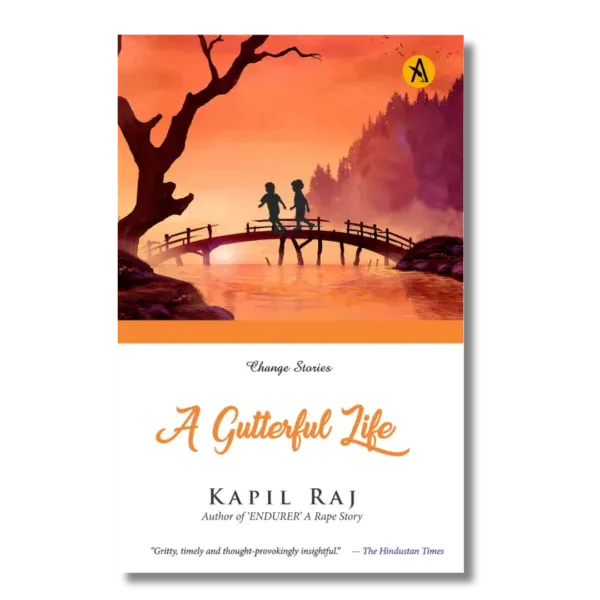
A Gutterful Life by Kapil Raj – A Thought-Provoking Story of Friendship, Humanity & Social Division
A Gutterful Life by Kapil Raj – A Thought-Provoking Story of Friendship, Humanity & Social DivisionWhat happens when friendship crosses the boundaries that society has spent generations creating?A Gutterful Life by Kapil Raj is a thought-provoking and emotionally resonant story about friendship, humanity, dignity, and the invisible divisions that shape the lives of ordinary people. Set against the realities of a society where social status, prejudice, and circumstances can determine how people are seen and treated, the novel invites readers to look beyond labels and discover the human beings behind them.At the heart of the story are relationships that challenge assumptions and reveal an uncomfortable truth: people may live on opposite sides of social boundaries, yet their hopes, fears, struggles, and dreams can be remarkably similar. Through moments of companionship, conflict, compassion, and loss, the characters discover that genuine friendship does not always recognize the barriers created by society.The title A Gutterful Life evokes the harsh realities faced by those who are often overlooked, reminding us of the distance between privilege and survival. Yet this is not simply a story of hardship. It is also a story of courage, resilience, empathy, and the human desire to be respected and understood.Kapil Raj explores how social divisions influence relationships and opportunities while asking readers to consider what truly defines a person's worth. Is it wealth, status, occupation, family background, or the choices we make when confronted with another person's suffering?With an engaging narrative and deeply human perspective, A Gutterful Life encourages readers to question inherited prejudices and examine the boundaries that separate people from one another. It celebrates the power of friendship to create connections where society expects division and reminds us that compassion can exist in the most unexpected places.Emotional, reflective, and socially conscious, this novel is ideal for readers who enjoy meaningful stories about friendship, inequality, human dignity, social realities, and the enduring strength of the human spirit.
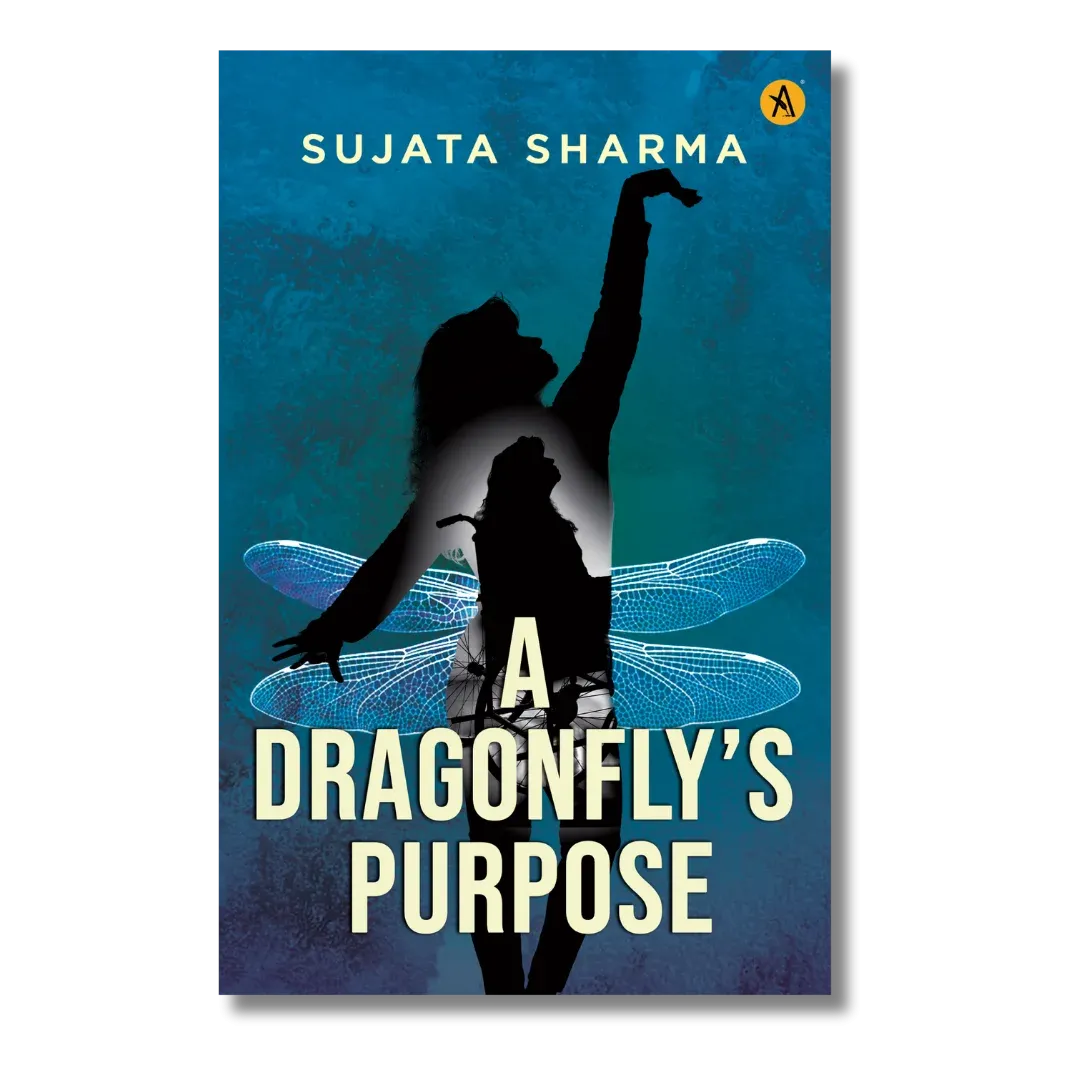
A Dragonfly’s Purpose | Inspiring Children’s Storybook About Life, Growth, Courage & Discovering Your Purpose
A beautiful and inspiring story about discovering purpose, embracing change, and finding the courage to become who you are meant to be.A Dragonfly’s Purpose is a heartwarming children's story that uses the fascinating journey of a dragonfly as a gentle way to explore meaningful themes such as growth, transformation, courage, self-discovery, and purpose.With an engaging storyline and an uplifting message, this book can encourage young readers to understand that change is a natural part of life and that every individual has unique qualities and possibilities.Key FeaturesHeartwarming Story: An engaging tale designed to entertain and inspire young readers.Meaningful Life Lessons: Explores themes of courage, growth, change, and discovering one's purpose.Encourages Self-Discovery: Helps children appreciate their individuality and potential.Positive & Inspirational: Promotes curiosity, confidence, resilience, and hope.Great for Reading Together: Suitable for parents, teachers, and children to enjoy together.Beautiful Addition to a Child’s Library: A thoughtful choice for young readers who enjoy nature and inspirational stories.Perfect ForChildren who enjoy animal and nature storiesBedtime readingParents and children reading togetherTeachers and educatorsGifts for birthdays and special occasionsYoung readers interested in inspirational storiesWhy Choose A Dragonfly’s Purpose?The transformation of a dragonfly provides a wonderful storytelling opportunity to introduce children to the idea that growth often involves change. This story encourages young readers to embrace new experiences, believe in themselves, and discover the unique possibilities within them.A gentle, inspiring story that reminds young readers that every journey has a purpose.
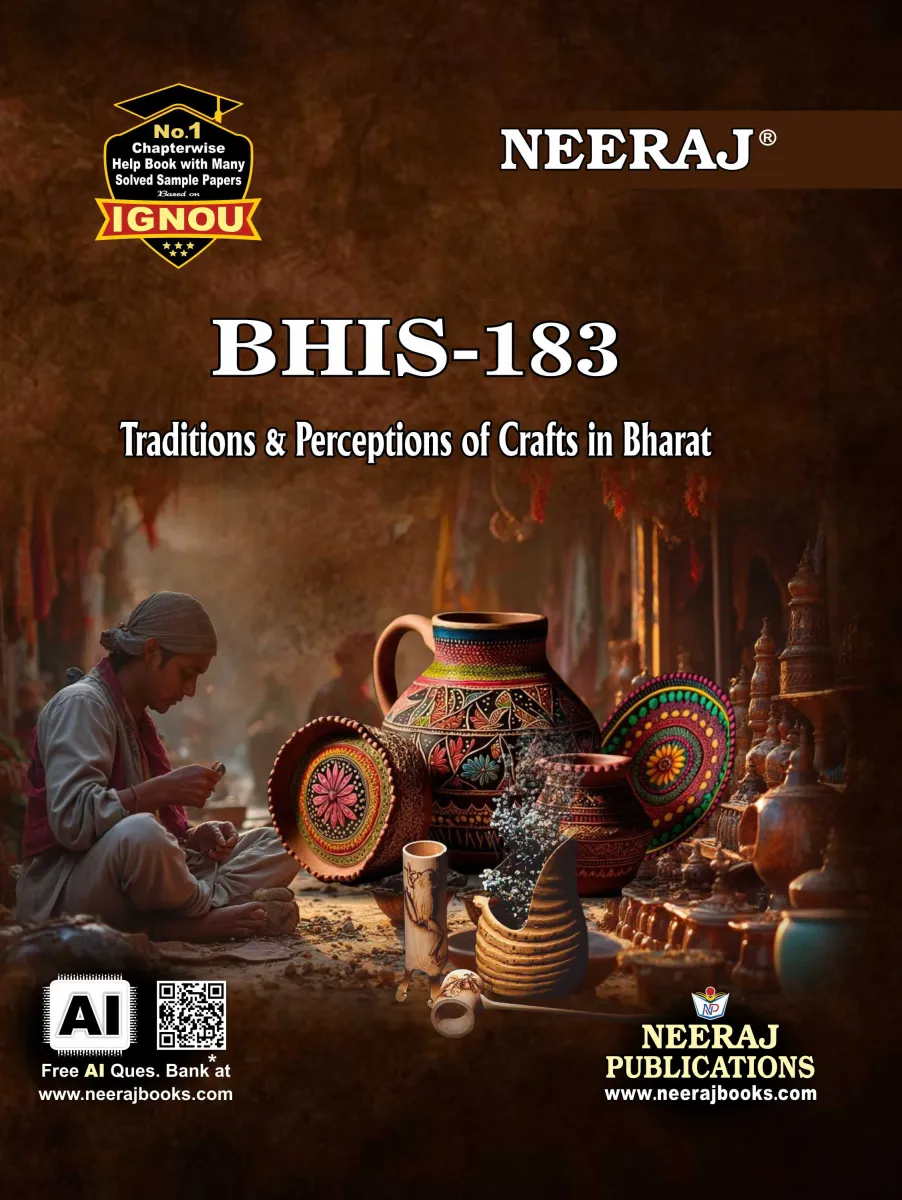
IGNOU BOOK | Traditions and Perceptions of Crafts in Bharat [English medium] BHIS -183
Traditions and Perceptions of Crafts in BharatThe traditions and perceptions of crafts in Bharat (India) are deeply rooted in its history, culture, spirituality, and social life. Indian crafts are not merely objects of decoration or commerce; they represent the knowledge, creativity, skills, beliefs, and identity of communities passed from one generation to another.1. Meaning of Crafts in Indian TraditionCrafts traditionally referred to skilled work involving materials such as clay, wood, metal, stone, textiles, bamboo, leather, and natural fibres. Pottery, weaving, embroidery, jewellery-making, sculpture, painting, woodwork, and metalwork developed as important forms of craftsmanship.2. Crafts and Traditional KnowledgeCraft knowledge was generally transmitted through family and community traditions. Children learned by observing and working alongside experienced artisans. Techniques, designs, tools, and knowledge of materials were preserved through practice rather than only through written texts.3. Crafts and SpiritualityCrafts have historically been closely associated with religious and spiritual life. Temple sculptures, idols, ritual vessels, lamps, textiles, paintings, and architectural decoration demonstrate how artistic skills were used for sacred purposes. Craftsmanship was often regarded as a disciplined and meaningful form of work.4. The Artisan in Indian SocietyThe artisan occupied an important position in traditional society. Communities of weavers, potters, carpenters, metalworkers, goldsmiths, stone carvers, and other craftspeople provided essential goods and services. Their work connected artistic creativity with practical everyday needs.
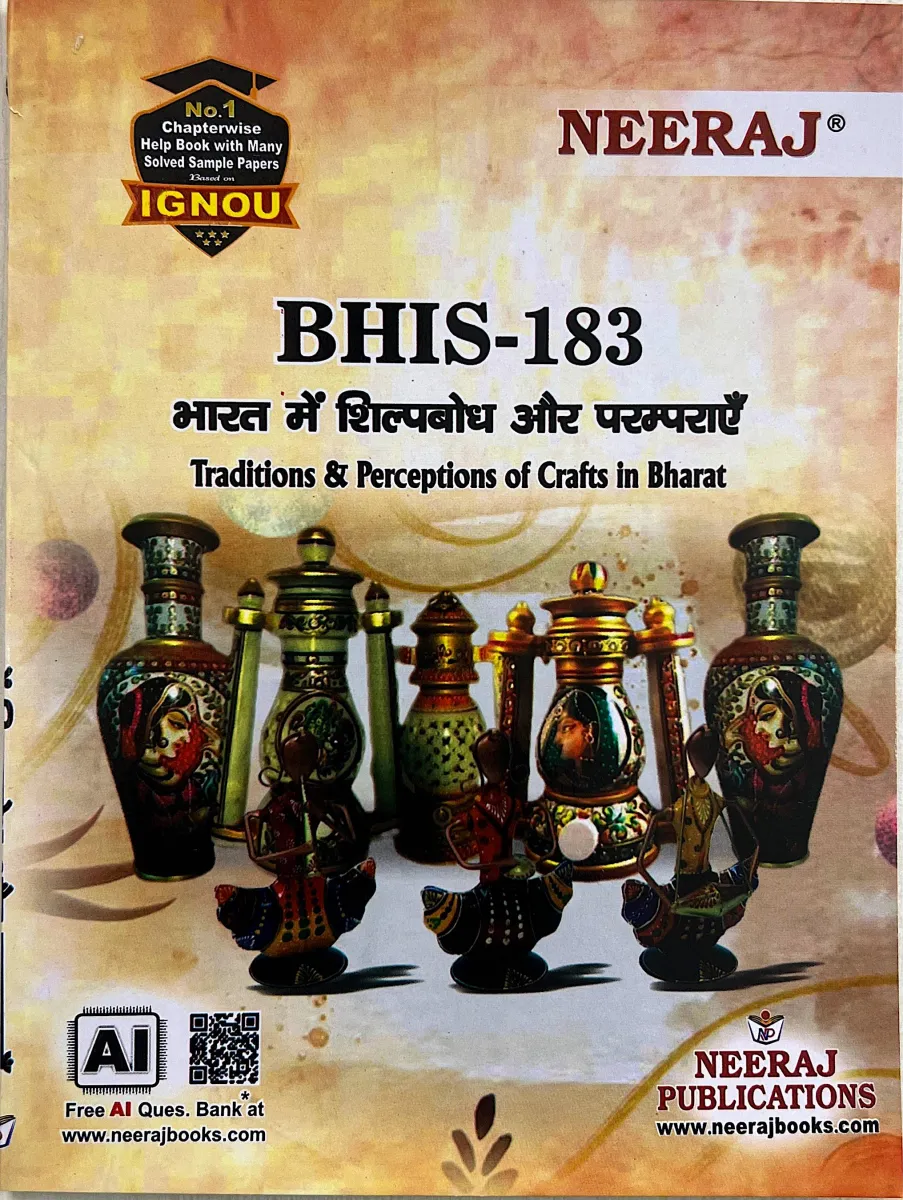
IGNOU BOOK | Traditions & Perceptions Of Crafts In Bharat | [ Hindi medium] BHIS-183
BHIS-183: भारत में शिल्प की परंपराएँ एवं धारणाएँ(Traditions & Perceptions of Crafts in Bharat) — हिंदी माध्यमपरिचयशिल्प (Craft) भारतीय संस्कृति और इतिहास का एक महत्वपूर्ण हिस्सा है। भारत में शिल्प केवल वस्तुएँ बनाने की तकनीक नहीं है, बल्कि यह ज्ञान, परंपरा, कौशल, संस्कृति, धर्म, सामाजिक जीवन और स्थानीय पहचान से जुड़ा हुआ है। पीढ़ी-दर-पीढ़ी हस्तांतरित होने वाली शिल्प परंपराओं ने भारतीय सभ्यता के विकास में महत्वपूर्ण भूमिका निभाई है।भारत की भौगोलिक और सांस्कृतिक विविधता के कारण यहाँ विभिन्न क्षेत्रों में अलग-अलग प्रकार के शिल्प विकसित हुए हैं। इनमें मिट्टी के बर्तन, वस्त्र निर्माण, धातु शिल्प, लकड़ी का काम, पत्थर की नक्काशी, आभूषण, चित्रकला, बुनाई और हस्तकला प्रमुख हैं।1. शिल्प का अर्थशिल्प का अर्थ है हाथों और विशेष कौशल के माध्यम से उपयोगी या कलात्मक वस्तुओं का निर्माण।शिल्प में दो महत्वपूर्ण पक्ष होते हैं:उपयोगिता — वस्तु का दैनिक जीवन में उपयोग।सौंदर्य — वस्तु में कलात्मकता और आकर्षण।इसलिए भारतीय शिल्प में कला और उपयोगिता दोनों का सुंदर संयोजन दिखाई देता है।2. भारत में शिल्प परंपराओं की प्राचीनताभारत में शिल्प की परंपरा बहुत प्राचीन है। सिंधु घाटी सभ्यता से प्राप्त मिट्टी के बर्तन, मनके, आभूषण, मूर्तियाँ, मुहरें और धातु की वस्तुएँ इस बात का प्रमाण हैं कि प्राचीन भारत में शिल्पकारों को विभिन्न तकनीकों का ज्ञान था।बाद के काल में भी शिल्प परंपराओं का विकास हुआ। मंदिरों, महलों, धार्मिक संस्थानों और नगरों के निर्माण में शिल्पकारों की महत्वपूर्ण भूमिका रही।3. शिल्प और भारतीय समाजभारतीय समाज में शिल्प का संबंध केवल आर्थिक गतिविधि से नहीं था। कई शिल्प जाति, समुदाय, परिवार और स्थानीय परंपराओं से जुड़े रहे।शिल्पकारों का ज्ञान सामान्यतः परिवार में ही अगली पीढ़ी को दिया जाता था। बच्चे बचपन से अपने माता-पिता या समुदाय के अनुभवी शिल्पकारों से काम सीखते थे।इस प्रकार शिल्प:ज्ञान → कौशल → परंपरा → पीढ़ी-दर-पीढ़ी हस्तांतरणकी प्रक्रिया के माध्यम से आगे बढ़ता रहा।4. प्रमुख भारतीय शिल्प परंपराएँ(क) मिट्टी का शिल्पमिट्टी से बर्तन, खिलौने, मूर्तियाँ, दीपक और सजावटी वस्तुएँ बनाई जाती हैं। कुम्हार समुदाय इस परंपरा से विशेष रूप से जुड़ा रहा है।मिट्टी का शिल्प भारतीय ग्रामीण और धार्मिक जीवन में विशेष महत्व रखता है।(ख) वस्त्र और बुनाईभारत में बुनाई की अत्यंत समृद्ध परंपरा है। विभिन्न क्षेत्रों में अलग-अलग प्रकार के वस्त्र और तकनीकें विकसित हुईं।उदाहरण के लिए:बनारसी वस्त्रकांजीवरम साड़ीचंदेरीपटोलाइकतपश्मीनाखादीवस्त्रों में स्थानीय संस्कृति, प्रतीक और डिजाइन दिखाई देते हैं।(ग) धातु शिल्पसोना, चाँदी, तांबा, कांसा, पीतल और लोहे जैसी धातुओं से विभिन्न वस्तुएँ बनाई जाती रही हैं।धातु शिल्प में शामिल हैं:आभूषणधार्मिक मूर्तियाँबर्तनऔजारसजावटी वस्तुएँ(घ) लकड़ी का शिल्पलकड़ी से फर्नीचर, खिलौने, मूर्तियाँ, दरवाजे और सजावटी वस्तुएँ बनाई जाती हैं। मंदिरों और पारंपरिक भवनों की नक्काशी में भी लकड़ी का उपयोग हुआ है।(ङ) पत्थर का शिल्पभारत की मंदिर स्थापत्य परंपरा पत्थर की नक्काशी और शिल्प-कौशल का उत्कृष्ट उदाहरण है। मूर्तियाँ, स्तंभ, मंदिर की दीवारें और अन्य स्थापत्य तत्व कुशल शिल्पकारों द्वारा बनाए गए।(च) आभूषण निर्माण शिल्प संरक्षण की आवश्यकताभारतीय शिल्प परंपराओं को संरक्षित करना आवश्यक है क्योंकि इनमें पारंपरिक ज्ञान और सांस्कृतिक विरासत निहित है।संरक्षण के लिए आवश्यक कदम:कारीगरों को उचित पारिश्रमिक देना।पारंपरिक ज्ञान का दस्तावेजीकरण करना।युवा पीढ़ी को शिल्प प्रशिक्षण देना।शिल्प उत्पादों के लिए उचित बाजार उपलब्ध कराना।नकली और मशीन-निर्मित उत्पादों से वास्तविक हस्तशिल्प की पहचान करना।डिजिटल प्लेटफॉर्म के माध्यम से कारीगरों को बाजार से जोड़ना।शिल्प मेलों और प्रदर्शनियों को बढ़ावा देना।महिलाओं और स्थानीय समुदायों की भागीदारी को प्रोत्साहित करना।
IGNOU BOOK | Tradition of History Writing in India | BHART ME ETIHAS KE LIKHN KI PARMANPARYE | BHIE-144
Tradition of History Writing in IndiaThe tradition of history writing in India has a long and diverse development. Unlike the modern Western idea of history, ancient Indian writers often combined historical events with religion, mythology, legends, genealogy, and moral teachings. Over time, Indian historiography developed through different periods and forms.Ancient Period: Early historical traditions can be found in the Vedas, Epics (Ramayana and Mahabharata), Puranas, Buddhist and Jain texts. These works contain information about kings, dynasties, society, religion, and political events, although historical facts are often mixed with myths and religious traditions.Inscriptions and Coins: Inscriptions, coins, monuments, and archaeological remains provide important evidence for reconstructing India's past. Ashokan inscriptions are among the earliest important sources for political and social history.Regional Historical Traditions: Different regions developed their own traditions of recording the past. A notable example is Kalhana's Rajatarangini (12th century), which narrates the history of Kashmir and is often regarded as one of the earliest systematic works of history in India.Medieval Period: Persian and Arabic writers contributed significantly to Indian historiography. Scholars and chroniclers such as Al-Biruni, Minhaj-us-Siraj, Ziauddin Barani, and Abul Fazl recorded political events, administration, society, culture, and the activities of rulers.
IGNOU BOOK | Tradition of History Writing in India[English medium] BHIE - 144
BHIE-144: Tradition of History Writing in India — DescriptionIntroductionThe tradition of history writing in India refers to the different ways in which Indians recorded, remembered, interpreted, and transmitted their past. Indian historical traditions are very diverse and include religious texts, genealogies, inscriptions, biographies, chronicles, regional literature, administrative records, travel accounts, and oral traditions.Unlike the modern Western idea of history, which generally emphasizes chronological and critical reconstruction of the past, traditional Indian historical writing often combined myth, religion, genealogy, political memory, moral teachings, and historical events.1. Ancient Indian Tradition of History WritingAncient India did not produce history books in exactly the same form as modern historians. However, this does not mean that Indians had no sense of the past.Historical information can be found in:VedasEpicsPuranasBuddhist textsJain literatureInscriptionsGenealogiesAccounts of kings and dynastiesThese sources contain information about political institutions, social life, religious practices, economy, kingship, and cultural traditions.2. The Vedic TraditionThe Vedas are primarily religious texts rather than historical works. Nevertheless, they provide valuable information about early Indian society.The Rigveda, for example, contains references to:Tribes and clansKings and chiefsConflicts and battlesSocial organisationReligious practicesEconomic activitiesTherefore, historians use Vedic literature as an important source for reconstructing ancient Indian history, while also considering its religious and literary character.3. Epics as Sources of Historical MemoryThe two great Indian epics, the Ramayana and the Mahabharata, played an important role in preserving cultural and historical memories.They contain descriptions of:Kings and kingdomsWars and political conflictsFamily relationshipsSocial customsReligious beliefsIdeas of kingship and moralityHowever, these texts contain both historical memories and elements of mythology and religious tradition. Therefore, they cannot simply be treated as modern historical narratives.4. Puranic TraditionThe Puranas are particularly important for understanding the Indian tradition of preserving the past.They contain:Genealogies of kingsDynastic listsAccounts of rulersCreation storiesReligious traditionsDescriptions of sacred placesThe Puranic tradition often connected political history with religious and cosmic ideas.Genealogy was especially important because dynasties and royal lineages were used to establish legitimacy and continuity.5. Buddhist Historical TraditionBuddhist literature provides important information about the history of ancient India.Texts such as the Dipavamsa and Mahavamsa preserve traditions relating to the Buddha, Buddhist communities, kings, and political developments.Buddhist traditions also provide information about:MagadhaMauryan historyAshokaBuddhist councilsSpread of BuddhismRelations between rulers and religious institutionsThese texts are valuable historical sources, although they must be examined critically.6. Jain Historical TraditionJain literature also contributed significantly to Indian historical memory.Jain texts contain information about:Religious teachersKings and dynastiesCitiesMerchantsSocial groupsReligious institutionsJain authors preserved traditions about important political and religious personalities and helped maintain historical memories across generations.7. Inscriptions as Historical RecordsInscriptions are among the most important sources for Indian history.Kings and other authorities recorded information on:VictoriesDonationsLand grantsAdministrative arrangementsReligious activitiesPublic worksGenealogiesThe inscriptions of Ashoka are particularly significant because they provide direct evidence about his policies, administration, ethical ideas, and relationship with his subjects.Later inscriptions also provide valuable information about dynasties and rulers.8. Biographical TraditionAnother important tradition was the writing of biographies of rulers and important personalities.A famous example is Banabhatta's Harshacharita, which describes the life and achievements of King Harshavardhana.
IGNOU BOOK | The Rise of Modern West - I | ADHUNIK PASCHIMI UDHY - I | HINDI MEDIUM
The Rise of Modern West – IThe Rise of Modern West – I is the study of the transformation of Western Europe from the late medieval period to the early modern period, roughly from the 15th to the 18th century. It explains how Europe moved away from medieval feudal institutions and developed the foundations of the modern state, capitalist economy, modern science, secular thought, and global trade.1. Decline of FeudalismDuring the late medieval period, the traditional feudal system began to weaken.Major causes included:Growth of towns and marketsExpansion of money-based tradeDecline of serfdom in many parts of Western EuropeRise of merchants and bankersGrowth of centralized monarchiesDevelopment of professional armiesAs feudal relationships weakened, economic and political power increasingly shifted toward towns, merchants, monarchs, and centralized states.2. RenaissanceThe Renaissance, meaning "rebirth," began in Italy and spread to other parts of Europe.It involved a renewed interest in classical Greek and Roman culture and encouraged new approaches to art, literature, education, and philosophy.Important characteristics were:
IGNOU BOOK | The Rise of Modern West - I | BHIC -106 | ENGLISH MEDIUM
The Rise of the Modern West – IThe Rise of the Modern West – I deals with the major political, economic, social, intellectual, and cultural changes that transformed Western Europe between roughly the 15th and 18th centuries. This period witnessed the decline of medieval institutions and the emergence of the foundations of the modern Western world.1. Transition from Medieval to Modern EuropeBy the 15th century, Western Europe was undergoing significant changes. The old feudal order began to weaken, while centralized monarchies, commercial economies, towns, and new intellectual movements grew.Important developments included:Decline of feudalismGrowth of towns and marketsExpansion of tradeRise of merchant and banking groupsStrengthening of centralized statesDevelopment of new scientific and intellectual ideasThese changes gradually created the conditions for modern European society.2. RenaissanceThe Renaissance began in the Italian city-states during the 14th and 15th centuries and later spread throughout Europe.
IGNOU BOOK | Some Aspects of European History 1789-1944[Hindi medium] BHIE-145
BHIE-145 – Some Aspects of European History (1789–1944) | Hindi Mediumपाठ्यक्रम का परिचय:BHIE-145 Some Aspects of European History (1789–1944) यूरोप के आधुनिक इतिहास की महत्वपूर्ण राजनीतिक, सामाजिक, आर्थिक और वैचारिक घटनाओं का अध्ययन करने वाला पाठ्यक्रम है। इसमें फ्रांसीसी क्रांति (1789) से लेकर द्वितीय विश्व युद्ध के दौर (1944) तक यूरोप में हुए प्रमुख परिवर्तनों को समझाया गया है।इस पुस्तक में फ्रांसीसी क्रांति, नेपोलियन युग, राष्ट्रवाद, उदारवाद, समाजवाद, औद्योगिक क्रांति, 1848 की क्रांतियाँ, इटली और जर्मनी का एकीकरण, साम्राज्यवाद, प्रथम विश्व युद्ध, रूसी क्रांति, फासीवाद, नाजीवाद तथा द्वितीय विश्व युद्ध जैसे महत्वपूर्ण विषय शामिल हैं।मुख्य विषय:फ्रांसीसी क्रांति और उसके प्रभावनेपोलियन बोनापार्ट और यूरोपउदारवाद, राष्ट्रवाद एवं समाजवाद का विकासऔद्योगिक क्रांति और यूरोपीय समाज1848 की क्रांतियाँइटली का एकीकरणजर्मनी का एकीकरणयूरोपीय साम्राज्यवाद एवं उपनिवेशवादप्रथम विश्व युद्ध के कारण एवं परिणामरूसी क्रांति और सोवियत संघ का उदयअंतरयुद्ध कालीन यूरोपफासीवाद और नाजीवाद का उदयद्वितीय विश्व युद्ध और 1944 तक यूरोप की राजनीतिक स्थिति
IGNOU BOOK Some Aspects of European History 1789-1945 | BHIE-145 | ENGLISH MEDIUM
Some Aspects of European History, 1789–1945The period 1789–1945 is one of the most important phases in European history. It began with the French Revolution of 1789 and ended with the conclusion of the Second World War in 1945. During these years, Europe experienced revolutionary changes in politics, society, economy, nationalism, imperialism, and international relations.1. The French Revolution, 1789The French Revolution was a turning point in European history. Before 1789, French society was divided into three estates:First Estate – clergySecond Estate – nobilityThird Estate – peasants, workers, merchants, and the middle classThe revolution was influenced by economic problems, social inequality, political absolutism, and Enlightenment ideas.Its major principles were liberty, equality, and fraternity. The revolution abolished many feudal privileges and promoted the idea that political authority should ultimately rest with the people.Its effects spread far beyond France and encouraged movements for constitutional government and national self-determination throughout Europe.
IGNOU BOOK | Social Formations and Cultural Patterns of the Medieval World | MADHYEKALIN VISW KI SAMAJIK SANCHAR OR SANSKRITI PATTEN | BHIC - 104 |HINDI MEDIUM
Social Formations and Cultural Patterns of the Medieval WorldSocial Formations and Cultural Patterns of the Medieval World is the study of how human societies were organized and how their economy, politics, religion, social structure, art, literature, science, and traditions developed during the medieval period, roughly from the 5th to the 15th century CE. It covers different regions such as Europe, the Islamic world, India, China, and Africa.1. Social StructureMedieval societies were generally hierarchical. Social position was influenced by land ownership, occupation, caste, religion, birth, and political power.Major groups included:Kings and rulers – exercised political and military authority.Nobles and landlords – controlled land and often provided military support to rulers.Religious groups – priests, monks, scholars, ulema, and other religious specialists.Merchants and artisans – became increasingly important with the growth of towns and trade.Peasants and agricultural labourers – formed the majority of the population.Slaves and dependent workers – existed in several medieval societies.The exact social structure varied greatly from one region to another.
IGNOU BOOK |Social Formations and Cultural Patterns of the Medieval World [ENGLISH MEDIUM] BHIC-104
BHIC-104: Social Formations and Cultural Patterns of the Medieval World is an IGNOU history course that examines how medieval societies were organized and how their cultures developed across different parts of the world.Main areas coveredMedieval SocietyFormation of social groups and classesFeudalism and agrarian societiesLand ownership and systems of productionPeasants, landlords, and other social groupsEurope in the Medieval PeriodDecline of the Roman EmpireRise of feudalismManorial systemGrowth of towns and tradeEmergence of merchants and guildsIslamic WorldRise and expansion of IslamPolitical and social institutionsAbbasid society and cultureUrban centres, trade, science, and learningMedieval ChinaState and societyAgricultural developmentUrbanization and commerceIntellectual and cultural traditionsMedieval JapanFeudal institutionsSamurai and warrior cultureShogunateRelations between rulers, warriors, and peasantsReligion and CultureChristianity and the ChurchIslam and Islamic cultureBuddhism and other Asian traditionsReligious institutions and their influence on societyScience, Technology and EducationDevelopment of scientific knowledgeAdvances in agriculture and technologyUniversities and centres of learningContributions of Islamic, Chinese, and European civilizationsArt and LiteratureMedieval architecturePainting and sculptureLiterature and philosophyReligious and secular cultural traditions
IGNOU BOOK | Social Formations and Cultural Patterns of the Ancient World [ HINDI medium] BHIC-102
BHIC-102: प्राचीन विश्व की सामाजिक संरचनाएँ एवं सांस्कृतिक प्रतिमानAncient historyBHIC-102 (Social Formations and Cultural Patterns of the Ancient World) इतिहास का एक महत्वपूर्ण पाठ्यक्रम है। इसमें प्राचीन विश्व के समाज, अर्थव्यवस्था, राजनीति, धर्म, संस्कृति और सभ्यताओं के विकास का अध्ययन किया जाता है। यह विषय मुख्य रूप से यह समझने में मदद करता है कि प्राचीन समाज किस प्रकार बने और उनमें समय के साथ क्या परिवर्तन हुए।मुख्य विषय1. प्रारंभिक मानव समाजशिकारी और खाद्य-संग्राहक समाजकृषि की शुरुआतपशुपालन और स्थायी बस्तियों का विकासनिजी संपत्ति और सामाजिक असमानता की शुरुआत2. प्रारंभिक सभ्यताओं का विकासमेसोपोटामिया की सभ्यतामिस्र की सभ्यतासिंधु घाटी सभ्यताचीन की प्रारंभिक सभ्यतानगरों और राज्य का उदय3. सामाजिक संरचनावर्ग और सामाजिक समूहों का निर्माणशासक, पुरोहित, व्यापारी, कारीगर और कृषकदास प्रथामहिलाओं की सामाजिक स्थितिपरिवार और सामाजिक संस्थाएँ4. प्राचीन अर्थव्यवस्थाकृषि और सिंचाईशिल्प एवं उद्योगआंतरिक और बाहरी व्यापारमुद्रा का विकासश्रम और उत्पादन संबंध5. प्राचीन राज्य और राजनीतिक संस्थाएँराज्य के उदय के कारणराजतंत्र और साम्राज्यप्रशासनिक व्यवस्थाकानून और शासनयुद्ध और साम्राज्य विस्तार
IGNOU BOOK | Social Formations and Cultural Patterns of the Ancient World[ENGLISH medium] BHIC -102
Social Formations and Cultural Patterns of the Ancient WorldSocial formations and cultural patterns of the ancient world refer to the ways in which people in early civilizations organized their societies, economies, political institutions, religions, and cultural life. Ancient societies developed differently according to their environment, resources, technology, and historical experiences.1. Social FormationsAncient societies were generally divided into different social groups or classes. These could include:Rulers and nobles: Kings, chiefs, aristocrats, and members of royal families held political and economic power.Priests: Religious specialists often had considerable influence because religion was closely connected with government and everyday life.Farmers and workers: The majority of people were engaged in agriculture, animal husbandry, crafts, and other forms of labour.Merchants and artisans: With the growth of cities and trade, merchants, craftsmen, and traders became important social groups.Slaves and dependent labourers: In many ancient civilizations, slavery or other forms of dependent labour existed.The family and kinship system was another important part of social organization. Patriarchal families were common, although the position of women varied considerably between different societies.
IGNOU BOOK | Rise of Modern World-II [English medium] BHIC-108
BHIC-108: Rise of Modern World – IIModern historyBHIC-108: Rise of Modern World – II is an IGNOU History course that deals with the major political, economic, social, and cultural developments that shaped the modern world, particularly from the late 18th century into the 20th century.What does BHIC-108 cover?The course broadly helps you understand how the modern world emerged through industrialization, nationalism, imperialism, revolutions, world wars, and decolonization.Major topics1. IndustrializationIndustrial Revolution and its originsDevelopment of factories and mechanized productionChanges in agriculture and labourGrowth of towns and citiesRise of the working class and industrial capitalism2. Nationalism and Nation-StatesMeaning and development of nationalismFormation of modern nation-statesNational movements in EuropeUnification of Italy and GermanyImpact of nationalism on international politics3. Imperialism and ColonialismExpansion of European powersColonialism in Asia and AfricaEconomic motives behind imperialismColonial administration and exploitationResistance to colonial rule4. Major RevolutionsFrench Revolution and its consequencesAmerican RevolutionRevolutions of 1848Russian RevolutionImpact of revolutionary ideas on modern society5. Capitalism and SocialismGrowth of modern capitalismIndustrial working classMarxism and socialist ideasLabour movements
IGNOU BOOK | History of Modern Europe - 2[ ENGLISH MEDIUM] BHIC-114
BHIC-108: History of Modern Europe – IIThis paper mainly deals with the political, economic, social and intellectual developments in Europe from the 19th century into the 20th century. Important themes include:Industrial Revolution – development of industries, capitalism, urbanisation and changes in working life.Nationalism in Europe – growth of national consciousness and the formation/consolidation of nation-states.Unification of Germany and Italy – major political movements that transformed the European map.Socialism and Marxism – emergence of socialist ideas, class struggle and the growth of workers' movements.Imperialism and Colonialism – European expansion into Asia and Africa and its economic and political consequences.First World War – major causes, course and consequences of the war.Russian Revolution – background, events of 1917 and the emergence of the Soviet state.Interwar Europe – political instability, economic crisis and the rise of new political ideologies.Fascism and Nazism – rise of Mussolini and Hitler and their impact on Europe.Second World War – causes, major developments and consequences.Post-war Europe – reconstruction, changing political relations and the emergence of new international structures.
IGNOU BOOK | History of Modern Europe - 1 | BHIC -111 | ENGLISH MEDIUM
History of Modern Europe – IHistory of Modern Europe – I generally covers the period from the Renaissance and Reformation to the French Revolution and its aftermath, roughly from the fourteenth/fifteenth century to the early nineteenth century. This period witnessed the decline of medieval institutions and the emergence of modern European political, economic, intellectual and social structures.1. RenaissanceThe Renaissance, meaning “rebirth,” began in the Italian city-states during the fourteenth century and gradually spread across Europe.It marked a revival of interest in the literature, philosophy and art of ancient Greece and Rome.
IGNOU BOOK | BHIE-142 | History of Modern East Asia: Japan | ADHUNIK PURVH ASHIA KA ETEHAS : JAPAN (1868-1945 ) | HINDI MEDIUM
आधुनिक पूर्वी एशिया का इतिहास: जापान (1868–1945) (BHIE-142) जापान के आधुनिक इतिहास और उसके राजनीतिक, सामाजिक, आर्थिक तथा सैन्य विकास का अध्ययन करने वाला महत्वपूर्ण पाठ्यक्रम है। इसमें 1868 की मेइजी पुनर्स्थापना से लेकर 1945 में द्वितीय विश्व युद्ध की समाप्ति तक जापान में हुए महत्वपूर्ण परिवर्तनों का अध्ययन किया जाता है। मेइजी पुनर्स्थापना के बाद जापान में राजनीतिक और प्रशासनिक व्यवस्था में व्यापक परिवर्तन हुए तथा देश ने आधुनिक राज्य के निर्माण की दिशा में कदम बढ़ाया। इस अवधि में औद्योगीकरण, आधुनिक शिक्षा, संचार, परिवहन और सैन्य व्यवस्था के विकास पर विशेष ध्यान दिया गया। जापान ने पश्चिमी देशों की तकनीक और संस्थाओं से कई चीजें अपनाईं तथा अपनी अर्थव्यवस्था और सैन्य शक्ति को मजबूत किया। पाठ्यक्रम में जापान के साम्राज्यवाद और उसके विस्तार का भी अध्ययन किया जाता है। चीन-जापान युद्ध, रूस-जापान युद्ध तथा कोरिया और अन्य क्षेत्रों में जापानी विस्तार ने पूर्वी एशिया की राजनीति को प्रभावित किया। आगे चलकर जापान में सैन्यवाद और राष्ट्रवाद का प्रभाव बढ़ा तथा 1930 के दशक में उसकी विदेश नीति अधिक आक्रामक हुई। चीन में जापानी सैन्य गतिविधियों और द्वितीय विश्व युद्ध में जापान की भूमिका भी इस पाठ्यक्रम का महत्वपूर्ण हिस्सा है। 1945 में जापान की पराजय और युद्ध की समाप्ति के साथ इस ऐतिहासिक अवधि का अंत होता है। BHIE-142 के अध्ययन से विद्यार्थियों को यह समझने में सहायता मिलती है कि जापान ने एक सामंती समाज से आधुनिक औद्योगिक और शक्तिशाली राष्ट्र के रूप में किस प्रकार परिवर्तन किया तथा उसके राजनीतिक, आर्थिक और सैन्य विकास ने पूर्वी एशिया और विश्व इतिहास को कैसे प्रभावित किया।